Pakistan asks Saudi Arabia for 15-year, $6.7 billion oil facility
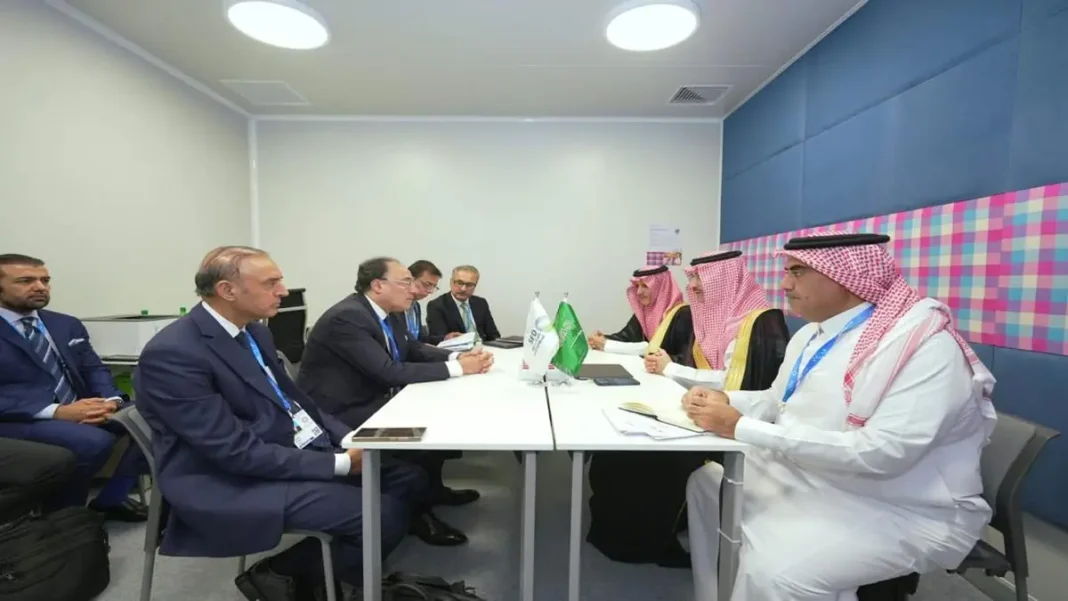
Pakistan has asked Saudi Arabia to convert its annual $1.2 billion deferred-payment oil arrangement into a 15-year Saudi oil facility worth $6.7 billion. Finance Minister Muhammad Aurangzeb raised the request with Saudi Fund for Development chief Sultan Abdulrahman Al-Marshad on the sidelines of the World Bank and IMF annual meetings in Bangkok.
The proposal would reshape one of Pakistan’s longest-running energy financing lines at a time when the country’s import bill is climbing and regional tensions are straining fuel supply routes.
Inside the 15-year Saudi oil facility proposal
Pakistan wants the Saudi oil facility renewed not as another one-year deal but as a long-term concessional arrangement stretching over 15 years. The proposed $6.7 billion envelope is designed to reduce Pakistan’s immediate external financing needs while locking in energy security amid the heightened Middle East conflict.
The Finance Ministry released details of the Aurangzeb-Al-Marshad meeting but did not comment on the oil facility itself. Adviser to the Finance Minister Khurram Schehzad did not respond to a query on the matter. Sources familiar with the talks said the Saudi side was examining the request.
No final decision has been announced. Riyadh’s response will determine whether the facility survives in its current short-term form or moves to the longer structure Islamabad wants.
A financing line that goes back to 2019
The request did not emerge from nowhere. Since 2019, Saudi Arabia has supplied oil to Pakistan on one-year deferred payments, giving Islamabad breathing room on its foreign exchange reserves each year.
The last such facility was signed in February 2025 and expired in April. The previous arrangement carried an interest rate of 6 per cent. Over the years, the Saudi Fund for Development has provided about $6.7 billion in financing for oil derivatives to Pakistan.
Saudi Arabia has also extended $3 billion in short-term deposits to Pakistan through the SFD. That amount was rolled over for three months in July and used to repay a deposit to the United Arab Emirates.
Why the timing matters
The request comes as Pakistan faces heavy external financing pressure. The IMF has assessed the country’s gross financing needs for FY2027-28 at nearly $30 billion. The Fund’s third staff-level report did not include the Saudi oil facility in its projected inflows for FY2026-27 and FY2027-28, which makes a renewed arrangement more important for Islamabad.
Petroleum imports remain one of Pakistan’s largest drains on foreign exchange. The annual petroleum group import bill surged to $16.8 billion last fiscal year, up 5.8 per cent. Crude oil import costs stood at $7.2 billion, up 32 per cent, and rose another 40 per cent during July and August of the current fiscal year.
For Pakistani consumers, the request arrives just days after the government cut petrol prices by Rs2.71 per litre for the second half of October. A stable long-term oil financing line would give the government more room to manage fuel price volatility.
Beyond oil: refineries and investment on the agenda
The Bangkok meeting covered more than the oil facility. Both sides discussed expanding trade and investment, strengthening private-sector engagement, and following up on the bilateral investment protection agreement. Refinery upgrades featured in the talks, with Pakistan exploring ways to modernise its refining capacity.
The two sides also reviewed progress on SFD-supported development projects and agreed on the need for a fresh pipeline of projects. The SFD reaffirmed its continued support for Pakistan within its mandate.
The energy track is not new. Pakistan’s petroleum minister recently held energy cooperation talks in Riyadh, underscoring how central the Saudi energy relationship has become to Islamabad’s planning.
What it means for Pakistan’s economy
A 15-year facility would give Pakistan predictable oil financing through the late 2030s, easing the annual scramble to renew the arrangement. It would also signal continued Saudi confidence in Pakistan’s economy at a moment when the country is chairing the G-24 group of developing nations.
But the numbers behind the request show the pressure points too. With petroleum imports at $16.8 billion a year and the IMF excluding the facility from its inflow projections, Islamabad needs the deal. The repayment of the UAE deposit earlier this year showed how quickly Gulf financing lines can tighten.
Frequently asked questions
What is the Saudi oil facility?
It is an arrangement under which Saudi Arabia supplies oil to Pakistan on deferred payments through the Saudi Fund for Development. Since 2019, it has run as an annual facility, most recently worth $1.2 billion a year.
How long would the new facility run?
Pakistan has proposed a 15-year concessional oil financing facility worth $6.7 billion, replacing the one-year renewals used since 2019.
Has Saudi Arabia accepted the request?
No decision has been announced. The Finance Ministry shared no comment on the oil facility after the Bangkok meeting, and sources said the Saudi side was still examining the matter.
—
*Source: The Express Tribune*