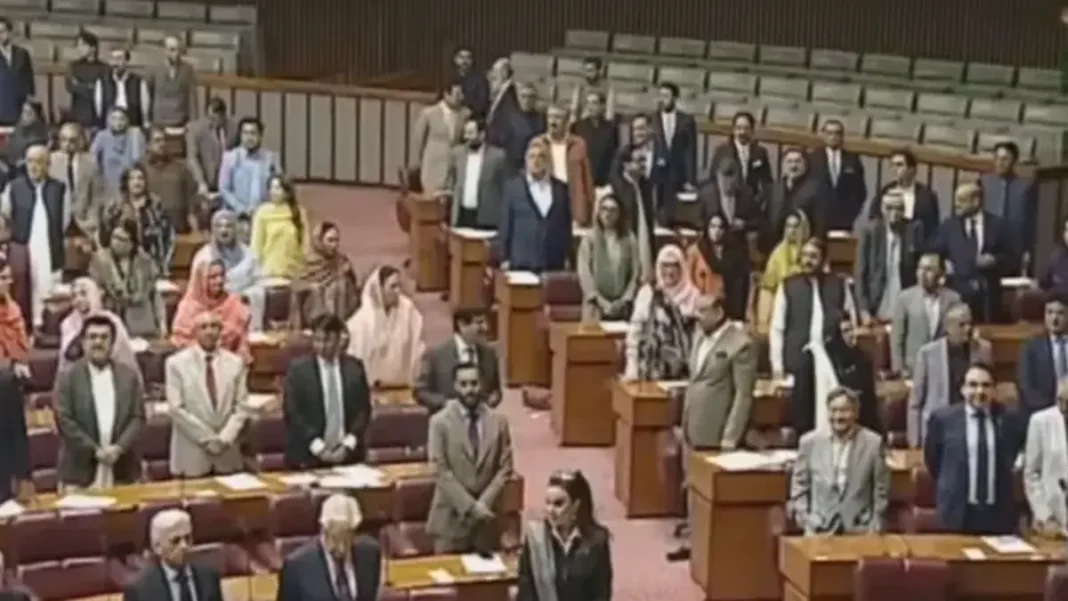
The joint session of parliament on Thursday endorsed the imposition of KP governor’s rule in Khyber Pakhtunkhwa, completing the federal government’s parliamentary push to sustain emergency rule in the province.
Opposition members staged a noisy protest inside the house as the resolution was taken up, denouncing both the emergency and the governor’s rule as unconstitutional. The session had been summoned for 11am on Thursday to consider the constitutional ratification of the governor’s rule under Article 234.
President Asif Ali Zardari had proclaimed the emergency and imposed governor’s rule on October 11 on the advice of the federal cabinet. The government said the move was forced by the provincial government’s “deliberate disengagement” from the fight against terrorism.
The National Assembly approved the Proclamation of Emergency on October 14 through a resolution moved by Minister for Parliamentary Affairs Dr Tariq Fazal Chaudhary. Law Minister Azam Nazeer Tarar told the house that presenting the proclamation before parliament and obtaining its approval was a constitutional requirement. The Senate gave its approval the same day by a majority vote, amid opposition ruckus.
Defence Minister Khawaja Muhammad Asif told parliament there was no choice but to impose the emergency because of rising incidents of terrorism in the province. He reaffirmed the government’s resolve to combat terrorism with full force.
What the KP governor’s rule vote changes
With the joint session’s endorsement, the emergency and governor’s rule now have full parliamentary cover. The Interior Ministry has already authorised, through an order under Article 245 of the Constitution, the deployment of Pakistan Army troops in aid of civil power in the province for the duration of the emergency.
The federal government has set up a dedicated secretariat headed by an additional chief secretary to administer 12 districts, mostly in the former tribal areas near the Afghan border. In those districts, executive officers have been authorised to perform judicial functions, temporarily suspending the usual separation of the judiciary and the executive there.
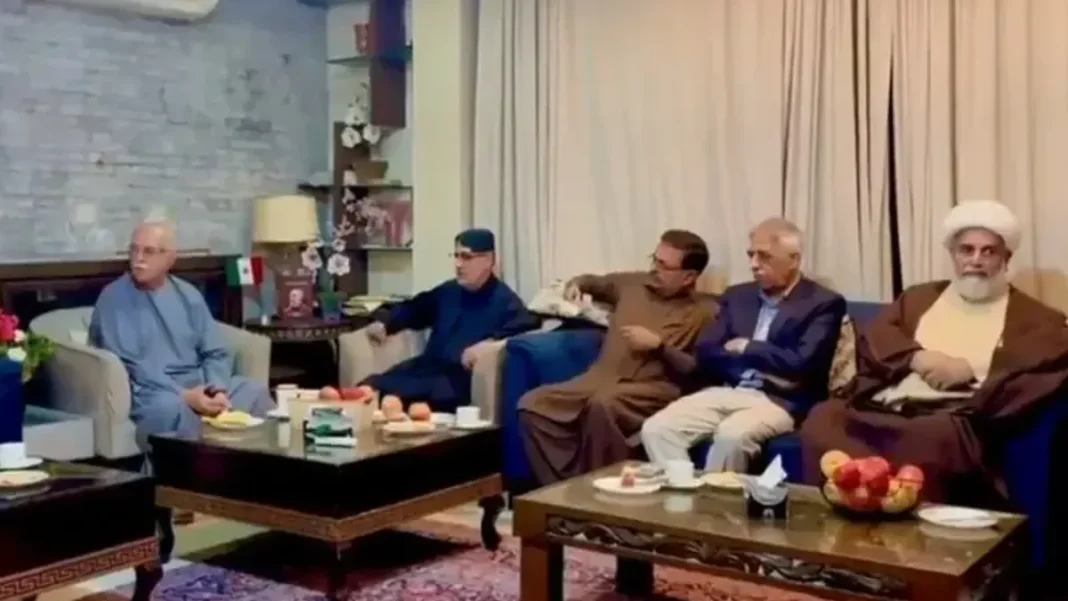
The government’s stance is that a single, centrally coordinated counterterrorism policy is required for the province. PTI, which led the ousted provincial government, has called the entire exercise a political move aimed at dismantling its elected government.
PTI vows legal challenge against the move
PTI has vowed to challenge the measures both in court and in parliament. Party chairman Barrister Gohar Ali Khan filed a petition in the Peshawar High Court on Wednesday asking the court to declare the October 11 proclamation unconstitutional. An earlier petition challenging both measures was filed on Monday. No hearing date or interim order has been reported so far.
Opposition lawmakers questioned the constitutional basis of the decision during the sessions, arguing that it damaged provincial autonomy. Rights groups have also raised concerns, and the Human Rights Commission of Pakistan has urged both the federal government and the PTI to resume meaningful political dialogue.
The constitutional clock for emergency and governor’s rule
The proclamation faces a series of constitutional deadlines. Because the president acted without a resolution from the provincial assembly, both houses of parliament had to approve the emergency proclamation within 10 days, by October 21, under the second proviso to Article 232(1).
The emergency proclamation must also be laid before a joint sitting of parliament within 30 days. It will lapse after two months unless the joint sitting approves it. If the joint sitting approves the emergency, it can remain in force until revoked.
Governor’s rule under Article 234 follows a separate limit. It can be extended in two-month increments to a maximum of six months in total. Thursday’s resolution is therefore only the first of several parliamentary votes the measures will need.
Frequently asked questions
What is governor’s rule?
Governor’s rule is imposed under Article 234 of the Constitution when the president is satisfied that the government of a province cannot be carried on in accordance with the Constitution. The governor then administers the province on behalf of the president.
How long can the KP emergency last?
The emergency proclamation lapses after two months unless approved by a joint sitting of parliament. Governor’s rule can be extended in two-month steps for a maximum of six months.
Has PTI challenged the emergency?
Yes. PTI chairman Barrister Gohar Ali Khan filed a petition in the Peshawar High Court seeking to have the October 11 proclamation declared unconstitutional, and the party says it will challenge the measures in parliament too.
Earlier in the crisis, the centre signalled it was seriously considering emergency rule in KP. PTI has already challenged the KP emergency in the Peshawar High Court. The opposition alliance TTAP has condemned the governor’s rule as unconstitutional. Defence Minister Khawaja Asif earlier called governor’s rule the last option for KP.