ILO Director-General Visits Gadani Shipbreaking Yard, Inspects Two Plots
ILO Director-General Gilbert F. Houngbo inspected plots three and four of the Gadani shipbreaking yard on Friday, in a visit accompanied by Federal Minister for Overseas Pakistanis and Human Resource Development Chaudhry Salik Hussain. The tour put the spotlight on one of the world’s largest ship-recycling sites and the working conditions of the thousands of labourers who dismantle ships along its shore.
The ILO Chief’s Tour of the Gadani Shipbreaking Yard
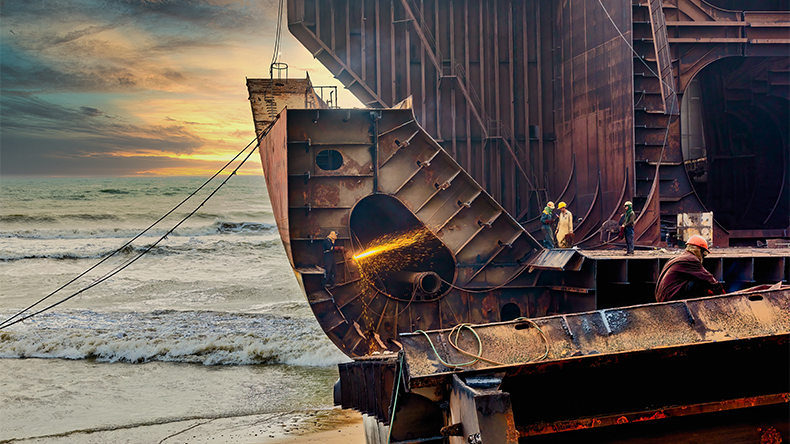
Houngbo toured plots three and four, the designated working sites where vessels are run aground and broken down by hand and torch. The visit drew attention to worker safety at a facility where cutting steel hulls, handling heavy scrap and exposure to hazardous materials are part of daily life. The presence of the federal minister alongside the ILO chief signalled that labour conditions at the yard have the government’s attention as well.
Why the Gadani Shipbreaking Yard Matters
Gadani sits on the coast of Lasbela district in Balochistan, about 50 kilometres west of Karachi, and ranks among the world’s largest shipbreaking yards alongside Alang in India and Chittagong in Bangladesh. South Asia handles roughly four-fifths of the world’s ship recycling, and Gadani is Pakistan’s share of that trade. The steel recovered from beached vessels feeds Pakistan’s construction industry, while thousands of workers earn their living cutting, hauling and sorting scrap on the yard’s plots. The industry’s fortunes move with global shipping cycles, and Gadani has seen business slow in recent years amid safety concerns and weak demand.
Safety Record Under the Spotlight
The yard has a troubled safety history. Labour representatives have told the ILO that workers at Gadani lack basic medical facilities, union representation and clean drinking water, and that seriously injured workers must travel 40 kilometres to Karachi for treatment, a journey some do not survive. Fires and structural collapses have killed workers in past years, and the dangerous practice of beaching ships keeps the risk of accidents high. The International Labour Organization has been pushing for better occupational safety and health standards at the yard, including frameworks that governments, employers and workers’ groups can adopt to enforce safer working conditions.
Reform Drive and What Comes Next
The visit comes as Pakistan moves to clean up the industry. The Safe and Environmentally Sound Ship Recycling and Decent Work project, run by the ILO with the International Maritime Organization and the Ministry of Maritime Affairs, brought stakeholders together in Karachi in May 2025 to discuss global conventions and practical reforms for Gadani. The following month, the Ministry of Maritime Affairs announced a 42 million dollar plan to turn the yard into a model green facility and a hub for green recycling. The director-general’s visit signals continued international backing for that effort. What follows now is implementation: safety upgrades on the plots, alignment with international labour and environmental standards, and proof that Gadani can recycle ships without costing workers their lives.
Frequently Asked Questions
Where is the Gadani shipbreaking yard?
The yard lies on the coast of Lasbela district in Balochistan, about 50 kilometres west of Karachi, and is one of the world’s largest ship-recycling sites.
Why did the ILO director-general visit Gadani?
Gilbert F. Houngbo inspected plots three and four of the yard to assess working conditions and back efforts to make ship recycling in Pakistan safer and more environmentally sound.
What is Pakistan doing to make shipbreaking safer?
Pakistan is working with the ILO and the International Maritime Organization under a safe-ship-recycling programme, and the government has announced a 42 million dollar plan to turn Gadani into a model green yard.