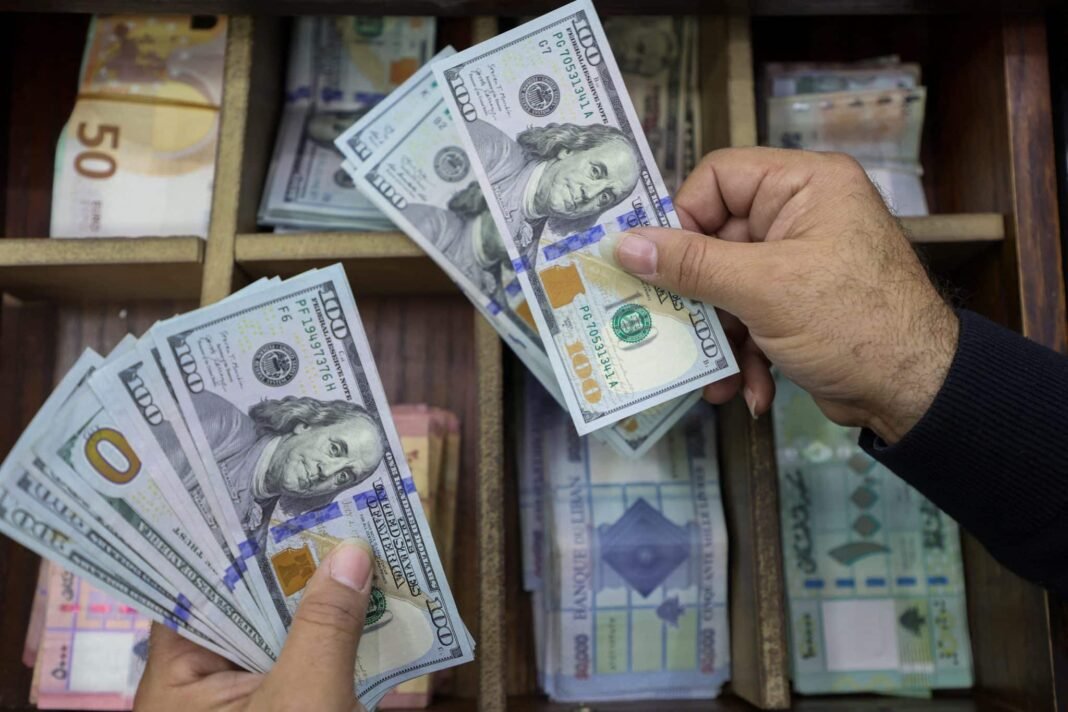
Remittances September figures from the State Bank of Pakistan put workers’ inflows at $3.59 billion, down 1.9 percent from $3.66 billion in August but up 12.7 percent from $3.18 billion a year earlier. The pace cooled compared to August, though the monthly run rate remains well above last year’s levels.
Inflows in July-September reached $10.88 billion, 14 percent higher than $9.54 billion in the same quarter of FY26, keeping the quarter ahead of last year’s record pace. July, August and September all cleared $3.5 billion, at $3.63 billion, $3.66 billion and $3.59 billion respectively, with a monthly average of $3.625 billion against the FY26 full-year average of $3.465 billion.
The July-September run rate points to inflows of about $43.5 billion in financial year 2026-27, against $41.6 billion in FY26 and the SBP’s projection of around $44 billion. Topline Securities predicted remittances for FY27 could clock in at $44.7 billion.
Remittances September: Gulf leads, Europe softens
Saudi Arabia was the only large corridor to rise from August, sending $899.1 million, up 2.9 percent month on month and 19.7 percent from $751 million a year earlier. It remained the largest single source.
Inflows from other GCC countries rose 4.7 percent to $342.1 million, with Oman, Qatar and Kuwait all increasing. The UAE was almost flat at $748.5 million, down 0.2 percent from August and up 10.5 percent year on year.
September’s softness sat in Europe rather than the Gulf. Remittances from the UK fell 8.6 percent to $515.1 million. EU countries fell 9.7 percent to $447.7 million, led by Italy, down from $152.9 million to $133.5 million, and Greece, down from $56.8 million to $48.6 million.
Saudi Arabia and the UAE together accounted for 46 percent of September remittances, and with other GCC countries the Gulf share stood at 55 percent.
Growth is in the West
Over the quarter, remittances from the UK rose 19.4 percent to $1.63 billion, the fastest among the large corridors. Inflows from the US rose 15.5 percent to $931 million; September inflows from the US were $305.9 million, down 0.9 percent from August and up 13.7 percent year on year.
Australia rose 9.5 percent in the quarter and Canada 11.7 percent, while the EU was slower, up 9.8 percent to $1.41 billion. France was the weak spot, down 4.5 percent. Smaller corridors grew faster, with Ireland up 24.4 percent, Japan 42.6 percent and South Korea 21.9 percent.
The UK, EU, US, Canada and Australia accounted for about 40 percent of September remittances. Experts say the policy question is skilled migration and student-to-worker routes, not only Gulf labour exports.
At a $3.6 billion monthly pace, remittances continue to do the heavy lifting on the current account, with the SBP crediting sustained inflows for the reserves rebuild and a narrower external gap.
Rupee and gold
The Pakistani rupee extended its marginal gains against the US dollar in the inter-bank market on Friday, closing at 277.00 after appreciating by one paisa. In the previous session, the local currency had settled at 277.01.
Gold prices in Pakistan rose, tracking gains in the international market, with the price of one tola increasing by Rs5,900 to settle at Rs440,936, according to the All-Pakistan Gems and Jewellers Sarafa Association.
Frequently asked questions
How much did Pakistan receive in remittances in September?
$3.59 billion, down 1.9 percent from August but up 12.7 percent from a year earlier, according to SBP data.
Which country sent the most?
Saudi Arabia, at $899.1 million, the only large corridor to grow from August. Saudi Arabia and the UAE together made up 46 percent of the month’s inflows.
What is the full-year outlook?
The July-September pace points to about $43.5 billion in FY27, close to the SBP’s projection of around $44 billion, with Topline Securities forecasting $44.7 billion.