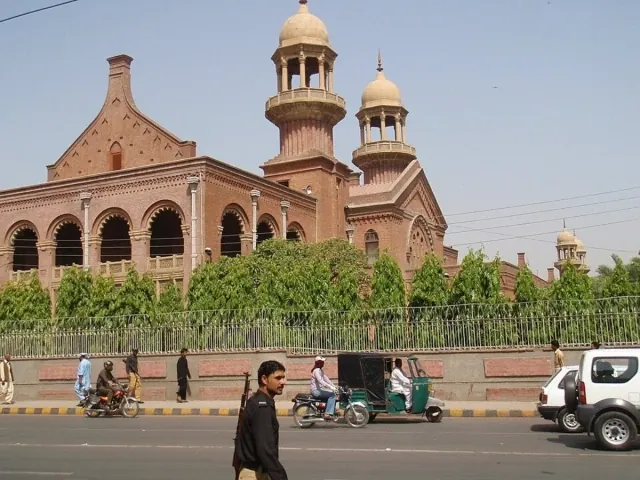
The Lahore High Court issued two significant education rulings on Friday, declaring the Pakistan Medical and Dental Council’s MDCAT paper retrieval policy illegal while extending protection for Afghan medical students facing expulsion from Punjab’s medical colleges.
In the first ruling, Justice Ahsan Raza Kazmi declared the PMDC’s decision to collect question papers from candidates after the recent Medical and Dental College Admission Test illegal and unconstitutional. The court directed the council to upload the papers to its official application immediately so that all candidates could access and review them.
MDCAT paper retrieval: what the court decided
The petitions had been filed by two candidates, Anabia Tahir and Rehan Shahid. Their counsel, Barrister Imran Afrasiab, argued that candidates should be allowed to retain question papers after completing an examination, describing it as the established practice worldwide. He contended that students were entitled to their question papers after examinations, including those conducted by schools, colleges and universities, and that examination authorities could not forcibly retrieve them once candidates had been allowed to use them.
Afrasiab said the PMDC had introduced the policy unilaterally this year, requiring candidates to return their question papers along with their answer sheets immediately after the examination. He challenged the move as illegal.
The federal government’s counsel, Malik Zaheer Arshad, partially supported the petitioners’ position, while the PMDC’s lawyer defended the council’s decision and urged the court to dismiss the petitions. After hearing the arguments, the court declared the practice illegal, ordered the papers to be uploaded to the official application without delay, and directed immediate implementation of its decision.
The ruling matters for thousands of candidates who sat the MDCAT this year. Feature Pakistan has followed the examination cycle through its MDCAT 2026 coverage, and the court’s order now gives every candidate the right to see and study the paper they attempted.
Afghan medical students win extended stay
In the second ruling, Justice Khalid Ishaq extended the court’s interim order restraining all medical colleges in Punjab from expelling Afghan students under a controversial PMDC notification. The judge was hearing petitions filed by more than 30 Afghan students, including Syed Mubeenul Fatti, challenging the PMDC’s deportation notifications.
The petitioners submitted that they had secured admission to medical colleges under the Afghan refugees’ quota and had gained admission on merit. They challenged notifications issued on July 31 and September 1, asking the court to declare them illegal and set them aside. On September 1, the PMDC had ordered medical colleges in Punjab to ask Afghan medical and dental students to complete formalities for their return to Afghanistan, while suspending future admissions, transfers and migration involving Afghan nationals. The LHC had on September 11 restrained the colleges from expelling the students.
During Friday’s hearing, the PMDC’s counsel sought an adjournment to submit a written reply. The court accepted the request, postponed further proceedings to a date to be fixed by the office, and extended the interim relief. Separately, the PMDC’s counsel told the court that the Prime Minister’s Office had issued a direction to the relevant authorities to allow the Afghan students to continue their studies, subject to valid visa and immigration requirements.
Why both rulings matter together
The two orders, issued on the same day by the same court, both push back against PMDC directives affecting students. One restores a transparency right for local candidates; the other preserves the academic future of Afghan students admitted on merit. Both will now turn on what the PMDC does next: uploading the MDCAT papers, and filing its reply on the Afghan students’ case.
The rulings land in a week of heightened attention on education in Punjab, from the tightened safety rules for private schools in Sindh to the UN visit to the Peshawar school collapse site. For the Afghan students, the case also sits against the wider state of Pakistan-Afghanistan ties, with Islamabad having ruled out unconditional talks with Kabul this week.
Original reporting: The Express Tribune. Additional reporting: Dawn.
Frequently asked questions
What did the LHC rule about MDCAT question papers?
The court declared the PMDC’s policy of retrieving question papers from candidates after the MDCAT illegal and unconstitutional, and ordered the papers to be uploaded to the council’s official application immediately.
Who challenged the MDCAT paper retrieval policy?
Two candidates, Anabia Tahir and Rehan Shahid, filed the petitions through their counsel Barrister Imran Afrasiab. The federal government’s counsel partially supported their position.
What is the status of Afghan medical students in Punjab?
The LHC has extended its interim order stopping medical colleges from expelling them. The PMDC has been given more time to file its reply, and the Prime Minister’s Office has directed that the students be allowed to continue their studies subject to valid visa and immigration requirements.