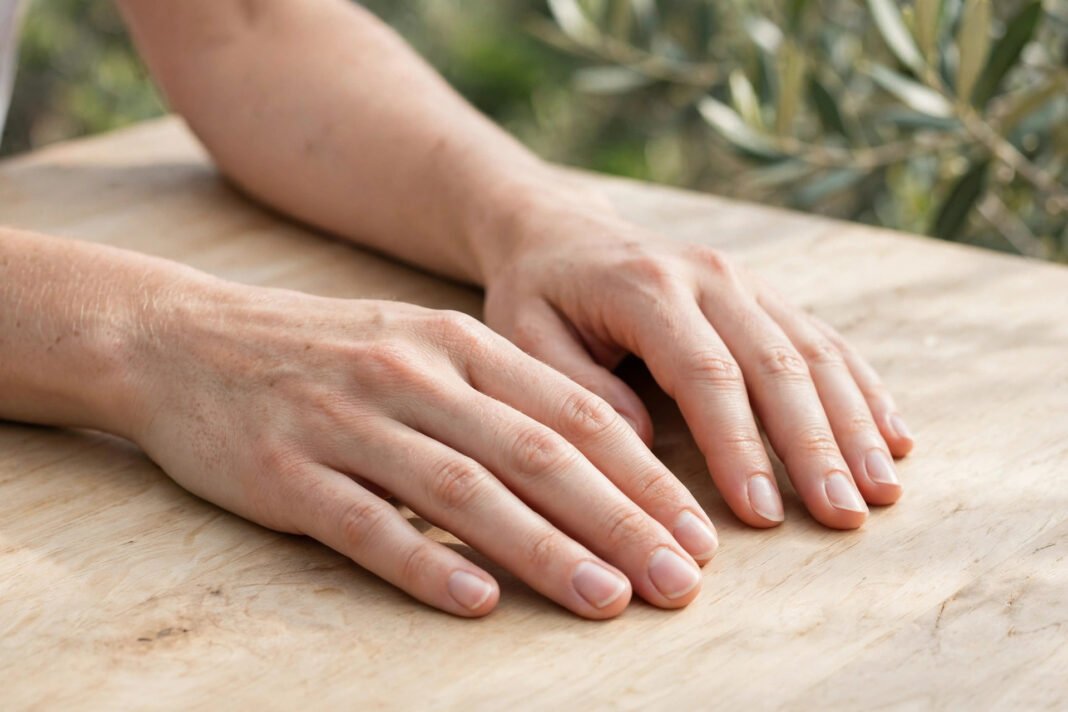
White spots on your fingernails can be surprising the first time you notice them. One day your nails look normal, and the next there is a small white dot sitting in the middle of one. For most people, white spots on fingernails are harmless and fade on their own as the nail grows out. They are one of the most common nail changes doctors see, and they rarely point to anything serious.
That said, nails do change for many reasons, from a bump you barely remember to an infection or a reaction to a product you use every day. Understanding what causes white spots on fingernails helps you tell the difference between a cosmetic quirk that needs no attention and a sign that is worth showing your doctor. If you notice new, spreading, or changing nail spots — especially with pain, thickening, or other health changes — it is sensible to get a professional opinion rather than guessing.
What White Spots on Fingernails Actually Are
The medical term for white spots on fingernails is leukonychia, which simply means white nail. Your fingernails are made of keratin, the same tough protein that forms your hair and the outer layer of your skin. Nails grow from a protected area under the cuticle called the nail matrix, where new cells are produced, flatten, and harden as they are pushed forward. When something briefly interrupts that orderly process — a knock, an infection, a reaction — the keratin does not pack together perfectly, and tiny air pockets or areas of incomplete keratinization form. Those areas scatter light differently, which is why they look white against the pink of the nail bed beneath.
True leukonychia can appear in several forms. The most common is true leukonychia, where the white marks are in the nail plate itself and grow out with the nail. There is also apparent leukonychia, where the white appearance comes from changes in the nail bed underneath rather than the nail, and these marks do not grow out in the same way. Knowing which kind you are looking at helps explain why some spots move toward the fingertip over weeks while others stay put. Most of the time, what you are seeing is true leukonychia from a minor, long-forgotten bump.
Common Causes of White Spots on Fingernails
Minor injury to the nail or cuticle
The single most common cause of white spots on fingernails is small trauma to the nail matrix — the growing zone hidden under the cuticle. You do not need a dramatic accident. Catching your finger in a drawer, banging it on a door handle, aggressive manicure work, biting your nails, or even typing with heavy pressure can disturb the matrix enough to leave a mark. Because nails grow slowly (a fingernail takes roughly six months to grow from base to tip), the white spot often appears weeks after the injury, by which time you have completely forgotten the bump that caused it. This delay is why so many people say the spots appeared “out of nowhere.”
Spots from minor injury have a characteristic pattern: they sit in the nail plate, they are usually on one or two nails rather than all ten, and they migrate toward the free edge as the nail grows. You cannot speed them up, but they reliably disappear once they reach the fingertip and are trimmed away. If this pattern matches what you are seeing, there is generally nothing to do except protect your cuticles and wait.
Fungal nail infection
Fungal infections of the nail, sometimes called white superficial onychomycosis, can start as small white spots or patches on the surface of the nail. Unlike spots from injury, these patches often feel slightly powdery or chalky and can spread slowly across the nail over months. The nail may become rougher in texture, and the white areas can merge into larger patches. Fungal infections thrive in warm, moist conditions, so they are more common on toenails, but they can appear on fingernails too, particularly if you frequently have wet hands or work in damp environments.
The key difference from injury spots is behavior: fungal white spots do not simply grow out and disappear. They persist, may spread to neighboring nails, and sometimes the nail thickens or becomes brittle around them. A pharmacist can advise on over-the-counter antifungal treatments, but fingernail infections are often more stubborn than they look, so it is worth seeing your doctor if the patches are spreading or not improving, since prescription treatment may be needed.
Allergic or irritant reactions
Reactions to nail products are an underappreciated cause of white spots on fingernails. Nail polish, hardeners, artificial nails, gel products, and even the acetone-based removers used to take polish off can irritate the nail surface. Some people develop white marks after wearing nail polish for long periods without breaks, or after aggressive buffing of the nail plate before polish application. The white appearance can come from surface dehydration or a mild reaction in the upper layers of the nail.
If your spots appeared shortly after a manicure, a new polish, or a change in nail products, try giving your nails a break for a few weeks and see whether the spots grow out. Gentle care — keeping nails trimmed, avoiding harsh scraping of the cuticle, and moisturizing the nail and surrounding skin — helps the nail plate recover. If the reaction comes with redness, swelling, or itching around the nail, that suggests contact dermatitis, and a doctor or dermatologist can help identify the trigger ingredient.
The vitamin and mineral deficiency myth
One of the most persistent myths about white spots on fingernails is that they signal a calcium deficiency — or, in newer versions of the claim, a zinc deficiency. This idea is widespread online but is not supported by medical evidence. Calcium is not a significant component of nails, and there is no established link between dietary calcium levels and white spots. Zinc plays a role in many body processes, and severe zinc deficiency can cause nail changes, but it does not typically show up as isolated white spots, and true zinc deficiency is uncommon in people eating a varied diet.
That does not mean nutrition never matters for nails. Severe protein deficiency or certain systemic illnesses can change nail appearance, but those situations come with obvious other symptoms — significant weight loss, fatigue, or illness — not a lone white dot on one nail. For the average healthy person, white spots are not a signal to start taking supplements. If your diet is very restricted, or you have digestive conditions that affect nutrient absorption, that is a conversation for your doctor, who can check your levels properly rather than guessing from your nails.
Certain medications
A number of medications can cause white spots on fingernails as a side effect. Chemotherapy drugs are the best known, because they disrupt rapidly growing cells — including those in the nail matrix — and can produce white bands or spots. Some antibiotics, particularly the sulfonamide class, have also been associated with nail changes, as have certain drugs used for immune conditions. In these cases, the spots often appear on multiple nails at once and in a similar position on each nail, reflecting a single episode of matrix disruption while the drug was at work.
If you started a new medication and white spots appeared on several nails around the same time, mention it to your doctor or pharmacist. They can tell you whether nail changes are a known effect of your medicine and whether anything needs to be done. Never stop a prescribed medication because of a cosmetic nail change without discussing it first — the benefit of the treatment almost always outweighs a harmless mark on a nail.
Psoriasis and other skin conditions
Psoriasis, the chronic skin condition that causes scaly patches, can affect the nails in a large share of people who have it. Nail psoriasis can produce small pits, but it can also cause white or yellowish spots and discoloration within the nail. Unlike injury spots, these tend to recur and may come with other nail changes such as thickening, ridging, or the nail lifting from the bed. Eczema around the fingertips can also disturb the nail matrix enough to leave marks.
If you already have psoriasis or eczema and notice new white spots on your fingernails, they may be part of the same condition. Nail involvement in psoriasis is common enough that dermatologists often ask about it specifically, and treating the underlying skin condition usually helps the nails too. If you do not have a skin diagnosis but notice recurring spots along with flaking skin, redness, or joint aches, that combination deserves a medical look.
Habitual picking, biting, or cuticle damage
Habits like nail biting, picking at cuticles, pushing cuticles back aggressively, or using nails as tools to pry things open can repeatedly injure the matrix and produce ongoing white spots. This is particularly common in children and teenagers, where biting is frequent and spots appear in crops. Because the injury is repeated, new spots keep appearing even as old ones grow out, which can make it look like a persistent problem when it is really a persistent habit.
Breaking the habit often resolves the issue within a few nail-growth cycles. Keeping nails short and filed smooth removes the temptation to bite or pick, and moisturizing the cuticles reduces the ragged edges that invite picking. For children, gentle redirection rather than punishment works best, since biting is often a response to boredom or anxiety rather than defiance.
Less Common but Important Causes
Beyond the everyday causes, there are a few less common conditions that can produce white spots on fingernails and deserve awareness rather than alarm. Heavy metal exposure, particularly arsenic, can classically cause white transverse bands across the nails, though this is rare outside of specific occupational or environmental exposures. Severe systemic illness — such as kidney disease or liver disease — can change the overall appearance of the nails, sometimes producing a half-white, half-pink pattern known as Terry’s nails, though again this comes with serious illness, not as an isolated finding in a healthy person.
Hereditary forms of leukonychia exist, in which white nails run in families from birth or early childhood, but these are uncommon and usually obvious from the family history. Punctate leukonychia — the small-dot form most people ask about — is only rarely tied to anything systemic. The reassuring pattern holds: isolated white spots in an otherwise healthy person are almost never a sign of internal disease. What matters is the context — how many nails are involved, whether the spots move with growth, and what else is happening with your health.
When to See a Doctor About White Spots on Fingernails
Most white spots on fingernails need no medical attention at all. But certain patterns are worth bringing to your doctor, dermatologist, or a pharmacist for an opinion. Consider getting checked if you notice any of the following:
- White spots or patches are spreading across the nail or to multiple nails over weeks or months.
- The nail is also thickening, crumbling, lifting from the nail bed, or changing color to yellow or brown.
- The spots appeared on many nails at once, in the same position, after starting a new medication.
- There is pain, swelling, redness, or pus around the nail.
- The white marks do not move toward the fingertip as the nail grows over several months.
- You have psoriasis, eczema, or another skin condition and your nails are newly affected.
- The spots come with other unexplained symptoms such as fatigue, weight loss, or digestive problems.
- A child has persistent nail changes along with poor growth or frequent illness.
None of these automatically means something serious is wrong — fungal infections and psoriasis, for example, are common and treatable. The point of the visit is simply to get an accurate identification so you treat the right thing, especially since fungal infections and injury spots can look similar at first glance.
What Helps, and What a Doctor May Check
For ordinary injury-related spots, the best treatment is patience and protection. Avoid picking at your cuticles, wear gloves for heavy manual work or when using harsh cleaning products, and keep nails trimmed so spots grow out and are clipped away sooner. Moisturizing your hands and nails regularly keeps the nail plate flexible and less prone to surface damage. If you wear nail polish, give your nails polish-free breaks between manicures, and avoid aggressive buffing or cuticle cutting.
If a fungal infection is suspected, a pharmacist can suggest over-the-counter antifungal options and advise on how long to use them — nail treatments typically need weeks of consistent use because nails grow slowly. Your doctor may take a small nail clipping or scraping to confirm a fungus under the microscope before prescribing anything stronger, since several conditions can mimic fungal infection and the prescription treatments work only on actual fungus. Blood tests are not usually needed for isolated white spots, but if your doctor suspects a systemic cause, they may check general markers of health or review your medications. No supplements are needed for ordinary spots, and there is no cream or home remedy that makes them fade faster than natural nail growth.
The Bottom Line
White spots on fingernails are, in the great majority of cases, nothing more than souvenirs of small bumps and scrapes you have long forgotten — harmless marks that grow out on their own within a few months. Knowing the common causes of white spots on fingernails helps you spot the exceptions: spreading patches that suggest fungus, reactions to nail products, or changes tied to medications and skin conditions. When in doubt, a quick look from your doctor or pharmacist settles the question, and most of the time the answer will be reassuringly simple.