Karachi’s SMBB Trauma Centre treated over 328,000 road accident victims in a decade
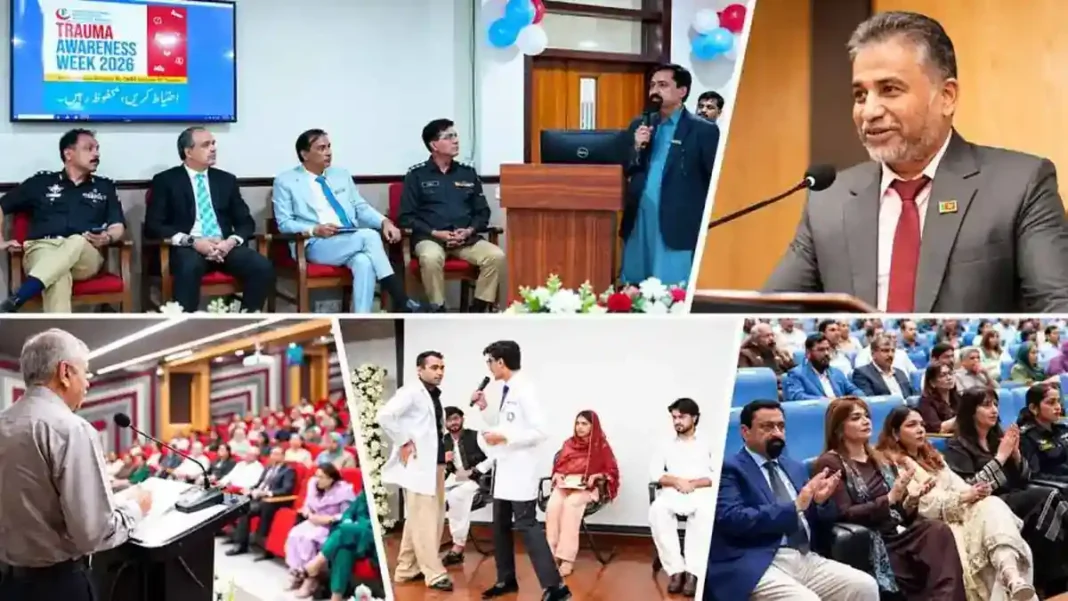
Ten years of Karachi’s road accidents have passed through a single hospital’s doors. Indeed, the numbers are stark. The Shaheed Mohtarma Benazir Bhutto (SMBB) Institute of Trauma recorded 328,841 road traffic injury cases in a decade. Its head shared the figures at a closing ceremony. The event marked Trauma Awareness Week 2026 and World Trauma Day. Specifically, it was held at Dow University of Health Sciences on Saturday.
In fact, the Karachi road accidents decade figure means roughly 90 crash victims a day, every day, for ten years.
A decade in numbers
The figures came from Dr Muhammad Sabir Memon. He heads the institute. He said the emergency department had handled 1,448,624 patient visits over ten years. Of these, 328,841 were road traffic accident cases. In addition, 5,045 patients were brought to the institute dead. Meanwhile, 9,634 firearm injury cases were reported over the same period.
“These figures underscore the devastating human impact of accidents, violence and other serious injuries, as well as the critical importance of timely emergency medical intervention,” he noted.
In other words, about one in every four emergency visits to the trauma centre was a road crash victim. In fact, the brought-dead figure alone averages more than one person a day.
Karachi road accidents decade: prevention is the prescription
Speakers at the event agreed on one point. Indeed, timely medical care saves lives. However, stopping crashes before they happen matters just as much. Specifically, they listed the basics. These include obeying traffic laws and keeping speeds down. Drivers should put the mobile phone away. They should also wear helmets and seat belts. In short, they must drive responsibly.
Dr Memon listed the pillars of trauma care. These are modern facilities and rapid emergency response. Moreover, they include skilled professionals and coordinated teamwork. In addition, sound administration and timely patient management matter.
“Trauma care depends not only on modern medical facilities but also on rapid emergency response, skilled healthcare professionals, coordinated teamwork, effective administrative systems and timely patient management,” he said, describing how the institute had improved its emergency services and patient care since 2016.
The numbers land at a time when Karachi’s traffic system is visibly under strain. For example, large parts of the city’s traffic signals went dark after cable thefts earlier this month. Meanwhile, the courts are weighing whether traffic wardens should move into a separate cadre. The city’s record on building fire safety is similarly grim. As a result, this suggests prevention is a weak spot well beyond the roads.
Who attended the ceremony
The closing ceremony took place at the Muin Auditorium of Dow University of Health Sciences. Specifically, it was held on October 17. Among those present was Sindh Inspector General of Police Javed Alam Odho. MNA Dr Nafisa Shah also attended. In addition, the institute’s board of governors was there, along with department heads and medical specialists.
Participants called for a joint effort to cut road deaths. For example, it must bring together the government and health institutions. In addition, traffic police and rescue services must join in. Educational institutions, the media and the public are also needed. Moreover, they said awareness campaigns were essential. They reduce avoidable loss of life and disability.
How many road accident cases did the SMBB Trauma Centre record in ten years?
The institute recorded 328,841 road traffic injury cases over a decade, out of 1,448,624 total emergency department visits.
How many patients were brought dead to the institute?
A total of 5,045 patients were brought to the institute dead over the same ten-year period.
What did the trauma centre’s head say about prevention?
Dr Muhammad Sabir Memon stressed prevention. In fact, he said preventing accidents was as important as treating victims. He urged the public to follow traffic laws. People should avoid speeding and phone use while driving. They should also wear helmets and seat belts.
When was Trauma Awareness Week 2026 concluded?
The closing ceremony covered two events. These were Trauma Awareness Week 2026 and World Trauma Day. It was held at Dow University of Health Sciences, Karachi. Finally, the date was Saturday, October 17, 2026.