- Suggested slug: imf-flags-unfair-tax-system-pakistan
- Category: Business News
- Focus keyphrase: IMF Pakistan tax system
- SEO title: IMF Pakistan Tax System ‘Unfair’, Salaried Squeezed
- Meta description: Jihad Azour says the IMF Pakistan tax system review found unfairness as salaried workers paid Rs629b while realty and farm sectors stayed untaxed.
- Tags: IMF, Jihad Azour, Pakistan tax system, salaried class, FBR, tax reform, Extended Fund Facility, real estate tax
- Original element: own data point + local angle — FBR figures (salaried Rs391b to Rs629b, realty tax down 38%, 137 retailers vs 1m target) woven with a link to our earlier workshop report; explainer on why withholding leaves salaried workers unable to escape the burden.
- Source: The Express Tribune https://tribune.com.pk/story/2635984/imf-flags-unfair-tax-system (published 2026-10-21)
- Story date: Wednesday, 2026-10-21
- Image note: IMF emblem beside the Pakistan flag; real photo; caption must carry “Image: The Express Tribune”
IMF Flags Pakistan’s ‘Unfair’ Tax System as Salaried Class Pays Rs629 Billion
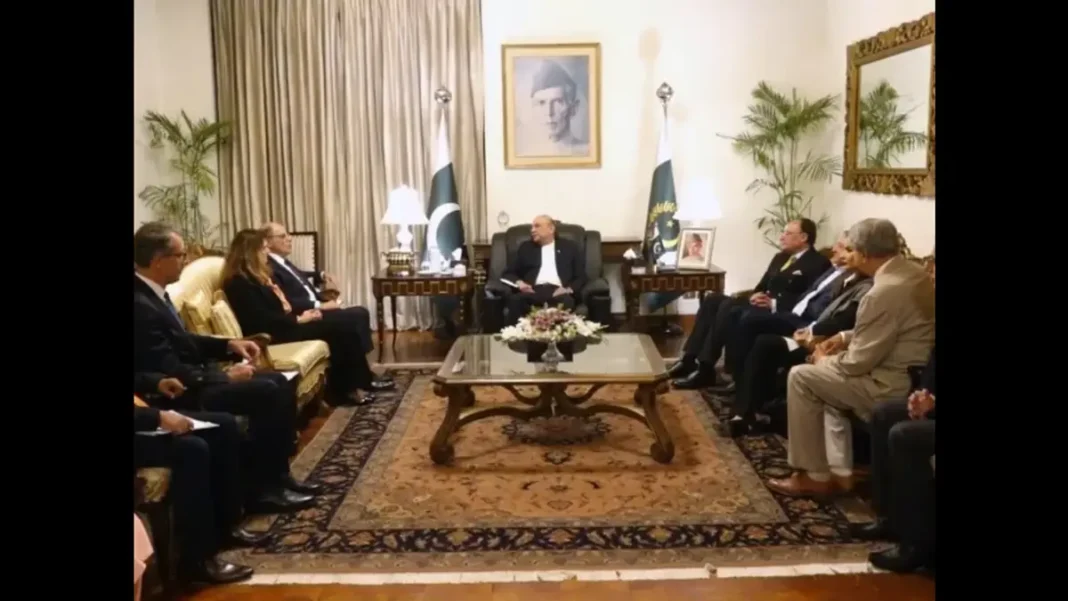
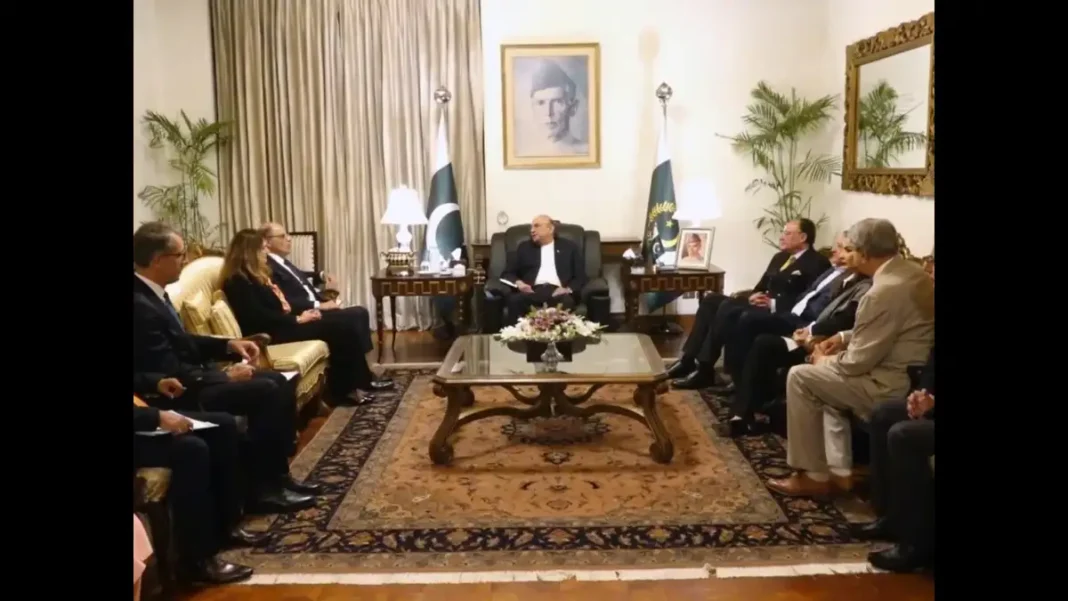
ISLAMABAD: The IMF Pakistan tax system debate sharpened on Tuesday as the Fund’s regional director, Jihad Azour, said the country’s tax structure had grown more unfair during the first two years of the IMF programme, urging a fairer and more neutral system to improve compliance and help productive firms expand.
Azour was opening a two-day conference in Islamabad on reforming Pakistan’s tax system.
“A fairer tax system can encourage compliance, better services can strengthen trust, and a more neutral structure can let productive firms expand rather than remain small or informal,” he said.
The workshop, titled “Reforms for a Modern and Growth-Friendly Tax System in Pakistan”, runs October 20 and 21, as our earlier report covered. It brings together government officials, IMF and World Bank representatives, tax experts and private-sector leaders.
IMF Pakistan tax system: what it means for salaried workers
The strongest charge in Azour’s speech was the gap between his call for fairness and ground reality. During the first two years of the IMF programme, the tax burden on the salaried class rose sharply while powerful sectors stayed largely outside the net.
Before the programme began, salaried workers contributed Rs391 billion a year in income tax. Within two fiscal years, that figure climbed to Rs629 billion as of June 2026, according to Federal Board of Revenue data, the Tribune reported.
By contrast, real estate income tax collection dived 38 per cent to Rs35.2 billion in the first three months of the current fiscal year. That is Rs22 billion less than last year, after the government halved realty income tax rates with IMF endorsement.
The sector paid Rs200 billion in fiscal 2024 and Rs236 billion last year, but collections could now fall below Rs150 billion. The pattern is familiar: the government has also pushed back against IMF tax demands in the auto sector.
Retailers remain almost entirely outside the tax net. An IMF-backed scheme for traders, which allows cash dealing, drew only 137 new retailers by October 15 against an annual target of one million.
Agriculture fared little better: Punjab and Sindh together collected Rs5.1 billion in agriculture income tax by June under the new regime. Sindh collected only Rs1.1 billion against a Rs2 billion target, while Punjab managed Rs4 billion against Rs10.5 billion.
Why the burden falls on salary earners
The reason is structural. Salaried workers pay tax through withholding at source, so they cannot under-report income or stay out of the system. Traders, landlords and large farmers face far weaker enforcement, which is why broadening the base has stalled. With enforcement this uneven, the government keeps reaching for new levies, as the Rs188bn car levy showed. The same households are also absorbing higher fuel prices, which tightens the squeeze on take-home pay.
“When the tax system is simpler, more neutral and predictable, it lowers the cost of formality and gives businesses greater confidence to invest and grow,” he said.
Stabilisation debate continues
Azour’s speech landed in the middle of a debate at the highest level of government over whether the Federal Board of Revenue can deliver reform. The prime minister has shelved a plan to abolish the FBR, but the discussion has exposed the failure to widen the net.
Planning Minister Ahsan Iqbal recently called Pakistan’s economic stabilisation “stunted and borrowed” in a letter to the prime minister.
Azour said stabilisation gains were hard won, and credibility depended on meeting fiscal and external objectives while anchoring reforms in institutions.
He said exposure to higher energy and food prices, trade disruptions and tighter global financing made protecting stability while supporting recovery even more important. “Moving beyond the cycles of adjustment toward a more competitive, investment-friendly and inclusive economy” was the IMF-backed reform agenda under the Extended Fund Facility, he added.
What did the IMF say about Pakistan’s tax system?
IMF regional director Jihad Azour said Pakistan’s tax system had grown more unfair under the IMF programme and urged a fairer, more neutral structure.
How much tax does Pakistan’s salaried class pay?
Salaried workers paid Rs391 billion a year before the IMF programme, rising to Rs629 billion by June 2026, while retailers, agriculture and real estate paid almost nothing in comparison.
Why is Pakistan’s tax system considered unfair?
Salaried workers pay through withholding and cannot avoid tax, while retailers, landlords and large farmers face weak enforcement. Realty tax fell 38 per cent after rate cuts, and only 137 retailers joined the documentation scheme against a target of one million.