Zardari Meets IMF Delegation, Commits Pakistan to Fiscal Reforms
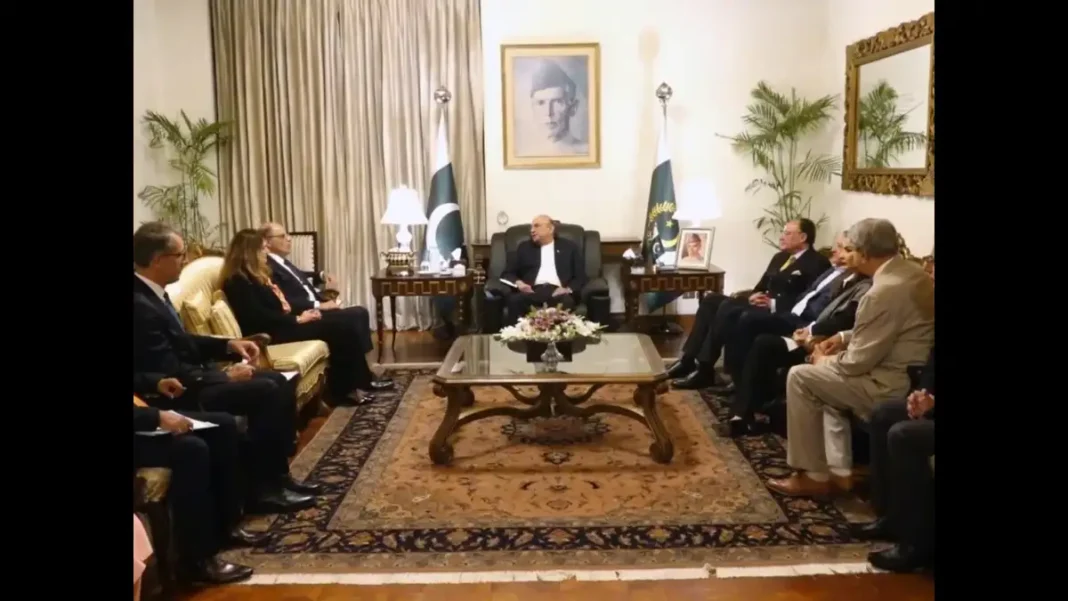
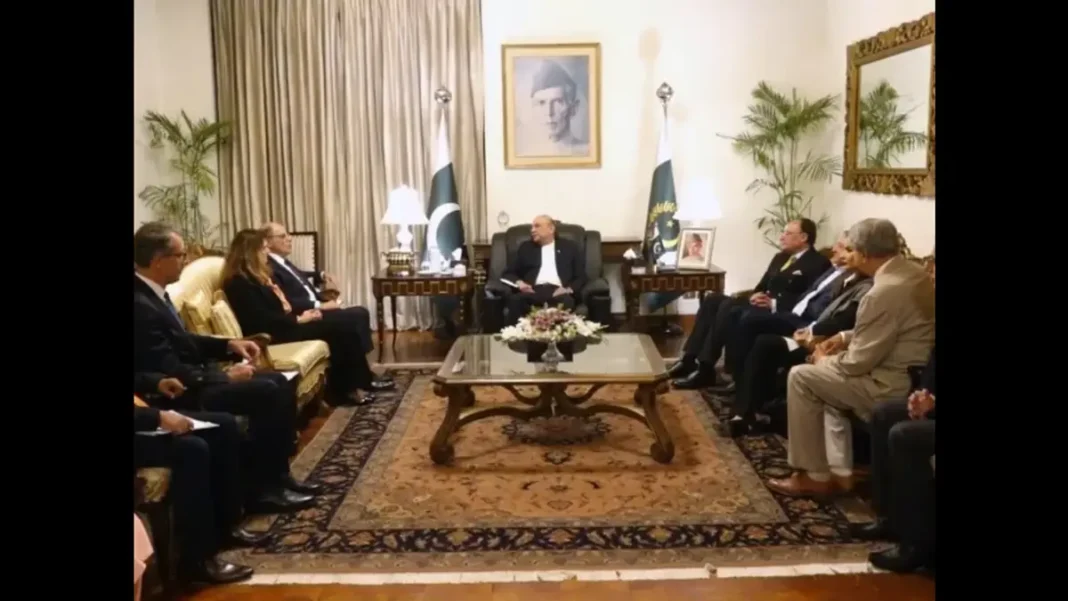
ISLAMABAD: President Asif Ali Zardari met a visiting International Monetary Fund (IMF) delegation at Aiwan-e-Sadr on Tuesday evening and reaffirmed Pakistan’s commitment to fiscal sustainability, energy sector reforms, privatisation and social protection, according to the President’s Secretariat.
The delegation was led by Jihad Azour, Director of the IMF’s Middle East and Central Asia Department, and included Iva Petrova, the IMF’s Mission Chief for Pakistan, and Mahir Binici, the Fund’s Resident Representative for Pakistan. Finance Minister Muhammad Aurangzeb, Senator Sherry Rehman, Senator Saleem Mandviwalla, former finance minister Syed Naveed Qamar and the finance secretary also attended, the Express Tribune reported.
Zardari said the government was pursuing inclusive and green economic growth as Pakistan moved from stabilisation towards recovery. He appreciated the IMF’s support for the Pakistan IMF fiscal reforms programme under the Extended Fund Facility (EFF) and the Resilience and Sustainability Facility (RSF).
What the president pledged to the IMF
Zardari told the delegation that Pakistan remained committed to fiscal sustainability, energy sector reforms and privatisation, while protecting social protection spending. Efforts were underway to expand tax documentation, digitalise revenue collection and curb tax evasion.
He also reiterated the government’s commitment to revenue mobilisation, tax administration and public sector reform. The programme enjoys the support of all political stakeholders, with provincial governments contributing towards the agreed targets.
The numbers behind the claims
Zardari cited an economy of $452.1 billion in fiscal year 2025-26, with real GDP growth accelerating to 3.7% from 3.2% the year before. The fiscal deficit had fallen to 2.6% of GDP, he said, with a primary surplus for the third consecutive year.
These are the same figures Feature Pakistan reported on October 14, when Finance Minister Aurangzeb told the MENAP meeting in Bangkok that Pakistan’s fiscal deficit had fallen to a 22-year low, alongside the 3.7% growth forecast and a third straight primary surplus. The Aiwan-e-Sadr meeting amounts to the presidency’s formal endorsement of data already on the public record.
Fiscal operations data for the year ended June 30, 2026 showed a statistical discrepancy of Rs853 billion between federal and provincial accounts, and debt servicing at Rs6.9 trillion remained by far the largest expenditure item.
EFF and RSF reviews concluded
Referring to the conclusion of the fourth review of the EFF and the third review of the RSF, along with the staff-level agreement, the president expressed confidence in the country’s continued progress towards “economic recovery and stability”.
Pakistan remains engaged with the IMF under a $7 billion EFF and a $1.4 billion RSF. Earlier this month, Pakistan and the Fund reached a staff-level agreement following the two reviews, Pakistan Today reported.
The agreement is subject to approval by the IMF Executive Board. Once approved, Pakistan will have access to about $1 billion (SDR 760 million) under the EFF and about $210 million (SDR 154 million) under the RSF, bringing total disbursements under the two arrangements to about $5.7 billion. Details of the Fund’s lending to Pakistan show how central the programme has become to the country’s external financing. The finance minister has meanwhile pushed a gas deregulation plan as part of energy reforms, argued for targeted, budget-neutral subsidies to protect low-income households, and led Islamabad’s chairmanship push at international forums.
Azour acknowledged Pakistan’s engagement under the ongoing programme and stressed the need to sustain reforms to strengthen macroeconomic stability, maintain fiscal discipline and support sustainable growth. Sustained reform, rather than one-off fiscal numbers, remains the test the IMF will apply at the next reviews.
Frequently asked questions
Who led the IMF delegation that met President Zardari?
Jihad Azour, Director of the IMF’s Middle East and Central Asia Department, led the delegation. It also included IMF Mission Chief for Pakistan Iva Petrova and Resident Representative Mahir Binici.
What are the EFF and RSF arrangements with the IMF?
Pakistan is engaged with the IMF under a $7 billion Extended Fund Facility and a $1.4 billion Resilience and Sustainability Facility. The fourth EFF review and third RSF review have concluded with a staff-level agreement, pending IMF Executive Board approval.
What funding follows the staff-level agreement?
Once the IMF Executive Board approves the agreement, Pakistan will have access to about $1 billion under the EFF and about $210 million under the RSF, bringing total disbursements under the two arrangements to about $5.7 billion.
What economic data did Zardari cite to the IMF?
The president cited an economy of $452.1 billion in FY2025-26, GDP growth of 3.7%, a fiscal deficit of 2.6% of GDP, and a third consecutive primary surplus, matching the finance minister’s October 14 figures.