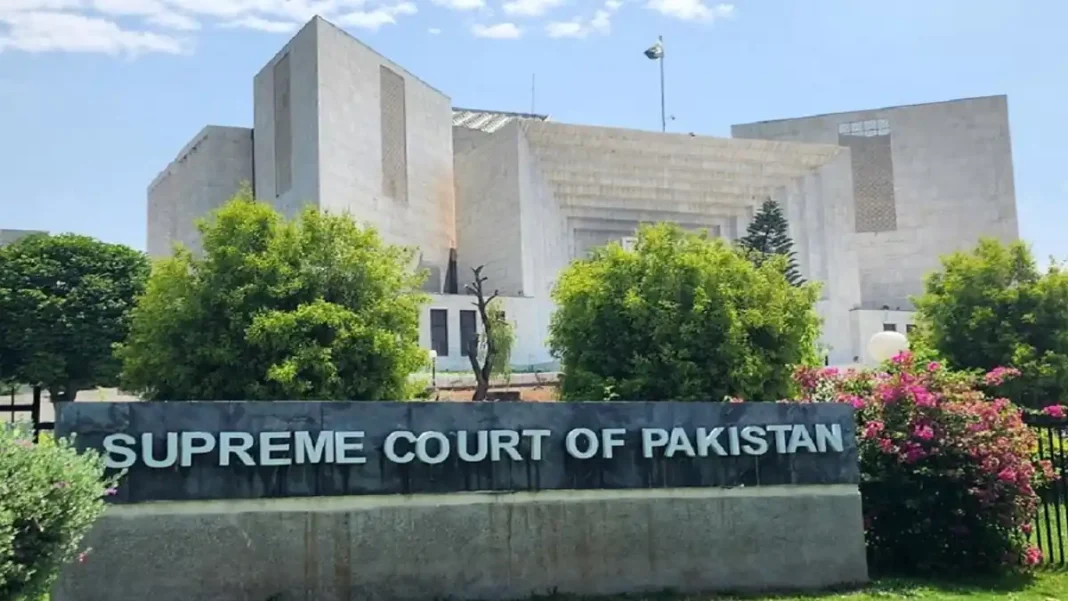
Article 4 of the Constitution of Pakistan is often described as the due-process anchor of the entire constitutional scheme. In a single sweeping guarantee, it declares that no action harmful to a person’s life, liberty, body, reputation or property can be taken except in accordance with law. For citizens and residents alike, it is the provision that turns the rule of law from a slogan into an enforceable right.
Quick answer: Article 4 is Pakistan’s due-process guarantee: no action harming your life, liberty, body, reputation or property can be taken except in accordance with law.
In this guide
- The Text of Article 4
- Who Does Article 4 Protect?
- What Article 4 Forbids
- Article 4 as the Due-Process Anchor
- How Citizens Can Rely on Article 4
- Frequently Asked Questions
- What does Article 4 of the Constitution of Pakistan guarantee?
- Does Article 4 protect non-citizens in Pakistan?
- Why is Article 4 called the due-process article?
- How is Article 4 enforced?
Placed at the very start of the Fundamental Rights chapter in the Constitution of Pakistan 1973, Article 4 sets the tone for everything that follows. This guide explains its text, its reach, and why lawyers call it the foundation stone of constitutional protection in Pakistan.
The Text of Article 4
Article 4 is titled “Right of individuals to be dealt with in accordance with law.” It provides:
(1) To enjoy the protection of law and to be treated in accordance with law is the inalienable right of every citizen, wherever he may be, and of every other person for the time being within Pakistan.
(2) In particular—
(a) no action detrimental to the life, liberty, body, reputation or property of any person shall be taken except in accordance with law;
(b) no person shall be prevented from or be hindered in doing that which is not prohibited or compelled to do that which is not required to do by law.
Two features of this text deserve emphasis: who it protects, and what it forbids.
Who Does Article 4 Protect?
Clause (1) is deliberately wide. It protects every citizen, wherever he may be — so a Pakistani abroad carries this right with them — and every other person for the time being within Pakistan, which covers foreigners, visitors and residents on Pakistani soil. Few constitutional guarantees cast their net this broadly.
The word “inalienable” is doing heavy work here: the right cannot be signed away, bargained off or stripped by executive order. It belongs to the person by virtue of the Constitution itself.
What Article 4 Forbids
Clause (2)(a) is the heart of the article. It lists five protected interests — life, liberty, body, reputation and property — and bars the state from taking any action detrimental to them except in accordance with law. That qualifying phrase is the entire point:
- An arrest must follow lawful procedure — it cannot be arbitrary.
- Property cannot be seized or demolished on executive whim — there must be legal authority.
- A person’s reputation cannot be damaged by official action without lawful basis.
- Any intrusion on liberty must be traceable to a law, not to the mood of an official.
Clause (2)(b) adds the mirror image: nobody can be stopped from doing what the law does not prohibit, and nobody can be forced to do what the law does not require. Together, the two clauses mean the state needs legal permission for coercion, while the citizen needs no permission for lawful conduct.
Article 4 as the Due-Process Anchor
Lawyers and judges routinely describe Article 4 as Pakistan’s due-process clause. Where specific articles protect against particular abuses — double punishment, arrest without safeguards, compelled testimony — Article 4 supplies the general principle behind them all: state power must travel through law.
This is why Article 4 appears in such a wide range of cases. It has been invoked against arbitrary demolitions, unlawful detentions, mala fide service actions, and executive decisions taken without lawful authority. Whenever official action cannot point to a legal provision authorising it, Article 4 is the provision that says so — a role that keeps it relevant to debates over constitutional limits on executive power and to the evolving framework for fundamental rights petitions.
How Citizens Can Rely on Article 4
Because it is a Fundamental Right, Article 4 is directly enforceable. A person who faces state action without lawful authority — a sealing order with no legal backing, a detention with no warrant or remand, a penalty with no enabling law — can approach the High Court under its constitutional jurisdiction and ask for the action to be struck down. The court’s first question will be the one Article 4 asks: under what law was this done? If there is no satisfactory answer, the action cannot stand.
Frequently Asked Questions
What does Article 4 of the Constitution of Pakistan guarantee?
Article 4 guarantees that every person will be dealt with in accordance with law. It provides that no action detrimental to a person’s life, liberty, body, reputation or property shall be taken except in accordance with law, and that no one shall be hindered in lawful conduct or compelled to do what the law does not require.
Does Article 4 protect non-citizens in Pakistan?
Yes. While it protects every citizen wherever they may be, it also expressly covers “every other person for the time being within Pakistan,” so foreigners and visitors on Pakistani soil are protected too.
Why is Article 4 called the due-process article?
Because it lays down the general principle that all state action affecting individuals must have lawful authority. Specific protections elsewhere in the Constitution — on arrest, trial and punishment — are applications of this broader due-process guarantee.
How is Article 4 enforced?
As a Fundamental Right, it is enforceable through the courts. Anyone facing state action taken without lawful authority can petition the High Court to have that action declared unconstitutional.