Quick answer: A census in Pakistan is a population and housing count run by the Pakistan Bureau of Statistics, required by the Constitution to be held every 10 years (though gaps have stretched to 19). Pakistan has held seven censuses — 1951, 1961, 1972, 1981, 1998, 2017 and the digital census of 2023, which counted 241.49 million people. Results decide National Assembly seats, NFC funds and job quotas.
In this guide
Why Pakistan holds censuses
The Constitution ties representation and resources to population: National Assembly seats are apportioned by headcount, the NFC award divides federal money largely by population, and provincial quotas in jobs and universities follow the same numbers. A census is therefore never just statistics in Pakistan — it is a redistribution of power, which is why every result is contested.
How counting works
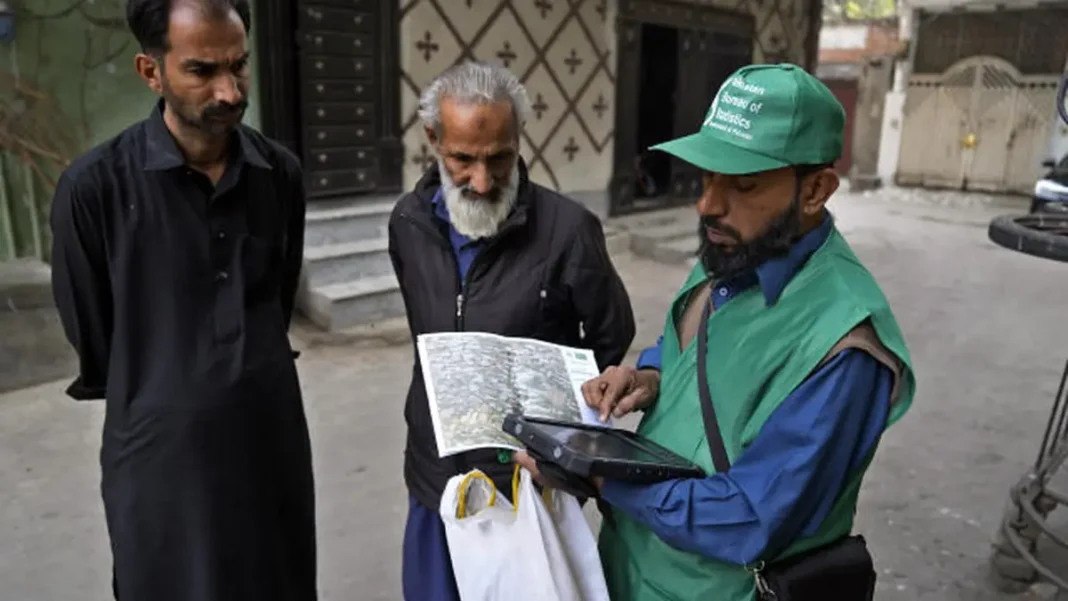
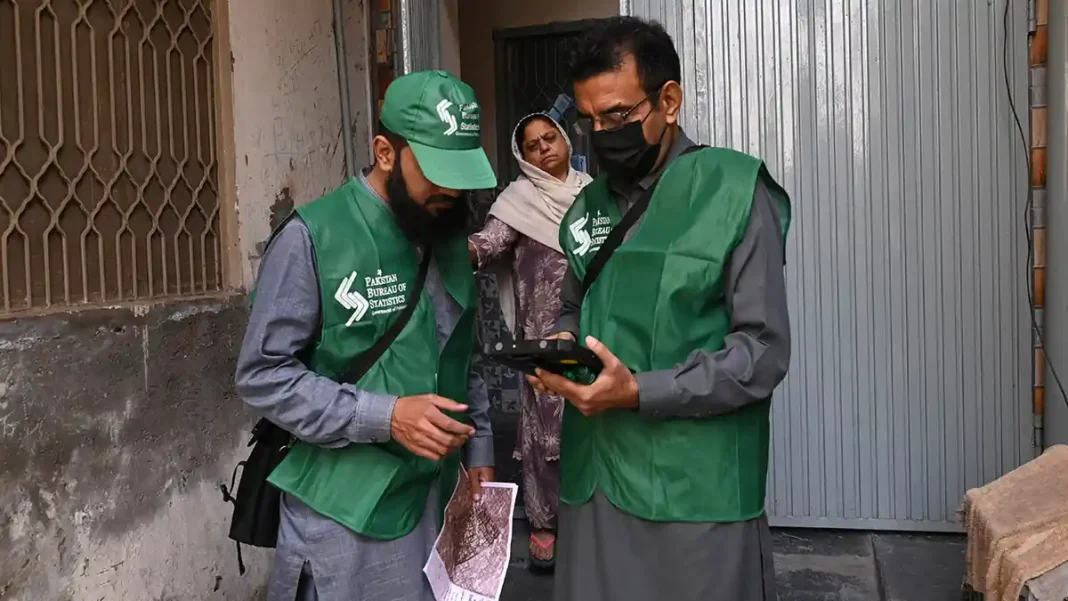
The Pakistan Bureau of Statistics divides the country into enumeration blocks, geo-tags every structure (since 2023), and sends trained enumerators door to door — in 2023, with tablets. The questionnaire covers population (age, sex, education, language, religion, disability, migration) and housing (rooms, construction material, water, electricity, tenure). Since 2023, households can also self-enumerate online.
The seven censuses
1951 (first, ~33.7m) → 1961 → 1972 (first without East Pakistan) → 1981 (~84m) → 1998 (132.35m) → 2017 (207.68m, after a 19-year gap) → 2023 (241.49m, first digital). The gaps tell their own story: politics repeatedly delayed the count, most notoriously the 19-year wait between 1998 and 2017.
What hangs on the numbers
The 2023 results triggered fresh delimitation of all constituencies and reopened the NFC debate — Punjab’s 127.68 million people anchor its dominance, while Balochistan’s 14.89 million (growing fastest at 3.20%) fuel its demand for a bigger share. For the full 2023 results and the digital method, see the complete digital census guide.
Related guides
Frequently asked questions
How often is the census held in Pakistan?
The Constitution requires a census every 10 years — though in practice gaps have run to 19 years (1998–2017).
Who conducts the census in Pakistan?
The Pakistan Bureau of Statistics (PBS), a federal attached department.
Why is the census controversial in Pakistan?
Because National Assembly seats, NFC funds and job quotas all follow the headcount — every province has an incentive to dispute the numbers.