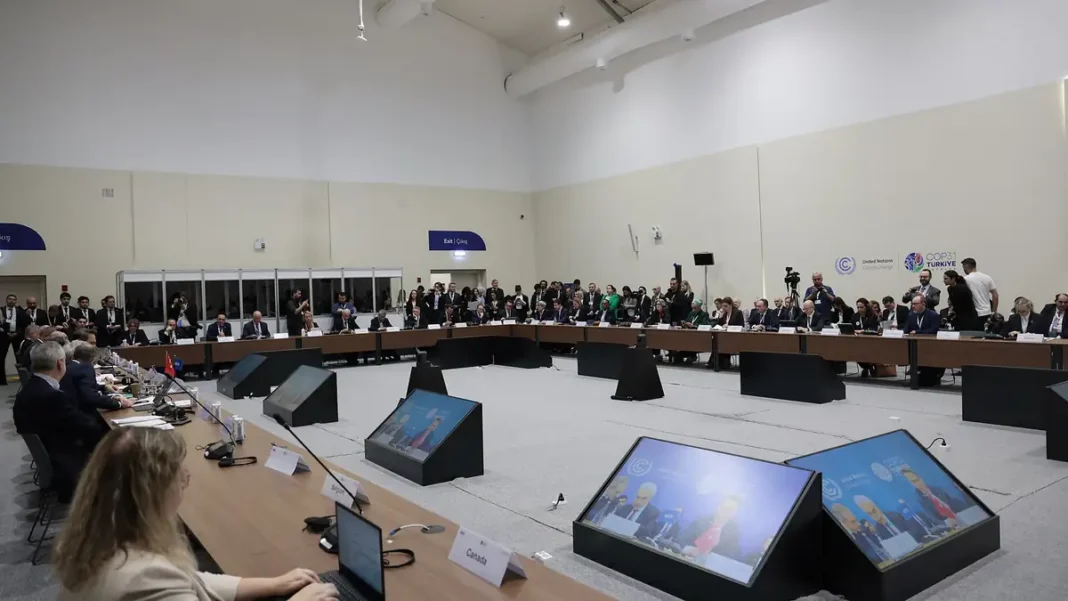
COP31 Pakistan Climate Push: Local Action First
The COP31 Pakistan climate push has begun, with Pakistan urging world leaders at COP31 to turn climate promises into locally led action, warning that real resilience starts with empowering the communities hit hardest by floods, heat and drought.
The call came from the Pakistan Red Crescent Society delegation at the UN climate summit in Antalya, Turkiye. The delegation is led by Chairperson Farzhana Naek, who is attending her first COP, with Deputy Director for Climate Change Adaptation Sajjad Ali Kandhir and Head of Media and Communications Sher Zaman. The German Red Cross is supporting the delegation.
At the Pakistan Pavilion, the society hosted its flagship session, “Empowering Communities: The Role of Locally Led Adaptation in Building Climate Resilience.” Senior government officials also took part.
COP31 Pakistan climate: what the Red Crescent asked for
The panel brought together climate officials from the International Federation of Red Cross and Red Crescent Societies, the Vanuatu and Dominican Red Cross societies, a climate and social justice activist, and the German Red Cross.
Ms Naek told the session that climate change is no longer a distant threat for Pakistan. She said it is a daily reality for millions of people.
“We are here because climate change is no longer a distant threat for Pakistan. It is a daily reality,” she said. “Floods wash away homes and livelihoods, heatwaves and droughts push families to the edge, and the poorest communities, who have contributed the least to this crisis, pay the highest price. Every disaster sets back years of progress and leaves families starting again from zero.”
She said the answer lies with communities themselves. Locally led adaptation, nature-based solutions, early warning systems and preparedness are not optional extras, she said. They are what builds real resilience.
“When communities are informed, warned in time and equipped to lead, lives and livelihoods are saved. That is why the Pakistan Red Crescent Society, with its volunteers and presence across the country, is the partner of choice for climate-affected communities. We are there before, during and after every disaster, and we invite the world to make Pakistan Red Crescent Society its first choice for reaching the last mile.”
Coordinator to the Prime Minister on Climate Change Romina Khurshid Alam backed the message. She urged the world to turn promises into practice.
“Climate commitments must translate into action on the ground. Vulnerable communities need access to climate finance, technical support and inclusive adaptation opportunities,” she said.
Why locally led action matters for Pakistan
The call carries weight because Pakistan has lived the cost of climate extremes. The 2022 floods affected more than 33 million people and swamped large parts of Sindh and Balochistan. Since then, heatwaves, erratic rains and glacial melt have kept pressure on farming families and city dwellers alike.
Locally led adaptation means that the people who face the risk help design the response. In practice, that covers village early warning systems, community-managed water storage, heat action plans drawn up with local health workers, and nature-based work such as restoring mangroves and planting trees along riverbanks.
The wider summit is running against a tight deadline. COP31 opened in Antalya on November 9 and is due to close on Friday, November 20. Negotiators published an 18-page draft deal on November 16 that sets out the competing positions of nearly 200 governments on fossil fuels, climate finance and the pace of the energy transition.
The draft proposes tripling adaptation finance for developing countries to at least 120 billion dollars a year. It also carries two competing wordings on fossil fuels, one restating the 2023 call to transition away from coal, oil and gas, and another calling for a phase-out. Delegates have warned that the text leaves deep divisions to bridge before Friday.
Pakistan’s case at COP31 is that such work needs money that actually reaches the ground. Sindh raised the same demand for climate justice at the summit this week, and Pakistan told the UN Security Council that food crises now hit import-dependent nations far beyond conflict zones.
For Pakistan, the adaptation finance figure is the number that matters most. The country is already turning to private investment for wastewater and water security, and Finland has signalled investment in Pakistan’s energy and minerals sectors.
Frequently asked questions
What is Pakistan asking for at COP31?
Pakistan’s Red Crescent delegation is asking world leaders to back locally led adaptation, with climate finance, technical support and early warning systems that reach the communities most at risk.
Who is leading Pakistan’s Red Crescent delegation?
Chairperson Farzhana Naek is leading the delegation at her first COP, with Deputy Director for Climate Change Adaptation Sajjad Ali Kandhir and Head of Media and Communications Sher Zaman. The German Red Cross is supporting the team.
What is locally led adaptation?
It means the communities facing climate risks help design the response, from village early warning systems and community water storage to heat action plans and nature-based work such as mangrove restoration.
Where and when is COP31 taking place?
COP31 is under way in Antalya, Turkiye. The talks opened on November 9 and are due to close on Friday, November 20, 2026.
What does the draft COP31 deal propose on finance?
The 18-page draft published on November 16 proposes tripling adaptation finance for developing countries to at least 120 billion dollars a year. It also carries competing wordings on phasing out fossil fuels.