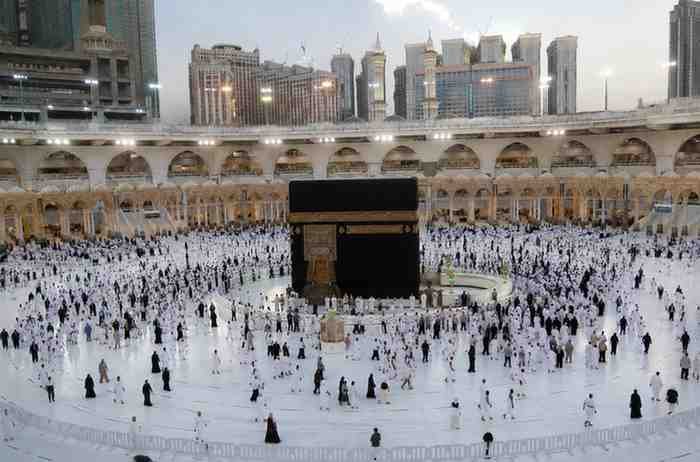
Prime Minister Shehbaz Sharif has approved Pakistan’s first comprehensive four-year Hajj Policy for 2027 to 2030. The federal cabinet approved the plan during a meeting in Islamabad on July 8, 2026.
The government says the new Hajj Policy will make the process easier for Pakistani pilgrims. It will also help officials plan Hajj operations with more time and better coordination.
In the past, the government announced a new Hajj plan every year. That system created uncertainty for pilgrims, private operators, and government departments.
Now, the four-year Hajj Policy gives Pakistan a clear roadmap until 2030. This roadmap will help authorities manage registration, travel, training, payments, and services more effectively.
The new Hajj Policy includes a one-time registration system for pilgrims. Under this system, applicants will register once for future Hajj seasons until 2030.
This step will reduce the amount of paperwork for citizens. It will also help authorities maintain a proper waiting list for future applicants.
The government says the system will support fair and smooth processing. Moreover, it will help officials manage applications in accordance with approved rules.
Another major feature of the Hajj Policy is the Shariah-compliant Hajj Savings Scheme. This scheme will allow citizens to save money gradually for the sacred journey.
Many families cannot cover the full cost of Hajj at once. Therefore, the savings plan can help them prepare practically.
The government plans to run this scheme in accordance with Islamic financial principles. As a result, more citizens can plan early and better manage their Hajj expenses.
The new Hajj Policy also focuses on digital services. The government will digitize payments, complaints, monitoring, and administrative work.
This digital system can reduce delays and improve transparency. It can also help pilgrims track applications and payments more easily.
In addition, the system will help officials resolve complaints faster. This step can improve trust between pilgrims and Hajj authorities.
The cabinet also discussed better service delivery during Hajj. The government wants stronger arrangements for travel, accommodation, training, and emergency support.
For this reason, the Hajj Policy includes long-term and short-term Hajj packages. These packages will give pilgrims more options according to their needs.
The policy will also keep separate quotas for government and private Hajj schemes. This separation will help officials manage both systems in a balanced way.
The government will also make training for pilgrims mandatory under the new Hajj Policy. This training will guide pilgrims about rituals, travel, health precautions, and discipline.
Better training can help pilgrims avoid confusion during the journey. It can also support smooth coordination in Pakistan and Saudi Arabia.
The policy also includes Takaful coverage for pilgrims. Takaful works as Islamic insurance during unexpected situations.
The government has also made emergency arrangements a required part of the plan. These steps show the policy’s focus on planning, protection, and better support.
Prime Minister Shehbaz Sharif directed officials to appoint Hajj assistants on merit. He also asked authorities to keep the appointment process transparent.
This direction aims to provide capable support staff for pilgrims. It will also help improve services during the Hajj operation.
The Prime Minister also ordered an independent third-party evaluation of Hajj services. This evaluation will cover both government and private Hajj schemes.
Through this step, the government wants to improve accountability and service quality. It also wants pilgrims to receive better facilities during the sacred journey.
The Hajj Policy will follow Saudi Arabian laws and regulations. The government will update the policy whenever Saudi rules require changes.
Officials will also prepare standard operating procedures and implementation guidelines. These guidelines will help departments follow the policy clearly.
The approval of the four-year Hajj Policy marks an important shift in Pakistan. It moves the country from yearly planning to a long-term system.
This approach can reduce confusion and improve coordination among departments. It can also give pilgrims greater confidence as they prepare for Hajj.
The government believes the new plan will bring better management and greater convenience. If implemented properly, the Hajj Policy can make Hajj easier and more organized.
It can also help thousands of Pakistani pilgrims plan their journey with confidence. Overall, the four-year roadmap offers a more stable system for future Hajj operations.