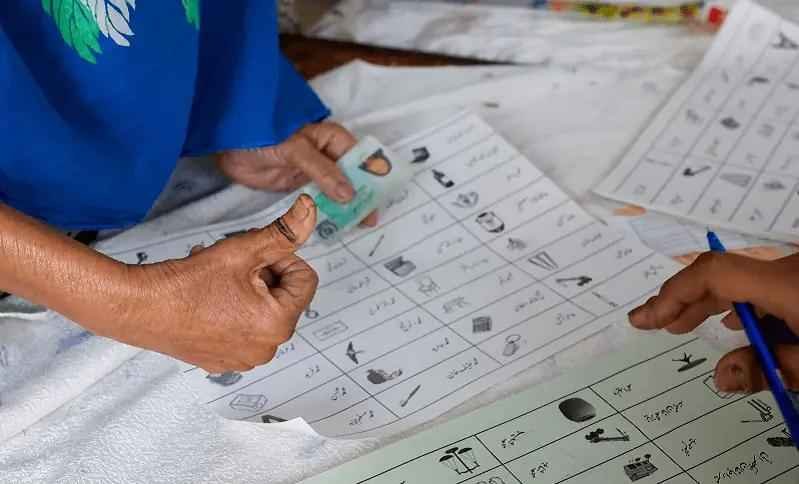
GILGIT: The Gilgit-Baltistan Elections officially entered a decisive stage on Sunday as polling started across all constituencies of the region. Voters began casting their ballots early in the morning, while election authorities announced that polling would continue without interruption until 5:00 PM.
Thousands of citizens turned out to participate in the democratic process. As a result, polling stations across the region witnessed steady voter activity from the start of the day.
The Gilgit-Baltistan Elections are taking place in 24 constituencies. More than 390 candidates are competing for these seats. Political parties, regional groups, and independent candidates are all seeking public support in this important contest.
Meanwhile, election officials have completed extensive arrangements to ensure smooth voting. Authorities deployed 7,678 election staff members at polling stations throughout the region. In addition, more than 12,000 security personnel are performing duties to maintain peace and orders.
The Election Commission has prohibited voters from carrying mobile phones and recording devices inside polling stations. However, accredited journalists and authorized election observers remain exempt from this restriction.
The outcome of the Gilgit-Baltistan Elections will determine the composition of the next regional government. Any political party or alliance will need at least 17 seats to secure a simple majority and form the government.
According to official figures, more than 963,000 voters are registered in the region. These include over 506,000 male voters and approximately 456,000 female voters. Therefore, voter participation play a significant role in shaping the final results.
The Gilgit-Baltistan Assembly consists of 33 seats. Among them, 24 members are directly elected. Additionally, six seats are for women, and three for technocrats.
Several districts remain politically important during the Gilgit-Baltistan Elections. Diamer and Skardu each have four constituencies. Likewise, Gilgit, Ghizer, and Ghanche each have three constituencies. Nagar and Astore each have two constituencies.
Moreover, Hunza, Shigar, and Kharmang each have one constituency. As polling continues, candidates and political parties are closely monitoring voter turnout across these areas.