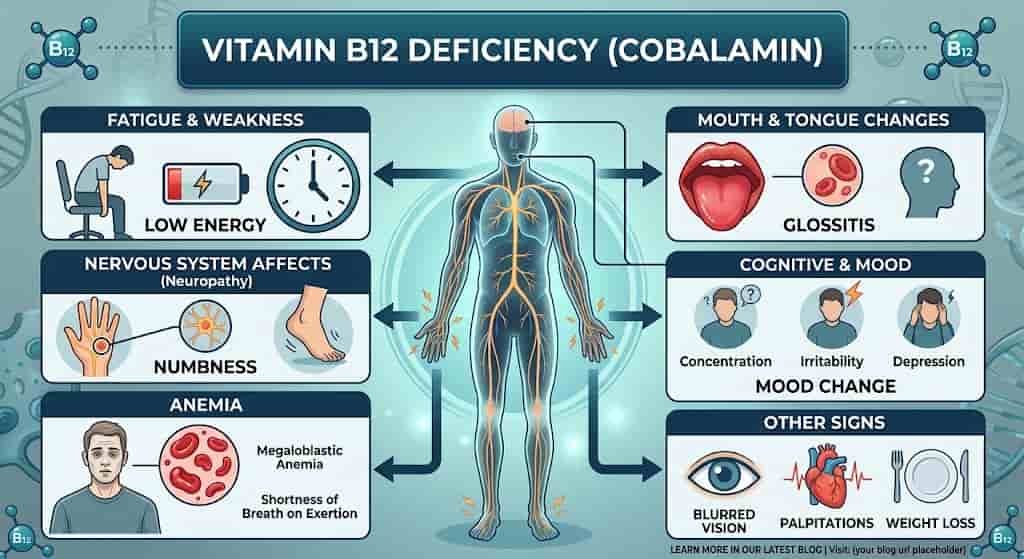
Have you been feeling tired even after getting enough sleep? Do you struggle to concentrate, forget small things, or feel a strange weakness in your body without knowing the reason?
Many people ignore these signs and blame their busy routine, stress, lack of sleep or ageing. However, sometimes these symptoms may point towards something your body desperately needs.
One important nutrient that plays a major role in your energy, brain function and overall health is vitamin B12.
Vitamin B12 deficiency is becoming increasingly common, but many people do not recognize it until symptoms become more noticeable. This vitamin helps your body produce healthy red blood cells, maintain nerve function and support the normal working of your brain. Our detailed guide covers vitamin B12 deficiency: symptoms, causes and treatment in full, including who is most at risk.
When your body does not get enough vitamin B12, it can affect several systems. You may experience constant tiredness, mood changes, weakness, memory problems or unusual sensations like tingling in your hands and feet.
The problem is that many early signs of vitamin B12 deficiency look similar to everyday problems. People often ignore them until they start affecting their work, studies, relationships or quality of life.
Your body often sends warning signals before a deficiency becomes serious.
Understanding these signs can help you take action early and protect your long-term health.
What Is Vitamin B12 and Why Does Your Body Need It?
Vitamin B12 is an essential nutrient that your body cannot produce naturally. You must get it through food or supplements.
It belongs to a group of vitamins called B vitamins and plays a critical role in many important functions.
One of the main jobs of vitamin B12 is helping your body produce red blood cells.
Red blood cells carry oxygen throughout your body. When vitamin B12 levels become too low, your body may produce abnormal blood cells that cannot work efficiently.
This can reduce oxygen supply and lead to tiredness, weakness and low energy.
Vitamin B12 also supports your nervous system.
Your nerves need a protective covering called myelin to send signals properly between your brain and body. Vitamin B12 helps maintain this protective layer.
When vitamin B12 levels remain low for a long time, nerve problems can develop.
This is why some people experience numbness, tingling sensations, balance problems or unusual feelings in their hands and feet.
Vitamin B12 also supports brain health.
It helps maintain normal brain function and contributes to the production of certain chemicals involved in mood and mental wellbeing.
Low levels may affect memory, concentration and emotional balance.
Why Vitamin B12 Deficiency Is Becoming Common
Many people think vitamin deficiencies only happen because of poor eating habits. However, several factors can contribute to low vitamin B12 levels.
Modern lifestyles have changed the way people eat and live.
Many people consume more processed foods and fewer nutrient-rich meals. Busy routines often lead to irregular eating patterns and limited dietary variety.
Another major reason is that vitamin B12 is mainly found in animal-based foods.
People who follow vegetarian or vegan diets may have a higher risk because plant foods usually contain little or no natural vitamin B12.
However, diet is not the only reason.
Some people consume enough vitamin B12 but their bodies cannot absorb it properly.
The digestive system needs certain processes to absorb vitamin B12 from food. Health conditions affecting the stomach or intestines can interfere with this process.
Age can also play a role.
As people get older, their ability to absorb vitamin B12 may decrease. This means older adults may require more attention to their vitamin levels.
Certain medications can also affect vitamin B12 absorption.
This is why understanding risk factors is important.
How Long Can You Have Vitamin B12 Deficiency Without Knowing?
Vitamin B12 deficiency often develops slowly.
Unlike some health problems that appear suddenly, low vitamin B12 levels can build up over months or even years.
Your body stores vitamin B12 in the liver, which means symptoms may not appear immediately after intake decreases.
At first, the signs may seem small.
You may feel slightly more tired than usual. You may forget things occasionally or feel less energetic during the day.
Many people simply adjust to these changes and think they are normal.
However, if deficiency continues, symptoms can become stronger.
Fatigue may increase. Nerve-related symptoms may appear. Mood and concentration may become affected.
This is why recognizing early warning signs is important.
Sign 1: Constant Tiredness and Low Energy
One of the most common signs of vitamin B12 deficiency is unexplained tiredness.
Everyone feels tired after a busy day, but vitamin B12 deficiency-related fatigue often feels different.
You may wake up after a full night’s sleep and still feel exhausted.
Simple activities that were once easy may start feeling difficult.
You may feel like your body has no energy, even when you have not done anything physically demanding.
This happens because vitamin B12 plays a role in red blood cell production.
When your body does not have enough healthy red blood cells, your tissues may receive less oxygen.
Lower oxygen supply can make you feel weak, tired and mentally drained.
Many people try to solve this problem by drinking more coffee or sleeping longer, but the real issue may require identifying the underlying cause.
If you constantly feel exhausted without a clear reason, checking your vitamin B12 levels may be worth discussing with a healthcare professional.
Sign 2: Tingling or Numbness in Hands and Feet
One of the more noticeable warning signs of vitamin B12 deficiency is a strange sensation in the hands and feet.
Some people describe it as:
- Pins and needles
- Tingling
- Burning sensation
- Numbness
- Feeling like electric shocks
This happens because vitamin B12 supports healthy nerve function.
When vitamin B12 levels remain low, nerve damage can develop over time.
Your nerves act like communication wires between your brain and body. When these signals become disrupted, you may experience unusual sensations.
Many people ignore these feelings because they appear occasionally.
However, repeated tingling or numbness should not be ignored, especially if it continues or becomes worse.
Early detection can help prevent more serious nerve problems.
Sign 3: Brain Fog and Difficulty Concentrating
Have you ever felt mentally slow, unable to focus or struggled to remember simple information?
This experience is often called brain fog.
People with vitamin B12 deficiency may notice:
- Difficulty concentrating
- Forgetting appointments or tasks
- Trouble finding the right words
- Reduced mental sharpness
- Feeling confused
Vitamin B12 supports normal brain function, and low levels may affect how efficiently your brain works.
Many people blame stress or ageing for these problems.
While stress can definitely affect concentration, persistent brain fog may have several possible causes, including nutritional deficiencies.
Your brain needs proper nutrients to maintain energy and communication between nerve cells.
Vitamin B12 is one important nutrient that supports these processes.
Sign 4: Mood Changes, Anxiety and Feeling Low
Your nutritional health can influence your emotional wellbeing.
Vitamin B12 helps support processes involved in producing and regulating certain brain chemicals.
When levels become too low, some people may experience:
- Mood swings
- Increased irritability
- Feeling emotionally low
- Anxiety symptoms
- Lack of motivation
The relationship between vitamin B12 and mental health is complex.
Low vitamin B12 does not mean it is the only cause of anxiety or depression. Mental health conditions involve many factors.
However, nutritional deficiencies can sometimes contribute to symptoms or make existing problems harder to manage.
If you notice unexplained mood changes along with physical symptoms such as fatigue or numbness, it may be useful to consider your overall nutrition.
Sign 5: Weakness, Dizziness and Balance Problems
Feeling weak or unsteady can be another warning sign of vitamin B12 deficiency.
Many people experience weakness and think it is simply because of a busy routine or lack of rest. However, when vitamin B12 levels remain low, the body may struggle to produce enough healthy red blood cells.
This can reduce oxygen delivery throughout the body and make you feel physically weak.
Some people may also experience dizziness, especially when standing up quickly or during physical activity.
Vitamin B12 also supports the nervous system, which helps your brain communicate with your muscles. When nerve signals become affected, balance and coordination can become difficult.
You may notice:
- Feeling unstable while walking
- Difficulty maintaining balance
- Weak muscles
- Increased tiredness during normal activities
Balance problems should never be ignored, especially if they continue for a long time.
Early diagnosis can help prevent possible nerve-related complications.
Sign 6: Pale Skin and Signs of Anemia
Changes in your skin appearance can sometimes reveal what is happening inside your body.
Vitamin B12 plays an important role in producing healthy red blood cells.
When your body lacks enough vitamin B12, it may create larger and abnormal red blood cells that cannot carry oxygen properly.
This condition is known as megaloblastic anemia.
Because your body receives less oxygen, you may notice:
- Pale or yellowish skin
- Weakness
- Shortness of breath
- Fast heartbeat
- Feeling tired easily
Some people ignore these symptoms because they develop slowly.
They may assume they are simply getting older or becoming less active.
However, unexplained changes in energy levels and appearance deserve attention.
A simple blood test can help identify whether vitamin B12 levels or other health issues are involved.
Sign 7: Memory Problems and Mental Changes
Memory problems are another symptom that many people overlook.
Everyone forgets things occasionally. Forgetting names, misplacing items or missing small details can happen because of stress or tiredness.
However, frequent memory problems combined with fatigue and other symptoms may indicate a nutritional issue.
Vitamin B12 supports healthy brain function and communication between nerve cells.
When levels are too low, some people may experience:
- Forgetfulness
- Difficulty thinking clearly
- Slow mental processing
- Confusion
- Trouble concentrating
Older adults especially need to pay attention to these symptoms because vitamin B12 deficiency can sometimes be mistaken for normal ageing.
Aging may affect memory, but nutritional deficiencies can also contribute.
Finding the real reason behind these changes is important for better health management.
Sign 8: Vision Problems
Many people do not connect eye problems with vitamin deficiency, but vitamin B12 can influence nerve health, including the nerves involved in vision.
In rare cases, severe vitamin B12 deficiency may affect the optic nerve, which carries information from your eyes to your brain.
Possible warning signs may include:
- Blurred vision
- Difficulty focusing
- Changes in eyesight
- Reduced visual clarity
Vision problems can have many causes, and vitamin B12 deficiency is only one possibility.
However, if vision changes appear along with fatigue, numbness or memory issues, discussing your symptoms with a healthcare professional can help identify the cause.
Sign 9: Hair, Skin and Nail Changes
Your body needs proper nutrition to maintain healthy skin, hair and nails.
Vitamin B12 deficiency may affect the production of healthy cells, which can sometimes lead to visible changes.
Some people may notice:
- Increased hair shedding
- Dry skin
- Weak nails
- Changes in skin tone
Hair loss especially can be frustrating because many people immediately blame shampoos, stress or genetics.
While these factors can contribute, nutritional deficiencies can also affect hair health.
Your hair growth depends on many nutrients, including vitamins, minerals and proteins.
Maintaining balanced nutrition supports healthier hair and skin.
Sign 10: Mouth Problems and Tongue Changes
Changes inside your mouth can also be a sign of vitamin B12 deficiency.
Some people develop a condition called glossitis, which causes inflammation of the tongue.
Symptoms may include:
- A red or swollen tongue
- Burning sensation
- Mouth discomfort
- Changes in taste
Vitamin B12 helps maintain healthy cells throughout the body, including cells inside your mouth.
If these symptoms appear with tiredness, weakness or nerve-related problems, they should not be ignored.
Vitamin B12 Deficiency in Pakistan: Why More People Need Awareness
Vitamin B12 deficiency is becoming an important health concern in Pakistan.
Many people do not test their vitamin levels unless they experience serious symptoms.
One reason is limited awareness.
People often associate tiredness, weakness or poor concentration with stress, workload or lifestyle.
However, nutritional deficiencies can also contribute to these problems.
Dietary habits also influence vitamin B12 levels.
Since vitamin B12 is mainly found in animal-based foods, people who consume limited meat, fish, eggs or dairy products may have a higher risk.
Vegetarians and vegans need special attention because plant-based foods usually do not provide enough natural vitamin B12.
Another challenge is that many people do not understand the importance of regular health checks.
A simple blood test can provide valuable information about your vitamin status.
Foods Rich in Vitamin B12
The best way to maintain healthy vitamin B12 levels is through a balanced diet.
Some excellent sources include:
Meat
Beef, chicken and other meats contain vitamin B12.
They are among the richest natural sources of this vitamin.
Fish and Seafood
Fish such as salmon, tuna and sardines provide vitamin B12 along with healthy fats that support brain health.
Eggs
Eggs are a convenient source of several nutrients, including vitamin B12.
Milk and Dairy Products
Milk, yogurt and cheese can contribute to daily vitamin B12 intake.
Fortified Foods
Some cereals and plant-based products contain added vitamin B12.
People following vegetarian or vegan diets often rely on fortified foods or supplements to meet their needs.
Who Is More Likely to Develop Vitamin B12 Deficiency?
Certain groups have a higher risk of low vitamin B12 levels.
These include:
- Older adults
- Vegetarians and vegans
- People with digestive problems
- Individuals with absorption issues
- People who follow restrictive diets
- Those using certain medications for long periods
Understanding your risk factors can help you take preventive steps.
How Is Vitamin B12 Deficiency Diagnosed?
Many people try to identify vitamin deficiencies by searching their symptoms online. While awareness is helpful, symptoms alone cannot confirm whether you have vitamin B12 deficiency.
Several health conditions can cause similar problems, including tiredness, weakness, mood changes and concentration difficulties.
The most reliable way to check your vitamin B12 status is through a blood test.
A healthcare professional may recommend different tests depending on your symptoms and medical history.
Common tests may include:
- Vitamin B12 blood level test
- Complete blood count (CBC)
- Tests related to red blood cell health
- Additional tests if absorption problems are suspected
A blood test helps doctors understand whether your symptoms are linked to low vitamin B12 or another health issue.
Early diagnosis is especially important because long-term deficiency can affect nerve health.
What Happens If Vitamin B12 Deficiency Is Left Untreated?
Ignoring vitamin B12 deficiency for a short time may not create serious problems for everyone.
However, long-term deficiency can become harmful.
Vitamin B12 plays a major role in maintaining healthy nerves and producing blood cells.
When deficiency continues for months or years, some problems may become more noticeable.
Possible complications include:
- Long-lasting nerve problems
- Difficulty maintaining balance
- Severe fatigue
- Memory difficulties
- Changes in mood
- Anemia-related complications
Nerve damage caused by severe vitamin B12 deficiency can sometimes become permanent if treatment starts too late.
This is why recognizing early signs and getting proper guidance is important.
Your body often provides warning signals before a problem becomes severe.
How Is Vitamin B12 Deficiency Treated?
Treatment depends on the severity of deficiency and the reason behind it.
If your body lacks vitamin B12 because of diet, improving food choices may help increase levels.
Healthcare professionals may recommend:
- Vitamin B12 tablets
- Oral supplements
- Vitamin B12 injections in certain cases
- Dietary changes
People with absorption problems may require different treatment approaches because their bodies cannot properly absorb vitamin B12 from food.
The correct treatment plan depends on individual health needs.
Avoid taking extremely high doses of supplements without proper guidance.
More vitamins do not always mean better health. The right amount is what matters.
How Long Does It Take to Recover From Vitamin B12 Deficiency?
Recovery time depends on how low your vitamin B12 levels are and how long the deficiency has existed.
Some people notice improvements in energy and general wellbeing after treatment begins.
However, nerve-related symptoms may take longer to improve.
If deficiency has affected the nervous system for a long time, recovery may require patience and regular medical follow-up.
The earlier you identify and address the problem, the better the chances of preventing serious complications.
Vitamin B12 Supplements: What You Should Know
Vitamin B12 supplements are widely available, but people should use them wisely.
Many people take supplements because they feel tired or believe they have a deficiency.
However, fatigue can happen due to many reasons, including poor sleep, stress, other nutritional deficiencies or medical conditions.
Testing helps you understand whether vitamin B12 is actually the issue.
Supplements are generally considered safe when used appropriately, but unnecessary use can delay finding the real cause of symptoms.
If you have ongoing symptoms, professional advice is always the better option.
Simple Ways to Prevent Vitamin B12 Deficiency
Prevention starts with awareness and healthy daily habits.
Here are some ways to support healthy vitamin B12 levels:
Eat a Balanced Diet
Include foods that naturally contain vitamin B12, such as eggs, dairy products, fish and meat.
A variety of nutrient-rich foods supports overall health.
Pay Attention to Your Body’s Signals
Do not ignore constant tiredness, numbness, mood changes or memory problems.
Small symptoms can sometimes provide important clues.
Get Regular Health Checks
Regular medical checkups can help identify nutritional problems before they become serious.
Follow a Healthy Lifestyle
Good sleep, physical activity and balanced nutrition work together to support your body and mind.
Vitamin B12 Deficiency and Mental Health: Understanding the Connection
Many people focus only on physical symptoms of vitamin deficiencies.
However, nutrition also affects emotional and mental wellbeing.
The brain requires several nutrients to function properly.
Vitamin B12 supports processes involved in nerve communication and brain health.
Low levels may contribute to symptoms such as:
- Low mood
- Irritability
- Difficulty concentrating
- Mental fatigue
- Feeling emotionally drained
The connection between nutrition and mental health is complex.
Improving vitamin B12 levels may support wellbeing in people with deficiency, but it does not replace professional mental health support when needed.
Mental health problems deserve proper attention and care.
Frequently Asked Questions About Vitamin B12 Deficiency
What are the first signs of vitamin B12 deficiency?
Early signs may include tiredness, weakness, difficulty concentrating, mood changes and low energy. Some people may also experience tingling sensations in their hands and feet.
Can vitamin B12 deficiency cause anxiety?
Low vitamin B12 levels may contribute to mood changes and anxiety symptoms in some people. However, anxiety can have many causes, including stress, genetics and lifestyle factors.
How can I increase my vitamin B12 naturally?
You can increase vitamin B12 through foods such as meat, fish, eggs, milk and dairy products. People who cannot get enough through diet may need supplements under professional guidance.
Is vitamin B12 deficiency common?
Yes, vitamin B12 deficiency affects many people worldwide. Risk can increase with age, dietary restrictions and certain health conditions.
Can vitamin B12 deficiency affect memory?
Low vitamin B12 levels may affect brain function and contribute to problems with concentration and memory, especially when deficiency becomes significant.
How often should vitamin B12 levels be checked?
The need for testing depends on your health condition, diet, age and symptoms. People at higher risk may benefit from regular monitoring.
Can tiredness always mean vitamin B12 deficiency?
No. Tiredness can happen because of many reasons, including stress, poor sleep, dehydration, infections and other health conditions.
A proper evaluation helps identify the real cause.
Final Thoughts
Your body constantly communicates with you.
Sometimes the signs are obvious, while other times they appear as small changes that are easy to ignore.
Feeling tired all the time, struggling with concentration, experiencing numbness or noticing mood changes may seem like normal parts of life, but they can sometimes indicate that your body needs more support.
Vitamin B12 plays an important role in energy production, nerve health, brain function and overall wellbeing.
Recognizing the signs of vitamin B12 deficiency symptoms early can help you take action before problems become more serious.
A balanced diet, healthy lifestyle and regular health awareness can make a major difference.
If you have been experiencing unexplained fatigue, memory problems, mood changes or unusual body sensations, consider discussing your symptoms with a healthcare professional.
Your body’s warning signs are worth listening to.
A simple check today could help you understand your health better and take a positive step toward a more energetic and healthier life.