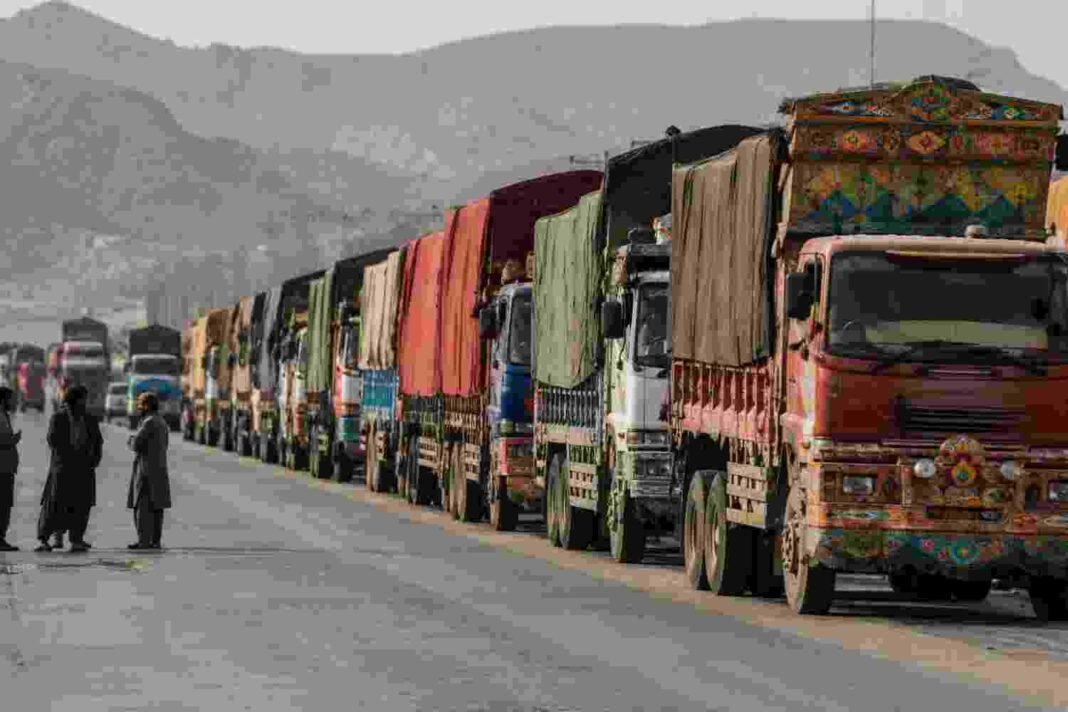
Pakistan’s economy has suffered losses of more than Rs50 billion as the nationwide Goods Transport Strike continues for an eighth consecutive day. The disruption has affected cargo movement, industries, ports and businesses across the country.
Transporters have stopped moving thousands of containers from major ports during the protest. As a result, imported goods and export shipments have started piling up while businesses struggle to maintain normal operations.
Goods transport representatives said ports normally dispatch around 10,000 containers every day. However, the ongoing protest has disrupted this movement and created serious problems throughout the national supply chain.
Meanwhile, transporters estimate that economic losses have already crossed Rs50 billion. They also warn that the financial impact could increase rapidly if authorities fail to resolve the dispute.
The Goods Transport Strike has continued because transporters and government officials have not agreed on key demands. Talks involving the ministries of communications, finance and petroleum have produced no breakthrough so far.
Goods transport leader Malik Shahzad Awan said disagreements with federal and provincial authorities remain unresolved. Therefore, transporters have continued their protest while waiting for meaningful progress on their demands.
The prolonged shutdown has created growing concerns within Pakistan’s business community. Moreover, companies that depend on regular cargo movement now face delays in receiving supplies and delivering products.
Federation of Pakistan Chambers of Commerce and Industry President Atif Ikram has urged both sides to resume meaningful negotiations immediately. He warned that Pakistan cannot maintain economic activity without a functioning transport network.
According to Ikram, freight forwarding activities at ports have almost stopped because of the disruption. Consequently, large quantities of imported goods remain stuck and cannot reach factories, warehouses or markets.
The Goods Transport Strike has also started affecting industrial production across the country. Many factories rely heavily on imported and locally transported raw materials to maintain their daily production schedules.
However, delays in cargo transportation have created shortages of essential industrial inputs. Several businesses now risk slowing production further if the transport disruption continues.
At the same time, exporters face growing pressure to move goods to ports within strict deadlines. Delayed shipments could affect export commitments and create additional financial problems for Pakistani companies.
The crisis has also increased costs for importers. Containers sitting at ports can trigger demurrage and detention charges, adding another financial burden to businesses already facing transportation delays.
Moreover, prolonged congestion can create operational problems at ports and terminals. Businesses may eventually pass some additional costs to customers if transportation and storage expenses continue rising.
Atif Ikram described the situation as a serious threat to economic activity. He highlighted stranded cargo, raw material shortages and risks to exports as major concerns that require immediate attention.
The Goods Transport Strike has now expanded beyond the transport sector itself. Its effects have reached manufacturers, exporters, importers, wholesalers, retailers and other businesses that depend on smooth supply chains.
Pakistan’s economy relies heavily on road freight to connect ports with industrial centers and markets. Therefore, any prolonged interruption can quickly affect production, trade and the availability of goods across different regions.
Businesses also need reliable transport services to fulfill domestic orders. Consequently, companies may face delayed deliveries and higher operating expenses as the disruption continues.
FPCCI has called on the government and transport representatives to find a solution before the economic damage increases further. The organization wants both sides to resolve their differences through immediate negotiations.
Ikram also called for financial support for traders who have suffered losses during the disruption. In addition, he urged authorities to provide relief from charges linked to containers stranded at ports.
Specifically, the business community wants authorities to waive demurrage and detention charges on affected containers. Such relief could reduce some of the financial pressure that importers currently face.
The Goods Transport Strike also poses risks for Pakistan’s export sector if exporters cannot move shipments to ports on time. International buyers often operate under strict schedules, so that extended delays can create commercial complications.
Meanwhile, manufacturers may struggle to maintain output if raw material shortages worsen. Reduced industrial activity could also affect workers, suppliers and other businesses connected with manufacturing.
The dispute has therefore become an important economic issue rather than a transport problem alone. Each additional day of disruption increases pressure across Pakistan’s commercial network.
Transporters continue to demand action from federal and provincial authorities. However, both sides still need to overcome the existing deadlock before normal cargo movement can resume across the country.
Business leaders now want authorities to act quickly and prevent further economic losses. They believe immediate negotiations could help restore freight movement and reduce pressure on ports and industries.
For now, the Goods Transport Strike continues to disrupt Pakistan’s supply chain, with estimated losses exceeding Rs50 billion. Businesses, exporters and industries now await a settlement that can restart cargo movement and prevent further damage to the economy.