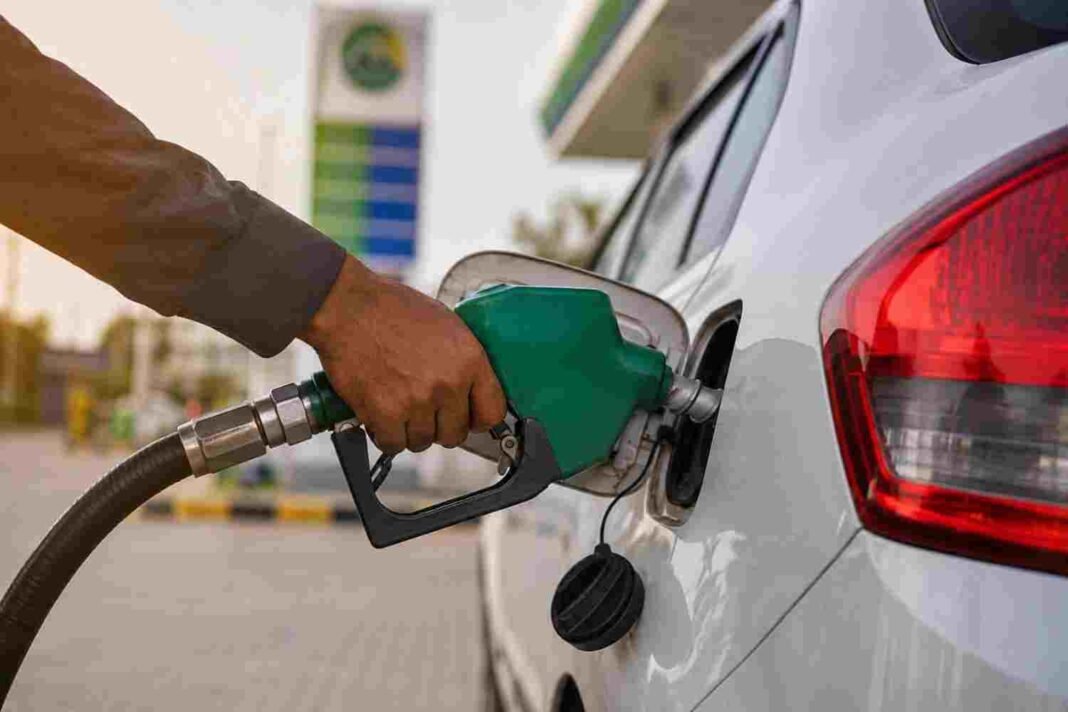
Pakistan’s petroleum dealers have proposed a major change to the fuel pricing system as debate continues over frequent price adjustments. The association has asked Prime Minister Shehbaz Sharif to restore the previous 7- or 15-day pricing cycle.
Pakistan Petroleum Dealers Association Chairman Malik Khuda Bakhsh shared the development during an emergency press conference in Karachi. He said officials have sent a fresh summary to the Prime Minister for consideration.
The proposal seeks to change the mechanism for petrol prices and other petroleum products in Pakistan. Dealers want the government to move away from daily adjustments and return to periodic price revisions.
Khuda Bakhsh linked the proposal to easing tensions in the Middle East. Therefore, the association believes the government can once again determine petroleum prices after every seven or 15 days.
The development comes as petroleum dealers continue negotiations with the federal government over several industry demands. Meanwhile, the government has taken action on one of their major concerns involving dealer margins.
Authorities agreed to increase the dealers’ margin by Rs1.34 per liter. As a result, the total margin will reach Rs10 per liter after the latest increase.
The decision came after the PPDA threatened to launch a strike over its unresolved demands. However, the association postponed its planned Saturday strike after receiving assurances from government officials.
Khuda Bakhsh said petroleum dealers held negotiations with officials in Islamabad. Later, the Petroleum Minister contacted the association and informed its representatives that the margin increase had been approved.
The discussion over petrol prices in Pakistan now forms another important part of talks between dealers and the government. The proposed revision cycle could directly affect how frequently consumers see changes at fuel stations.
According to the PPDA chairman, the Prime Minister has also forwarded the relevant summary to the Economic Coordination Committee. The ECC could therefore play an important role in determining the next steps.
Dealers have also demanded a margin equal to 8 percent. However, the government has not immediately accepted that demand and has instead agreed to review the matter through a joint committee.
The government and PPDA will participate in the committee. The committee will also examine the dealers’ margin demand and submit its findings within 30 days.
Khuda Bakhsh said the government’s assurances convinced the association to postpone its strike. Nevertheless, he made clear that petroleum dealers would continue pursuing their remaining demands.
The association has also retained its right to protest if negotiations fail to produce acceptable results. Therefore, the next 30 days could prove important for relations between dealers and federal authorities.
Any change in petrol prices in Pakistan can attract significant public attention because fuel costs affect households, transporters and businesses. Changes in petrol and diesel rates can also influence transportation and operating costs across different sectors.
Meanwhile, PPDA Vice Chairman Tariq Hassan raised concerns about dealer margins during the press conference. He said the government had not increased the margin for the past three years.
Hassan also claimed that around $50 million belonging to petroleum dealers remains held up with the government. Consequently, dealers continue to demand a long-term mechanism that addresses their operating costs.
Another major issue involves the digitization of petrol stations across Pakistan. PPDA Vice Chairman Anwar Kamal shared details about the government’s deadline for completing this process.
According to Kamal, authorities have set March 23, 2027, as the deadline for nationwide petrol pump digitization. Oil marketing companies will carry the main responsibility for implementing the required digital systems.
Pakistan currently has around 14,000 petrol stations across the country. However, Kamal said only about 10 percent of these outlets have completed the digitization process so far.
Therefore, oil marketing companies face a significant task before the March 2027 deadline. The transition could require rapid investment and implementation across thousands of fuel stations.
The debate over petrol prices in Pakistan comes at a time when dealers want greater predictability in the petroleum market. A seven- or 15-day pricing mechanism could give businesses and consumers more time between individual price revisions.
However, the government and relevant economic authorities will ultimately decide whether to approve the proposal. The ECC’s consideration could determine whether Pakistan returns to the previous fuel pricing schedule.
The petroleum sector plays a major role in Pakistan’s economy because transportation, agriculture, manufacturing and commercial activity depend heavily on fuel. Therefore, changes in pricing mechanisms can affect more than just petrol stations.
Dealers argue that a stable revision schedule can make business planning easier. Meanwhile, consumers generally follow fuel price announcements closely because changes directly affect their daily travel and household expenses.
The government must also consider international oil prices, exchange rates and other market factors when determining domestic petroleum rates. Consequently, authorities need to balance market conditions with the concerns of consumers and petroleum businesses.
For now, the dealers have postponed their strike while negotiations continue. The government’s Rs1.34 margin increase has provided temporary relief and allowed both sides to continue discussions without an immediate shutdown.
The joint committee will now examine the demand for an 8 percent dealer margin over the next 30 days. At the same time, authorities will consider the proposal concerning the frequency of petroleum price revisions.
A final decision on petrol prices in Pakistan could clarify whether the government will continue with frequent adjustments or restore the seven- or 15-day system. Consumers and petroleum dealers will now await the government’s response to the new proposal.