Married into a Pakistani family, running a business in Lahore for years, or a Commonwealth citizen who has made Pakistan home — there are real, legal paths to Pakistani nationality for foreigners. The Pakistan Citizenship Act 1951 sets out five routes. Here is each one: who it fits, what it requires, and where the application goes.
Quick answer: Foreigners can get Pakistani nationality by naturalisation (usually after 4 years of residence), by marriage to a Pakistani citizen (for foreign women), or by registration (Commonwealth citizens). Applications go through the Ministry of Interior and the Directorate General of Immigration and Passports, and are decided on documents, residence proof and good character.
In this guide
Route 1: Naturalisation After Residence
The main route for foreigners with no Pakistani family ties is naturalisation under the Naturalization Act 1926, read with the Citizenship Act. The headline requirement is residence in Pakistan — generally four years — plus good character, adequate knowledge of a language in common use, and the intention to continue residing in Pakistan. The applicant must also be prepared to renounce prior nationality where the law requires it — note that if your current country is one of the 22 dual-nationality treaty states, you may not need to give anything up at all.
This route suits long-term expatriates: professionals, investors and traders who have built their lives in Pakistan. The residence must be genuine and documented — utility bills, rental agreements, tax records and employment letters all count as evidence.
Route 2: Marriage to a Pakistani Citizen
Section 10 of the Citizenship Act provides that a foreign woman married to a Pakistani citizen may acquire citizenship on application. The marriage must be genuine and subsisting, and the application is supported by the marriage certificate (nikahnama for Muslim marriages, duly registered), the husband’s CNIC and proof of his citizenship. NADRA and the Interior Ministry scrutinise these applications for sham marriages, so documentation of a real shared life — joint residence, children, photographs — matters. Note the provision as written covers wives of Pakistani men; foreign husbands of Pakistani women rely on the naturalisation route instead.
Route 3: Registration (Commonwealth Citizens)
The Act allows citizens of Commonwealth countries to be registered as Pakistani citizens by the federal government — a simpler administrative route than naturalisation, reflecting the shared legal heritage of the Commonwealth. Eligibility turns on Commonwealth citizenship plus the prescribed residence and character conditions set out in the rules.
The Application Process and Documents
Whichever route fits, the machinery is the same. Applications for citizenship are handled by the Ministry of Interior through the Directorate General of Immigration and Passports. Expect to assemble:
- Identity documents: current passport, existing national ID, birth certificate.
- Residence proof: rental agreements or property documents, utility bills, tax filings covering the qualifying period.
- Route-specific papers: marriage certificate and husband’s CNIC (marriage route); employment and business records (naturalisation).
- Character evidence: police clearance certificates from Pakistan and previous countries of residence.
- Photographs and biometrics: NADRA enrolment follows approval.
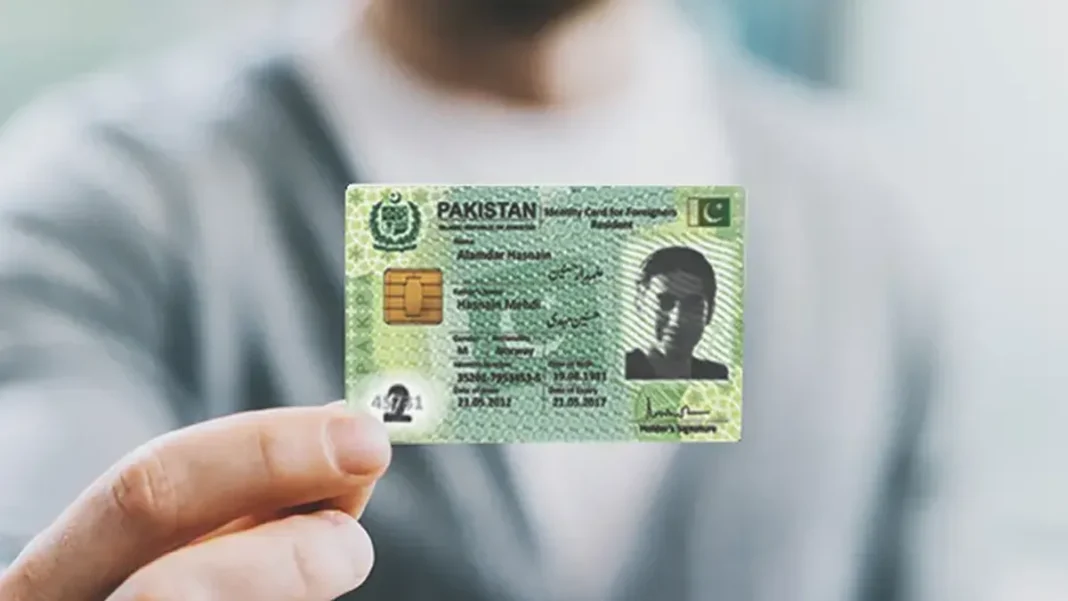
Processing is not fast — citizenship files move through verification stages at district, provincial and federal level, and applicants should expect months rather than weeks. Once granted, the new citizen is enrolled by NADRA and issued a CNIC, whose 13-digit number becomes their permanent identifier. For a full explainer of what the law says about each category, see our guide to how the 1951 Act decides who is a citizen.
Frequently asked questions
How long does a foreigner need to live in Pakistan to get nationality?
Generally four years of residence for naturalisation, with documented proof of genuine, continuous residence. The authorities examine the quality of residence, not just the calendar.
Can a foreign man get Pakistani nationality by marrying a Pakistani woman?
Not through the marriage provision, which covers foreign wives of Pakistani men. A foreign husband would apply through naturalisation after meeting the residence requirement.
Do I lose my original nationality when I become Pakistani?
It depends on your country’s laws and Pakistan’s dual-nationality list. If your current nationality is one of the 22 treaty countries, you can hold both. Otherwise, Pakistani law expects renunciation of the prior nationality.
Where do I apply for Pakistani citizenship?
Through the Ministry of Interior via the Directorate General of Immigration and Passports. NADRA handles identity enrolment after citizenship is granted.
Related Guides