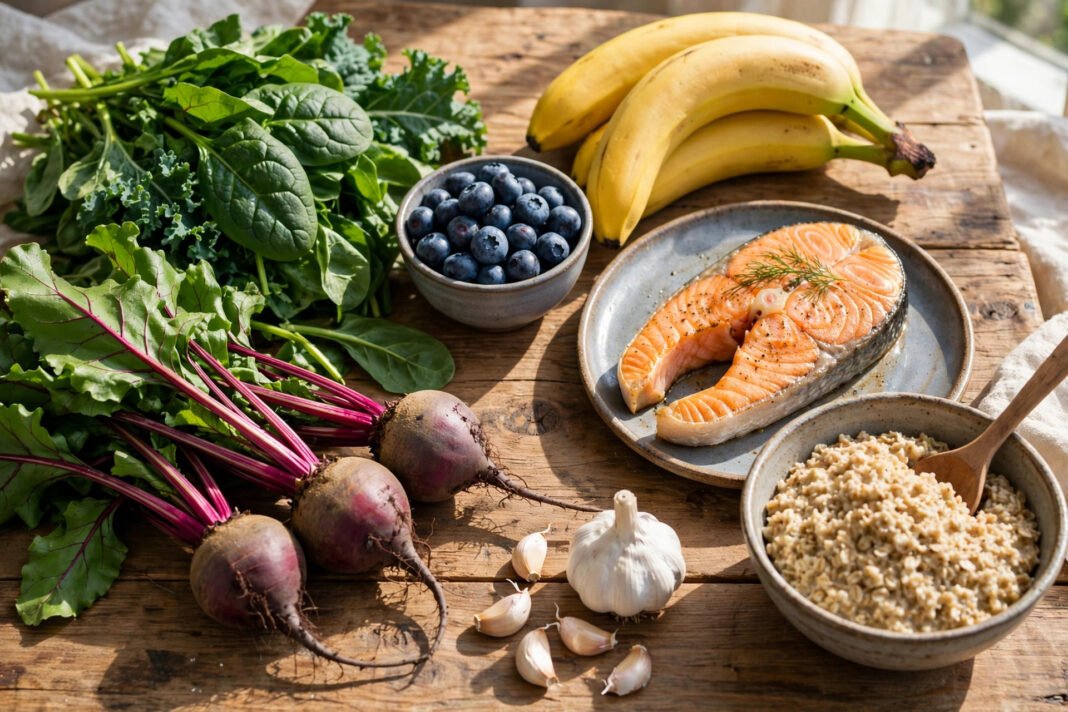
In fact, your blood pressure rises and falls with the way you live. Above all, food is one of the strongest levers you can pull. The right foods help your blood vessels relax, and they also help your body clear extra salt. The wrong foods, on the other hand, push your pressure up, meal after meal.
This article lists 10 foods that lower blood pressure, together with the research behind each one. In addition, they are simple foods you can find in any market. And they work best as part of a whole eating pattern, not as a magic fix, so the whole diet matters. Moreover, cold weather adds extra strain. Read our guide on why blood pressure rises in winter and how to control it to see the full picture.
How Food Affects Your Blood Pressure
In short, blood pressure is the force of blood against your artery walls. When arteries are stiff or narrow, for example, the heart works harder, and pressure rises. Food changes this in two main ways. Firstly, some foods supply potassium, which helps your body remove extra sodium. Secondly, some foods supply nitrates, which the body turns into nitric oxide. Nitric oxide relaxes and widens blood vessels, and as a result, blood flows more easily.
Salt, however, works in the other direction. Too much sodium holds water in the body, and that extra fluid raises pressure, so cutting salt helps. Therefore, keep daily sodium under 2,300 mg if possible. In general, the foods below help in two ways. They add potassium and nitrates, and they also replace salty, processed food on your plate.
Foods That Lower Blood Pressure: Leafy Greens and Beets
Leafy greens are one of the best places to start, especially spinach and kale. For example, spinach, kale, arugula and Swiss chard are rich in potassium and nitrates. Specifically, one cup of cooked spinach contains 839 mg of potassium. Similarly, kale provides 1,062 mg per cooked cup. A 2021 review in The Journal of Nutrition looked at nitrate-rich vegetables. For example, it found they lower blood pressure by 3–5 mmHg when eaten regularly.
Beets work in a similar way. They are rich in nitrates, and the body turns those nitrates into nitric oxide. A 2013 study in Hypertension tested beetroot juice in people with hypertension. Drinking 250 mL daily for four weeks lowered systolic blood pressure by 7–8 mmHg. Cooked beets, raw beets in salads, and beetroot juice all count. Add a handful of greens or a few slices of beet to one meal a day. The habit grows from there.
Berries, Bananas and Other Fruit
In fact, berries are small, but they carry a strong effect. Blueberries, strawberries, raspberries and blackberries are rich in anthocyanins, which support blood vessel health. A 2020 meta-analysis of 22 trials found that berry consumption reduced systolic pressure by an average of about 3.2 mmHg. A 2015 study in The American Journal of Clinical Nutrition tested blueberries in 40 postmenopausal women with prehypertension. One cup a day for eight weeks lowered systolic pressure by 5.1 mmHg and diastolic by 6.3 mmHg.
Bananas help in a different way. They are a simple source of potassium, and potassium helps offset the effects of sodium. One banana at breakfast or as a snack adds potassium with no cooking at all. For more ideas, read our guide to foods with more antioxidants than beets. In addition, it lists berries, spinach and kale together, so you can see how these foods overlap.
Fruit works best fresh and whole. Whole fruit keeps its fibre, and fibre slows how fast sugar reaches your blood. Juice loses most of that fibre, so eat the fruit instead of drinking it when you can. Frozen berries work well too, and in addition they cost less than fresh ones out of season. Keep a bag in the freezer, and add a handful to oats or yoghurt.
Foods That Lower Blood Pressure: Fish, Oats and Beans
Fatty fish brings healthy fats to the table. Salmon and mackerel are rich in omega-3 fats, which support heart and blood vessel health. First, aim for fish twice a week if you can. Grilled, baked or steamed fish keeps the meal light, while fried fish, in contrast, adds fat you do not need.
Oats are a quiet helper. They are a whole grain, and they add fibre that supports heart health. In addition, a bowl of oats in the morning replaces a salty or sugary breakfast. Beans and lentils work the same way. They are rich in fibre, potassium and plant protein, and they cost very little. Add lentils to soups, or beans to salads, and you add nutrition without adding salt.
Nuts, Seeds, Garlic and Dairy
Nuts and seeds add healthy fats, magnesium and fibre in a small handful. Almonds, walnuts, flaxseeds and pumpkin seeds all fit here. Therefore, keep the portion small, because nuts are rich in calories too. A small handful a day is enough.
Garlic has a long history in heart health. It adds strong flavour without salt, which helps in itself. Use fresh garlic in cooking, and you cut salt without losing taste. Low-fat dairy closes the list. Plain yoghurt and low-fat milk add calcium and protein, and they fit the DASH plan well. For example, choose plain yoghurt over sweetened versions, because added sugar works against your goal.
Small swaps make these foods easy. Sprinkle seeds over oats or salads. Swap a salty snack for a small handful of nuts. For instance, use garlic and herbs for flavour instead of extra salt. Choose plain yoghurt with berries for a snack that covers two foods at once. None of these changes needs a new recipe — they fit into meals you already cook.
The DASH Eating Plan Brings It Together
In short, single foods help, but the whole eating pattern matters more. The US National Heart, Lung, and Blood Institute developed the DASH eating plan to lower blood pressure. DASH is short for Dietary Approaches to Stop Hypertension. It brings the foods above together into one simple plan. In 2025, U.S. News & World Report ranked DASH the number one diet for high blood pressure. It was the eighth year in a row.
The daily targets are clear. Vegetables: 4–5 servings. Fruits: 4–5 servings. Whole grains: 6–8 servings. Lean protein, including fish, each day. Low-fat dairy: 2–3 servings. Nuts and seeds: 4–5 servings a week. Healthy oils: 2–3 teaspoons a day. Sodium is limited to 2,300 mg a day, and ideally 1,500 mg.
The results are strong. Clinical trials show the DASH diet reduces systolic blood pressure by 8–14 mmHg. A landmark 1997 trial in The New England Journal of Medicine followed 459 adults. After eight weeks, DASH dropped systolic pressure by 5.5 mmHg on average. In people who already had hypertension, the drop was 11.4 mmHg. A 2020 meta-analysis in Advances in Nutrition covered 30 randomised trials. It found average reductions of 8.7 mmHg systolic and 4.5 mmHg diastolic. In addition, the American Heart Association’s 2025 guidelines recommend lifestyle changes, including diet, as first-line treatment. This applies to elevated blood pressure and stage 1 hypertension.
Foods That Lower Blood Pressure: How Fast Do They Work?
Most studies show measurable blood pressure reductions within 2–4 weeks of consistent dietary change. Improvement continues over 8–12 weeks as the new habits settle in. In short, that is good news, because it means small changes pay off soon. However, one food alone does not go far. A handful of berries helps, yet it cannot undo a salty, processed diet on its own. The whole pattern is what moves the numbers.
Therefore, think in meals, not in single foods. Oats at breakfast, greens and beans at lunch, and fish at dinner cover most of the list at once. Add fruit for snacks, and the plan almost builds itself. Keep salt low through the day, and drink enough water.
How to Start Eating for Lower Blood Pressure
Start small, and start this week. Pick two or three foods from the list, and add them to meals you already eat. Add spinach to a soup, berries to breakfast, or lentils to dinner. Then add one more each week. In fact, small steps last longer than a sudden overhaul.
A simple day on this plan looks like this. Breakfast: oats with berries and a banana. Lunch: a salad with leafy greens, beans and seeds. Dinner: grilled fish with cooked greens and a side of lentils. Snacks: plain yoghurt or a small handful of nuts. That one day covers all 10 foods, and it follows the DASH pattern without any special cooking.
Keep track of what changes. Check your blood pressure as your doctor advises, and notice how you feel. Above all, if you take blood pressure medicine, keep taking it. In other words, food supports your treatment, but it does not replace it. Finally, speak to a doctor before making big dietary changes, especially if you take blood pressure medication. Cold weather adds its own strain. Read our guide on why blood pressure rises in winter and how to control it for the full winter picture.
This article is for general information only and does not replace medical advice. If you take blood pressure medicine, speak to a doctor before changing your diet.
Which of these 10 foods do you already eat, and which one will you try first? Tell us in the comments.