Few business stories in Pakistan start as quietly as this one. In 1947, a cloth trader arrived in Faisalabad with his family and reopened his small trade in the city’s bazaars. He had no factory, no bank and no famous name. Today, that same family business is Ibrahim Group. In fact, it runs Pakistan’s largest polyester fibre plant. Moreover, it controls one of the country’s biggest banks, Allied Bank. This feature traces the group’s journey, step by step, from a cloth shop to a business empire.
Ibrahim Group and the Cloth Trade of Faisalabad
The founder was Haji Sheikh Mohammad Ibrahim. In fact, his family had traded cloth in India for years. After Partition in 1947, the family migrated to Pakistan and settled in Faisalabad. The city, moreover, was already famous for its textile bazaars. So the family restarted its ancestral cloth business there under the name Ibrahim Agencies. For years, the work stayed simple and small. The agency bought and sold cloth and yarn. It owned no mill and no machinery. However, the family was quietly learning the trade from the inside. Indeed, every bale of cloth taught them what Pakistan’s textile market needed.
1968: The Year the Business Took Formal Shape
Trading alone was never the family’s final plan. In August 1968, Haji Sheikh Mohammad Ibrahim formally set up Ibrahim Agency (Private) Limited. He founded the company together with his sons, Sheikh Mukhtar Ahmed and Sheikh Sardar Ahmed. The new company therefore traded yarn and textiles in a more organised way. Even then, the family still owned no factory. Instead, they spent roughly another decade building capital and contacts. That patience later became, in fact, the group’s greatest strength. Meanwhile, the founder’s son Sheikh Mukhtar Ahmed was emerging as the driving force. He believed the family should instead stop selling other people’s cloth. In his view, they should manufacture their own.
Ibrahim Group Enters Manufacturing in 1980
The big break came in 1980. That year, the family set up Ibrahim Textile Mills Limited. It was their first spinning mill, and it changed everything. For the first time, the group produced its own blended yarn. More spinning mills followed during the 1980s. As a result, the small trading agency became a proper textile manufacturer. Meanwhile, buyers who once supplied the family became its customers. In addition, each new mill created jobs across Faisalabad. The family name consequently became a respected industrial name.
Ibrahim Fibres: The Boldest Bet of Ibrahim Group
In 1986, the group took its boldest step yet. Ibrahim Fibres Limited was incorporated as a public limited company. The company was also listed on the stock exchange. According to the company’s own published history, it was Pakistan’s first greenfield project of its kind. In that project, half of the share capital went to foreign investors. Those investors, in fact, paid a 70% premium for their shares. Then came the real gamble. In December 1996, the group’s first polyester plant started production. The plant could indeed produce 70,000 tons of polyester staple fibre every year. Its technology, furthermore, came from Zimmer AG of Germany. Suddenly, Pakistan had a serious local maker of man-made fibre.
One Roof: The Great Merger of 2000
By the late 1990s, the family ran several separate companies. Managing them apart had nevertheless become difficult. So the group made a clean and decisive move. On October 1, 2000, four companies merged into Ibrahim Fibres Limited. Ibrahim Textile Mills, A. A. Textiles, Zainab Textile Mills and Ibrahim Energy all became one company. As a result, Ibrahim Fibres became the group’s single flagship. It now combined spinning, polyester production and captive power generation. This merger, moreover, made the company’s accounts simpler and stronger.
Ibrahim Group Takes Control of Allied Bank
Textiles alone no longer satisfied the family’s ambition. In August 2004, the group made headlines far beyond Faisalabad. An Ibrahim Group consortium took control of Allied Bank. The consortium injected Rs 14.2 billion into the bank. In return, it received 325 million additional shares. The deal, as a result, turned a textile family into banking owners overnight. Moreover, it showed how much the group had grown since 1947. A family that once traded cloth now held a major national bank. Sheikh Mukhtar Ahmad subsequently sat on the bank’s board from 2005. Under the family, the bank indeed grew into one of Pakistan’s largest.
Ibrahim Group Today: Scale That Few Can Match
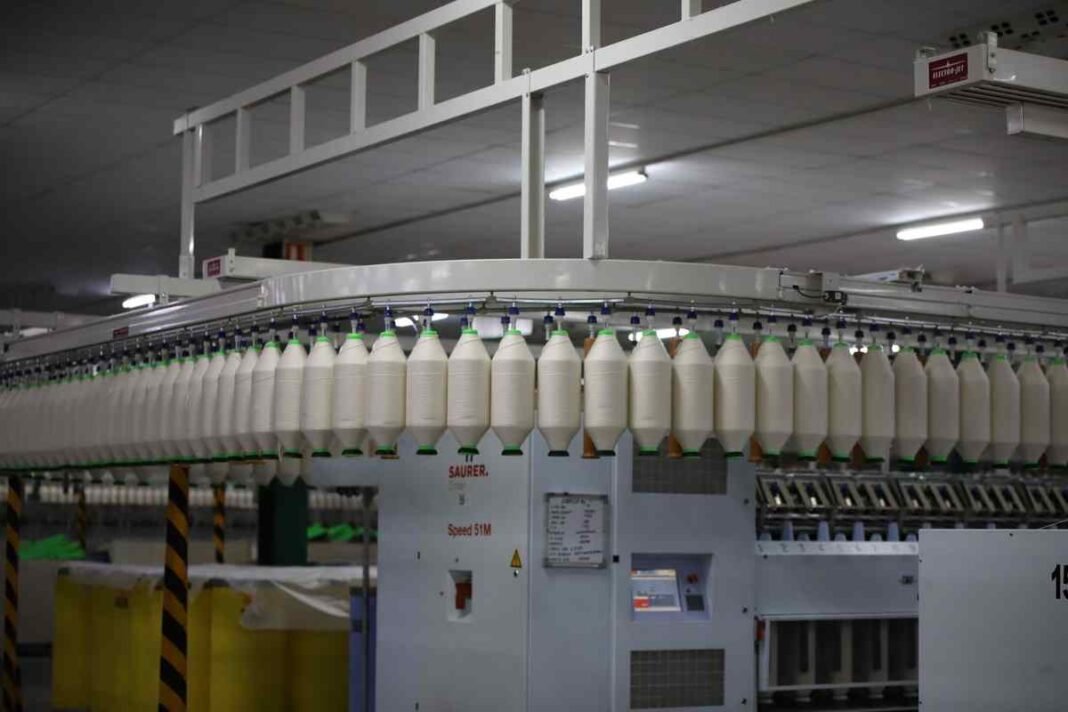
Today, Ibrahim Fibres is Pakistan’s largest producer of polyester staple fibre. Its three polyester lines can make about 390,600 tons every year. The huge plant stands on the Faisalabad–Sheikhupura Road near Shahkot. In addition, the group spins yarn in four factories at the same complex. Two in-house power plants supply about 73.3 megawatts of electricity. Ibrahim Fibres earned revenue of about Rs 120.7 billion in the 2024 financial year. Meanwhile, the family’s holding company owns about 91.6% of Ibrahim Fibres. The group also holds roughly 84% of Allied Bank. Few family businesses, consequently, operate at this scale in Pakistan. In addition, the family runs its charitable work through the Ibrahim Welfare Foundation.
A New Generation Leads Ibrahim Group
Every empire eventually faces a change of guard. Sheikh Mukhtar Ahmad led the group for more than six decades. He passed away on October 10, 2025. Business leaders across Pakistan, moreover, sent messages of condolence. Even the Interior Minister, Mohsin Naqvi, expressed his grief publicly. In December 2025, the third generation formally took charge. Mohammad Naeem Mukhtar became chairman of Ibrahim Fibres. His brother, Muhammad Waseem Mukhtar, became the chief executive. In addition, Naeem Mukhtar chairs Allied Bank today. As a result, the family’s third generation now leads both flagships.
Key Dates: From a Cloth Shop to an Empire
- 1947 — The family settles in Faisalabad and resumes cloth trading as Ibrahim Agencies.
- August 1968 — Ibrahim Agency (Private) Limited is formally founded.
- 1980 — The first spinning mill, Ibrahim Textile Mills, starts production.
- 1986 — Ibrahim Fibres Limited is incorporated and listed on the stock exchange.
- December 1996 — The first polyester plant begins production.
- October 2000 — Four group companies merge into Ibrahim Fibres Limited.
- August 2004 — The group takes control of Allied Bank.
- October 2025 — Sheikh Mukhtar Ahmad passes away.
- December 2025 — The third generation takes charge of the group.
What This Story Teaches Every Small Trader
The journey holds simple lessons for every small trader. First, the family mastered trading before it touched manufacturing. Next, it reinvested profits instead of spending them on display. Above all, it moved patiently, one industry at a time. Cloth led to yarn, and yarn led to polyester. Polyester profits then opened the door to banking. Indeed, the group never chased quick fame. In other words, it built real assets that lasted for decades. That is why a name written on a small Faisalabad shop in 1947 still stands tall today.
Frequently Asked Questions
Who founded Ibrahim Group?
Haji Sheikh Mohammad Ibrahim founded the business. He restarted his family’s cloth trade in Faisalabad after Partition in 1947. Moreover, he formally set up Ibrahim Agency (Private) Limited in August 1968 with his sons.
When was Ibrahim Group founded?
The family’s trading business, in fact, resumed in Faisalabad in 1947. However, the company itself was formally founded in August 1968.
What does Ibrahim Fibres produce?
Ibrahim Fibres produces polyester staple fibre and blended yarn. With about 390,600 tons of yearly polyester capacity, it is Pakistan’s largest polyester fibre maker.
Does Ibrahim Group own Allied Bank?
Yes. An Ibrahim Group consortium took control of Allied Bank in August 2004. Moreover, the group still holds roughly 84% of the bank today.
Who leads Ibrahim Group now?
The third generation leads the group today. Mohammad Naeem Mukhtar chairs Ibrahim Fibres and Allied Bank, while Muhammad Waseem Mukhtar serves as chief executive of Ibrahim Fibres.