


Islamabad Flood History: 2001 Cloudburst, 2022 Monsoon and the 2026 Deluge
The capital region’s relationship with floods is long, documented and getting worse. From the unprecedented 2001 cloudburst to the catastrophic 2022 monsoon and the September 2026 deluge, this guide records the major Islamabad floods with verified dates, rainfall figures and casualty numbers — the history every student, journalist and exam candidate needs in one place.
Quick answer: The worst Islamabad flood was the 23 July 2001 cloudburst — 620mm of rain in about 10 hours, the heaviest 24-hour rainfall recorded in Pakistan in a century, with 61 deaths. Major floods followed in the 2022 monsoon (299 deaths nationwide from late June to late August, per NDMA) and on 1 September 2026 (~200mm in Rawalpindi, Nullah Lai at 29 feet, evacuations and army deployment).
In this guide
2001: The Great Cloudburst
On 23 July 2001, Islamabad recorded 620mm of rain in about 10 hours (0600–1600 PST) — the heaviest 24-hour rainfall in Pakistan in the previous 100 years, according to the Pakistan Meteorological Department and the scientific study published in Advances in Atmospheric Sciences. Rawalpindi received 335mm the same day.
Nullah Lai rose to roughly 34 feet. Floodwater reached up to 6 metres deep in Rawalpindi’s low-lying neighbourhoods, sweeping away encroached houses, shops and road bridges along the banks. 61 people died across the affected region, and the government deployed 9,000 army personnel for rescue and relief. The Met Office noted the freak cause: intense surface heating combined with a mid-latitude westerly trough and heavy monsoon moisture flow along the Himalayas.
2022: The Monsoon of Records
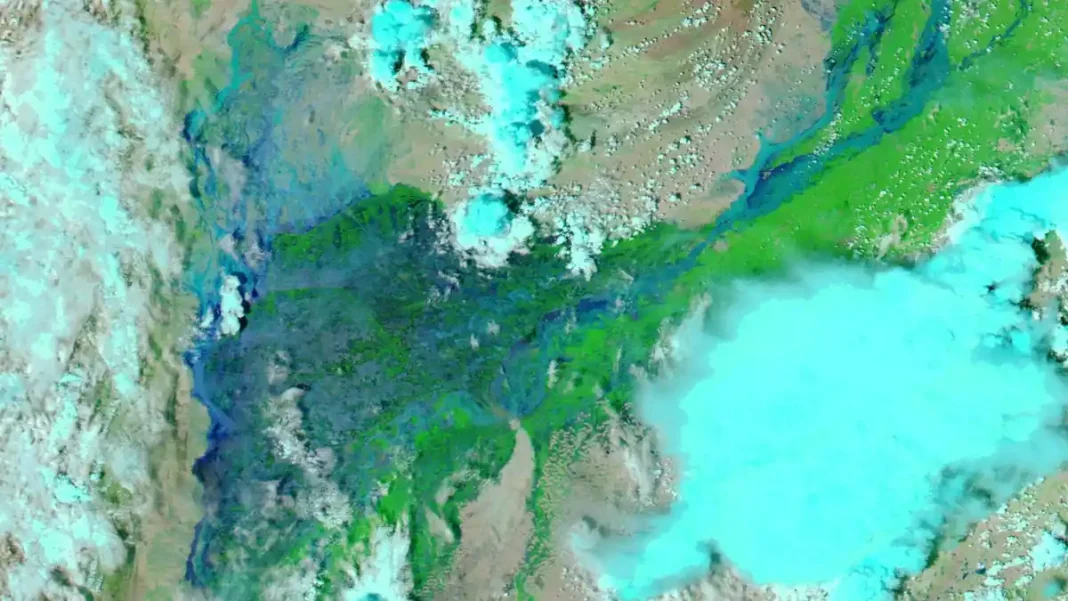
The 2022 monsoon was Pakistan’s worst climate disaster in living memory, and the capital region suffered its share. A flash flood in Saidpur swept away three cars and several motorbikes; in DHA Phase 5, a father and daughter drowned in the Sawan River’s floodwaters; Chattha Bakhtawar saw flood-like conditions with rainwater invading homes. Nationwide, the NDMA reported 299 deaths (including 140 children) and over 700 injured between late June and late August, with 1,676 houses affected. NASA satellite imagery from 24 August 2022 captured the vast flood extents across the country.
2026: The Twin Cities Deluge
On 1 September 2026, Rawalpindi and Islamabad woke to their heaviest downpour in three years. Rain began around 3:20am and fell until about 8am: Shamsabad 197mm, New Katarian 185mm, Golra 157mm — nearly 200mm city-wide. Nullah Lai surged to 29 feet at Katarian and 23.5 feet at Gawalmandi, both above evacuation thresholds. The Water and Sanitation Agency declared a rain emergency, Rescue 1122 positioned along the channel, schools closed for the day, and the district administration called in the Pakistan Army as a major flood surge moved through the nullah. Low-lying areas including Safdarabad, Dhoke Khaba, Pirwadhai and Arya Mohalla were inundated; one life was lost.
The Longer Pattern: 1944–Today
These were not freak one-offs. Flood management studies document at least 19 major Nullah Lai floods between 1944 and 2002 — roughly one every three years — with 1981, 1988, 1997 and 2001 ranked the worst before the 2026 event. The drivers are structural: encroached waterways, choked drains, rapid urbanisation and increasingly intense monsoon bursts. For the full explanation of causes and the safety checklist, see our Islamabad flood guide, our high alert in Pakistan explainer, and the Islamabad flood today live hub.
Frequently Asked Questions
What was the biggest flood in Islamabad’s history?
The 23 July 2001 cloudburst remains the benchmark: 620mm in about 10 hours, Nullah Lai at ~34 feet, and 61 deaths. No later event in the capital has matched its rainfall total.
How many people died in the 2022 monsoon floods?
The NDMA reported 299 deaths (including 140 children) and over 700 injured across Pakistan between late June and late August 2022, with the capital region suffering flash-flood deaths in Saidpur and DHA Phase 5.
What happened in Islamabad on 1 September 2026?
Nearly 200mm of rain fell on Rawalpindi in about five hours — the heaviest in three years. Nullah Lai hit 29 feet, schools closed, the army was called in, and low-lying localities were evacuated.
How often does Nullah Lai flood?
Studies record at least 19 major floods between 1944 and 2002 — roughly once every three years. Minor inundation of low-lying areas happens far more often during heavy monsoon spells.
, the 2022 monsoon disaster, and the 1 September 2026 deluge — dates, figures, records.)