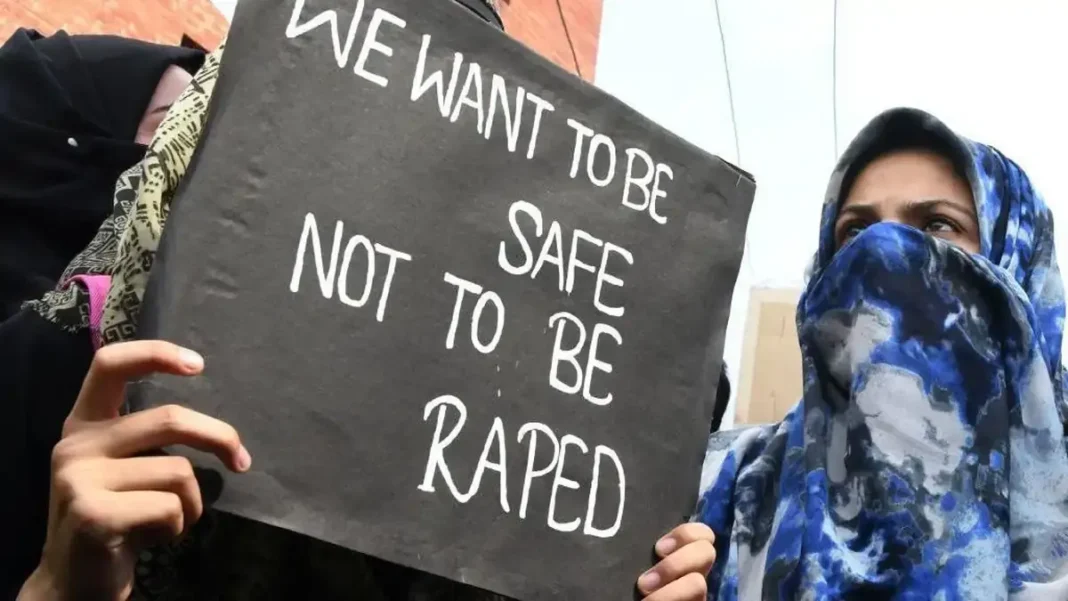
Justice Ayesha Malik: Laws Alone Cannot Protect Women
Supreme Court Justice Ayesha Malik has said Pakistan has strong laws to protect women, but turning legal rights into real protection needs legal literacy, effective enforcement and a gender perspective that challenges entrenched patriarchal mindsets.
Justice Malik was delivering the keynote address at a seminar titled Human Rights and Legal Awareness, held at Fatima Jinnah Women University in Rawalpindi under the 16 Days of Activism Against Gender-Based Violence campaign.
She observed that women make up 49 per cent of the country’s population, yet lack substantive equality. Only 14 per cent hold bank accounts, she said, while two per cent own homes or debit cards, 33 per cent possess mobile phones and 24 per cent take part in the workforce.
Justice Ayesha Malik cites stark gaps for women
The figures Justice Malik cited show how far legal rights sit from daily life for many women. A bank account, a home in one’s own name, a mobile phone and a job are basic markers of independence. On each count, the numbers she gave were low.
The gap matters because the law already promises much of what women lack. Pakistan has statutes against harassment, domestic violence and child marriage, and constitutional guarantees of equality. Justice Malik’s point was that statutes alone do not change outcomes.
Legal literacy is the first step, in her argument. Women need to know what the law gives them before they can claim it. Enforcement is the second. A right that the police and the courts do not uphold stays on paper. The third is a change in mindset, so that officials, families and communities stop treating women’s rights as optional.
The 16 Days campaign in Punjab
The seminar was held as part of the 16 Days of Activism Against Gender-Based Violence, a global campaign that runs each year from November 25 to December 10. Punjab has launched campaigns for the 16 days, with the Punjab Women Protection Authority leading the work. The province has also put in place a sexual violence response framework to improve how cases are handled.
The campaign comes as the courts and parliament face fresh questions about the law on marriage and consent. A recent report found that superior courts have yet to settle whether husbands can be prosecuted under the law on marital rape, leaving a gap the legislature has not closed. Marriage before finishing school leaves girls behind in education and health, as Feature Pakistan reported in its look at the girls the world is failing.
Justice Malik’s address fits that moment. She did not call for new laws. She called for the laws that exist to work, and for women to know them well enough to use them.
What legal awareness means in practice
Legal awareness starts in places like the seminar at Fatima Jinnah Women University, where students hear directly from a Supreme Court judge about their rights. It continues when women can open a bank account, own a home, keep a phone and take a job without facing barriers at each step.
The figures Justice Malik gave suggest the distance still to travel. Fewer than one in four women are in the workforce. Only one in three has a mobile phone. Two in a hundred own a home or hold a debit card.
Those numbers are not only about money. They decide whether a woman can leave an abusive home, report a crime, or run a business. That is why the judge tied legal rights to economic independence, and why she said a gender perspective must run through enforcement, not sit beside it.
Frequently asked questions
Who is Justice Ayesha Malik?
Justice Ayesha Malik is a judge of the Supreme Court of Pakistan. She delivered the keynote address at a seminar on human rights and legal awareness at Fatima Jinnah Women University in Rawalpindi.
What did she say about laws for women?
She said Pakistan has strong statutory laws to protect women, but turning legal rights into real protection requires legal literacy, effective enforcement and a gender perspective that challenges patriarchal mindsets.
What figures did she cite?
She said women make up 49 per cent of the population, yet only 14 per cent hold bank accounts, two per cent own homes or debit cards, 33 per cent possess mobile phones and 24 per cent take part in the workforce.
What is the 16 Days of Activism campaign?
It is a global campaign against gender-based violence held each year from November 25 to December 10. The seminar at Fatima Jinnah Women University was organised under this campaign.
Where was the seminar held?
The seminar, titled Human Rights and Legal Awareness, was held at Fatima Jinnah Women University in Rawalpindi.