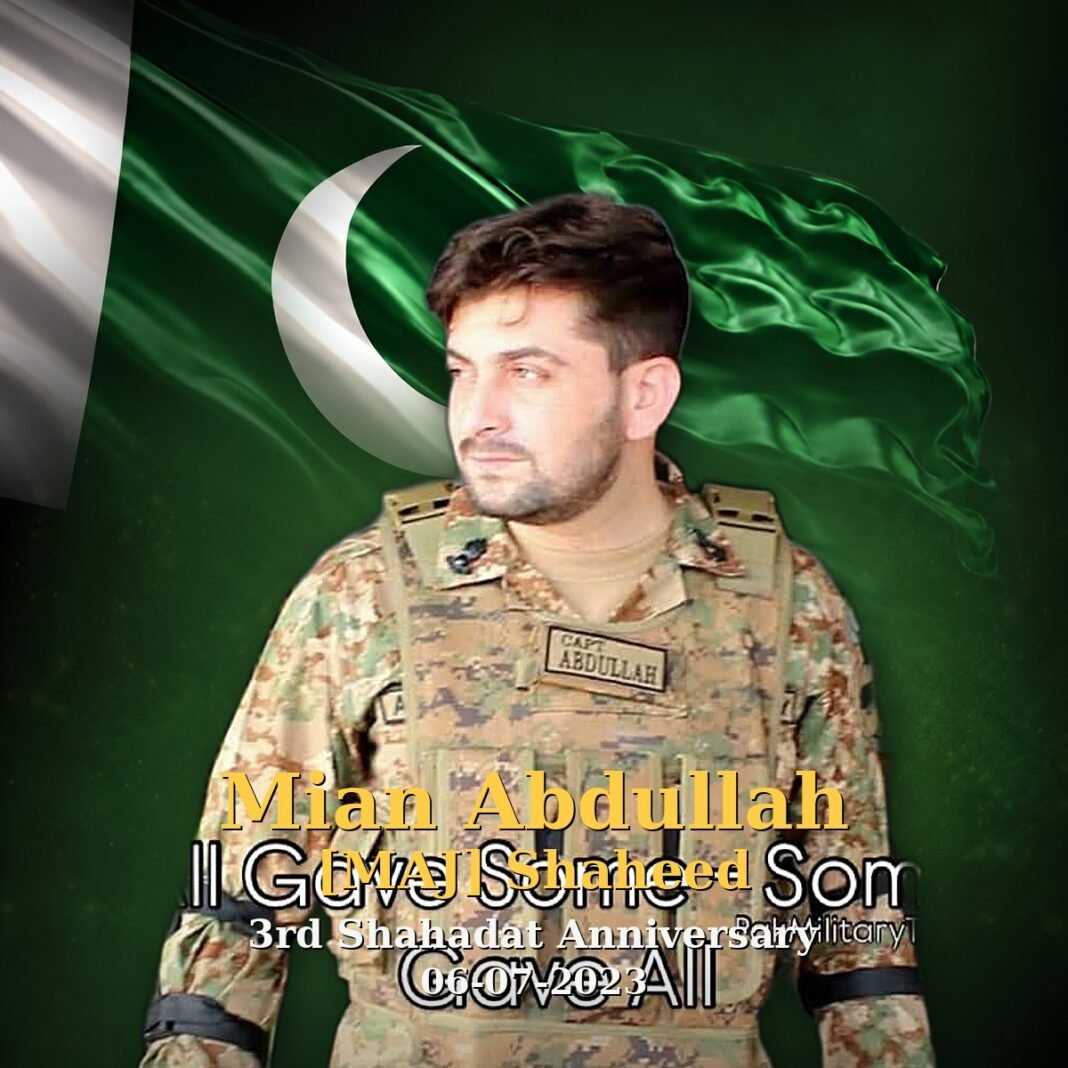
Major Mian Abdullah was a soldier who went looking for danger so that others could sleep in peace. On 6 July 2023, the officer of the 125 Long Course, serving with the 184 SP Medium Artillery and 163 Wing, led a daring raid on a terrorist camp in Bara, Peshawar. It was the kind of operation that dismantles terrorist networks before they can strike: fast, dangerous, and carried out by men who know exactly what they are walking into.
The target was a camp house belonging to a commander of the Tehreek-e-Taliban Pakistan, identified as Yaseen Ghanam Gul. Striking at such a target meant hitting the network where it lived. Major Abdullah led that strike knowing the risks better than anyone. During the raid, he was hit by bullets in the chest. He was evacuated to the Combined Military Hospital in Peshawar, where military doctors fought to save him. His wounds were too grave, and he embraced shahadat.
The Raid in Bara
To lead a raid into a terrorist stronghold is to accept the greatest risk a soldier can take. Operations like the raid in Bara are the cutting edge of the fight against terrorism. They are built on intelligence, planned in secrecy, and executed by small teams who move fast against an enemy that shows no mercy.
Major Abdullah accepted the danger without hesitation, placing the safety of Pakistan above his own life. These are the operations the public rarely hears about in detail, but they are the ones that keep the country safe: precise, deliberate strikes at the heart of the networks that plan attacks on innocent people.
The men who conduct these raids know that the enemy they are hunting is waiting, armed, and without mercy. They go anyway, because every camp house destroyed is an attack that will never happen, every commander removed is a network weakened. Major Mian Abdullah understood this arithmetic of sacrifice, and he paid it in full.
Wounded in Action
During the raid, Major Abdullah received bullets in his chest. He was evacuated to the Combined Military Hospital in Peshawar, where military doctors fought to save him. That he could not be saved, despite every effort, is a grief his family carries to this day. The Army’s medical corps does everything humanly possible for the wounded; sometimes the wounds of war are simply beyond healing.
His evacuation to CMH Peshawar is itself a testament to the Army’s creed of leaving no one behind. From the moment he fell in Bara, every effort was made to save him. That those efforts were not enough does not diminish them; it honours both the doctors who tried and the officer who fought to live.
Each year on 6 July, his shahadat anniversary is observed by his family, his regiment, and all who honour the ongoing fight against terrorism. Three years on, his name remains a reminder that the war against those who threaten Pakistan is fought by men of extraordinary courage, operation by operation, raid by raid.
Striking at the Network
The fight against terrorism is won not only in open battles but in the quiet, precise work of dismantling the networks themselves. Raids on militant camp houses disrupt planning, seize resources, and remove the commanders who direct attacks. They are among the most effective, and the most dangerous, operations in the counter-terrorism effort.
Major Mian Abdullah went into the darkness so that Pakistan could live in the light. He knew the risks of the raid in Bara, and he led it anyway, because that is what officers do: they go first, into the danger, so that others do not have to.
Remembered Every 6 July
May Allah grant Major Mian Abdullah Shaheed the highest place among the shuhada and give his loved ones strength and patience. The nation salutes him, and all its martyrs, with heads bowed and hearts full of pride.
He went looking for danger so that Pakistan could sleep in peace. Pakistan will never forget him.