


How many men and women live in Pakistan? The short version: about 106 men for every 100 women — 51.5% male, 48.5% female. But the national average hides big provincial and district differences. This guide gives you the male-to-female split in the plainest possible terms.
Quick answer: Pakistan’s male-to-female ratio is 106.12 males per 100 females (2023 census) — 51.48% male, 48.51% female out of 241.49 million people. Balochistan has the widest gap (109.02); three KP districts — Hangu, Lower Dir, Upper Dir — are the only places with more women than men.
In this guide
The National Split
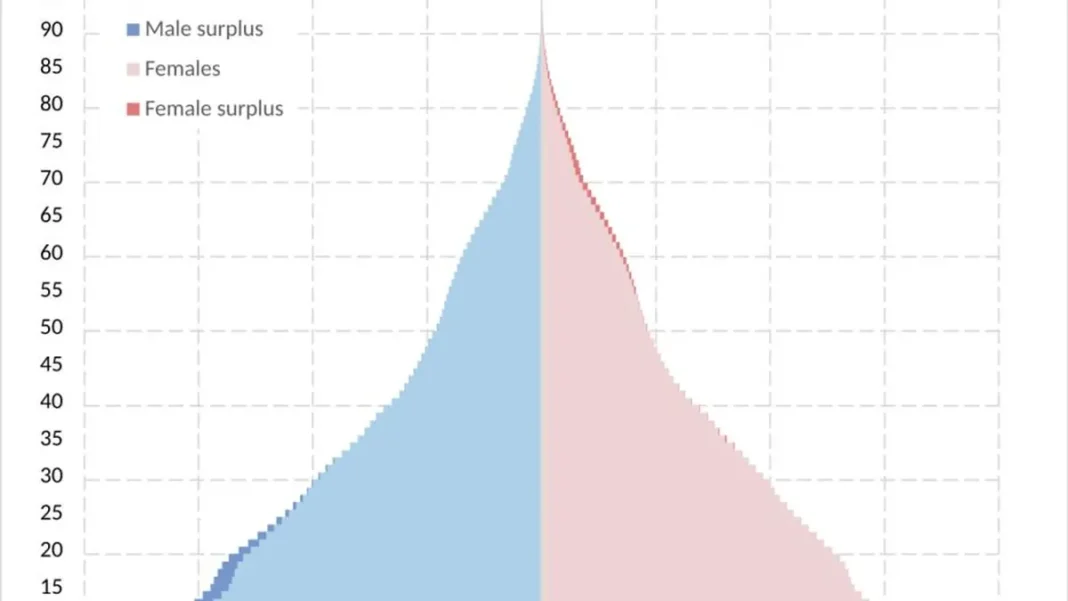
Out of Pakistan’s 241.49 million people (2023 census), 51.48% are male and 48.51% female — roughly 124.3 million men and 117.2 million women, or 106.12 men per 100 women. Transgender persons were counted as a separate category (10,418 in the 2017 census; enumerated again in 2023).
For the census-by-census history and the 2009/2018 figures, see our Pakistan sex ratio landing guide, the 2009 estimate and the 2018 explainer.
Provinces Compared
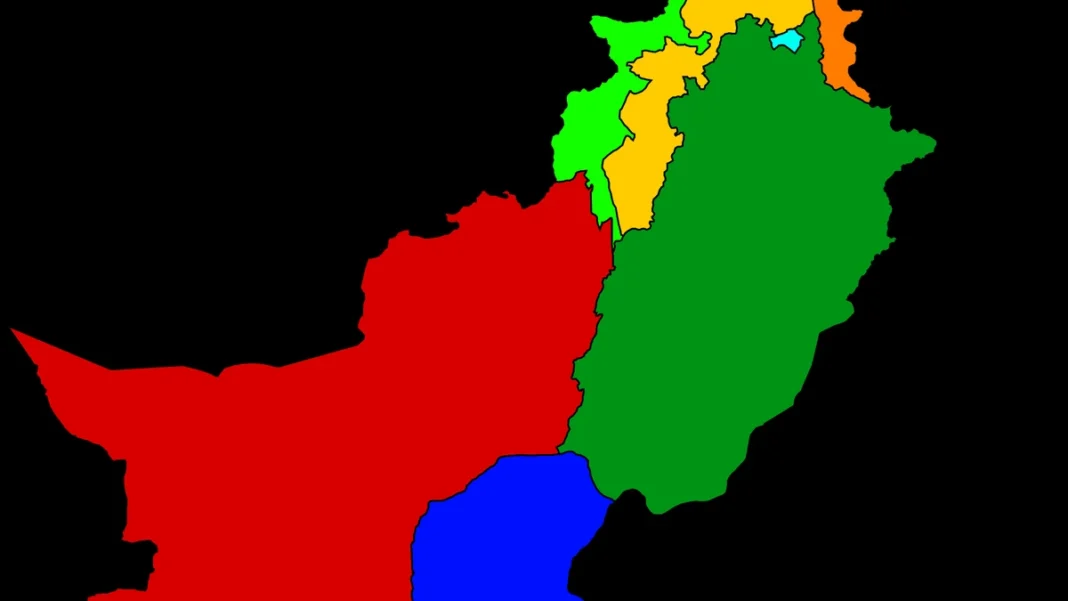
- Balochistan: 109.02 males per 100 females (2023) — the widest gap, though down from 110.82 in 2017 as the female share rose from 47.43% to 47.84%.
- Punjab, Sindh, KP: all sit near the national figure of 106, each ticking up slightly from about 105 in 2017.
- Islamabad Capital Territory: historically one of the most male-skewed areas (the 2009 compendium recorded very low female shares in the territory’s early decades), converging since.
District Outliers
The national average hides striking local variation (PBS district data, via The News): 127 of 136 districts have more men than women. Chaman leads at 12% more men; Dera Bugti and Sherani are 10% male-skewed. Going the other way, Hangu, Lower Dir and Upper Dir in Khyber Pakhtunkhwa have more women than men — the only such districts — while Abbottabad, Buner, Gujrat, Mandi Bahauddin, Attock and Chakwal sit at exact gender parity.
Frequently Asked Questions
What is the male to female ratio in Pakistan?
106.12 males per 100 females (2023 census) — 51.48% male, 48.51% female.
Which part of Pakistan has the most females?
Hangu, Lower Dir and Upper Dir districts in KP are the only districts with more women than men; six districts have exact parity.
Are there more boys or girls born in Pakistan?
More boys — about 105 male births per 100 female births, the normal biological pattern worldwide.
How many transgender people are in Pakistan?
The 2017 census counted 10,418 transgender persons as a separate category; they were enumerated again in the 2023 census.
 - the national split, provincial gaps and district outliers in plain terms.)