

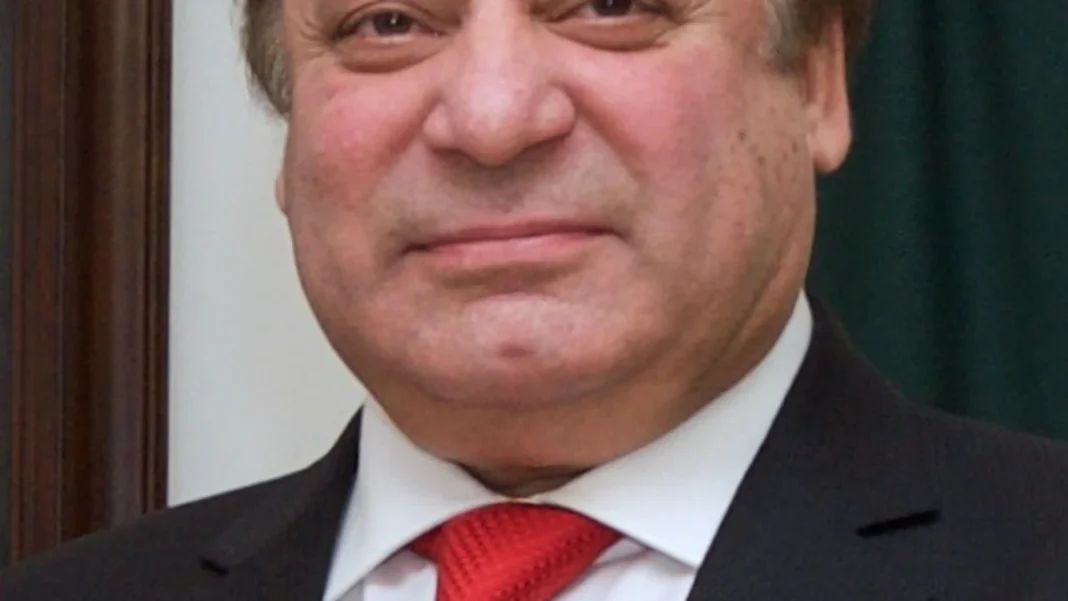
Before the motorways, before the nuclear tests, before the three terms — there was 1990: a 40-year-old industrialist from Lahore becoming prime minister for the first time. This is the story of Nawaz Sharif’s first premiership.
Quick answer: Nawaz Sharif first became PM on 6 November 1990, leading the IJI alliance to victory over Benazir Bhutto’s PPP. His 1990–93 term brought privatisation and economic liberalisation — and ended in dismissal by President Ghulam Ishaq Khan (April 1993), briefly restored by the Supreme Court, then resigned under military pressure (July 1993).
In this guide
The 1990 Victory
The 1990 elections — held after Benazir’s dismissal — pitted her PPP against Nawaz’s Islami Jamhoori Ittehad (IJI), a military-blessed conservative alliance. Nawaz won; at 40, the Lahore industrialist (Ittefaq Group) became the youngest PM since Bhutto. His base: Punjab’s traders and industrialists, the constituency he’s never lost.
The Reforms
Nawaz I was the liberaliser: privatisation of state industries, deregulation, the yellow-cab scheme (taxis for the unemployed — mocked, then iconic), and opening Pakistan to private banks and foreign investment. Critics called it crony capitalism favouring his business class; supporters called it the end of Bhutto-era nationalisation. The economic template of all three Nawaz governments was set here.
The Dismissal
In April 1993, President Ghulam Ishaq Khan dismissed Nawaz under Article 58(2)(b) — the same weapon used on Benazir. Nawaz fought back: the Supreme Court restored him (May 1993) — then the army chief brokered both men’s resignation (July 1993). The lesson Nawaz took into his later terms: never trust the presidency — which is why, as PM in 1997, he stripped the president’s dismissal power. The full list: Pakistan prime minister list.
The IJI Alliance
The Islami Jamhoori Ittehad (Islamic Democratic Alliance) was a nine-party conservative coalition stitched together with establishment blessing to stop the PPP. It was an alliance of convenience — landlords, industrialists and religious parties united by anti-PPP sentiment — and it fractured after winning. The IJI’s 1990 victory is still cited as an example of managed democracy: the establishment’s preferred outcome, delivered through the ballot box. Nawaz outgrew the alliance; the PML-N was its lasting product.
Frequently Asked Questions
When did Nawaz first become PM?
6 November 1990 — leading the IJI alliance to victory in the 1990 general election, at age 40.
Why was he dismissed in 1993?
President Ghulam Ishaq Khan dismissed him under Article 58(2)(b) amid a power struggle; the Supreme Court restored him, but he resigned under military-brokered pressure in July 1993.
: the IJI victory, economic reforms, and the dismissal that started the pattern.)