Pakistan GSP+ Agri Exports: EU Market Push
Pakistan GSP+ agri exports are set to expand as the country builds on the trade access granted by the European Union’s GSP+ scheme, with exporters focusing on food safety, better farming practices, product branding and value addition to win a bigger share of the European market.
The push comes as Pakistan tries to widen its export base beyond textiles and clothing.
The Tribune reported the export push on Friday, November 27.
The numbers behind Pakistan GSP+ agri exports
European Commission data shows EU imports of agri-food products from Pakistan reached 675 million euros in 2025. Cereals accounted for 263 million euros, or about 39 percent of the total. Fruits and nuts added 22 million euros, and preparations of fruits, nuts and vegetables added another 22 million.
The Commission’s series, begun in 2015, records average annual growth of 10.1 percent in agri-food imports from Pakistan over the decade. The category covers some non-edible farm products as well as food items.
The EU remains Pakistan’s largest export destination, taking almost 30 percent of exports in 2025, and exports to the bloc have risen by more than 92 percent since GSP+ began in 2014.
Rice leads the way
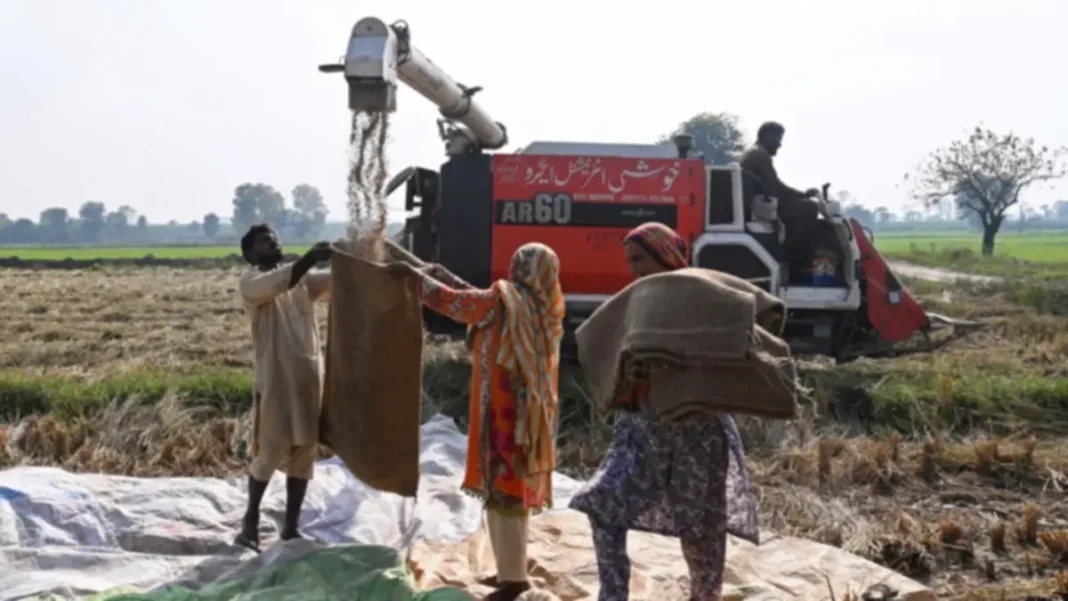
Rice sits at the centre of the plan. Shahzad Ali Malik, former chairman of the Rice Exporters Association of Pakistan and chief executive of Guard Group, said the rice sector was working to meet European food safety rules, above all by tackling pesticide residue levels.
“Excessive use of pesticides can affect the acceptability of Pakistani rice in European markets. We are working to identify low pesticide practices and educate farmers so that our consignments meet the required residue limits,” he said.
He called for a stronger role for agriculture extension departments in guiding farmers on pesticide use.
Malik also stressed branding. He said building Pakistani rice brands mattered abroad, and exporters had asked the government for support through the Export Development Fund, so local products could compete on quality rather than price alone.
The sector’s productivity gains give the plan a base. Malik said Chinese hybrid rice seed, introduced in 1999, had lifted yields of non-Basmati varieties from around 50 to 60 maunds per acre to about 120 maunds. Rice export earnings had grown from around $450 million in 2000 to $3.5 billion last year, he said.
Beyond rice
The opening goes past rice. Pakistan has export potential in citrus, mangoes, dates, vegetables, seafood, meat, dairy products and processed food, provided producers meet buyer needs for quality, safety and traceability.
FP reported on November 25 that FoodAg 2026 drew food investment interest and demand for mechanised rice processing. Pakistan also secured the lowest US tariff among rival exporters, which strengthens the case for diversifying export markets. Qatar’s Baladna group is eyeing animal feed supplies from Pakistan. Shrimp farming has been picked as a further export earner, with 14 priority areas identified.
What exporters want
The Pakistan Business Forum (PBF) said GSP+ had played an important part in export growth to European markets and welcomed efforts to extend the benefits to agriculture and agro-based industries.
“The continuation of GSP+ provides Pakistan with an important opportunity to build on the progress achieved so far,” the forum said. It added that stronger public-private cooperation, steady policies and institutional coordination could diversify exports, attract investment and create rural jobs.
The forum also welcomed the growing focus on international food safety standards, sanitary and phytosanitary rules, traceability and certification. It said further investment in testing laboratories, compliance systems, cold chain facilities, storage and food processing would help Pakistani producers reach higher-value European markets.
Those gains matter beyond exporters. Better grading, packaging, processing and storage can cut post-harvest losses, raise returns for growers and create rural jobs. The PBF also pointed to women’s work across rice, cotton, livestock and dairy, and called for better access to finance, technology and training.
Frequently asked questions
What is GSP+?
GSP+ is the European Union’s scheme that gives Pakistan preferential, mostly duty-free access to the EU market in return for meeting governance and rights conditions. It has applied to Pakistan since 2014.
How big are Pakistan’s farm exports to the EU?
EU imports of agri-food products from Pakistan reached 675 million euros in 2025, with cereals at 263 million euros, or about 39 percent of the total.
Why is pesticide residue an issue for rice?
European buyers apply strict residue limits. Exporters say heavy pesticide use can make consignments unacceptable in Europe, so they are working with farmers on low-pesticide practice.
How important is the EU for Pakistan’s exports?
The EU takes almost 30 percent of Pakistan’s exports, making it the country’s largest export destination. Exports to the bloc have risen by more than 92 percent since GSP+ began.
Which farm products can Pakistan sell to the EU?
Pakistan has export potential in citrus, mangoes, dates, vegetables, seafood, meat, dairy products and processed food, provided producers meet buyer needs for quality, safety and traceability.