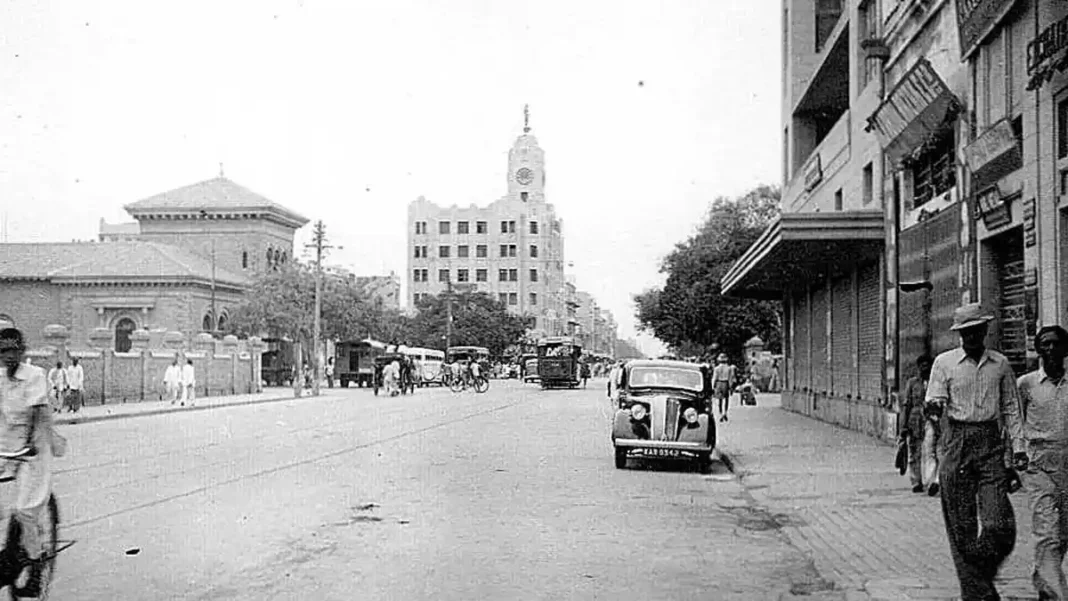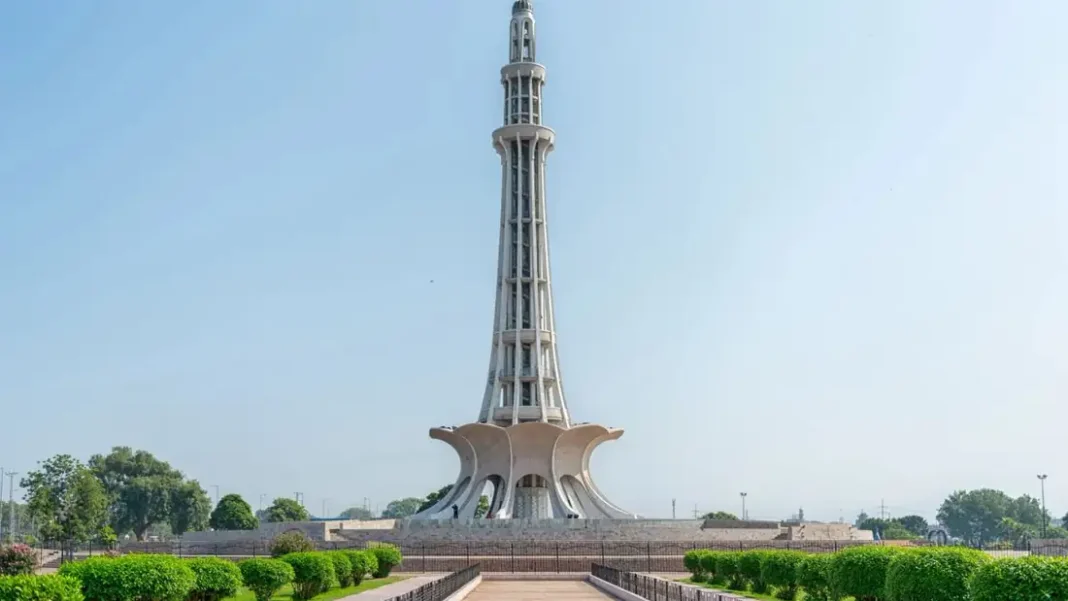


Pakistan’s history as an independent state spans 79 years — from the midnight of 14 August 1947 to the present day. Behind those eight decades lies a far older story: the Indus Valley cities of Mohenjo-daro and Harappa, the Gandhara civilisation, and centuries of empires. This is the definitive timeline, from ancient roots to October 2026.
Quick answer: Pakistan became independent on 14 August 1947 and a republic on 23 March 1956 — it is 79 years old in 2026. Key milestones: the 1940 Lahore Resolution, Partition, the 1948–49 and 1965 and 1971 wars with India, the secession of Bangladesh (1971), the 1973 Constitution (still in force), Zia’s martial law (1977–88), Musharraf’s rule (1999–2008), and uninterrupted democracy since 2008.
In this guide
Before 1947: five thousand years
The land is ancient; the state is young. The territory of Pakistan hosted the Indus Valley Civilisation (~2600–1900 BCE) — Mohenjo-daro in Sindh and Harappa in Punjab were among the world’s first planned cities, with grid streets and drainage millennia before Rome. Later came Gandhara (Taxila, a centre of Buddhist learning), the Achaemenid Persians, Alexander’s invasion (326 BCE), the Mauryans, the Kushans, the Ghaznavids, the Delhi Sultanate, the Mughals (1526–1857) and the Sikh Empire (1799–1849).
British rule (1849–1947) unified the region administratively for the first time and laid the railways, canals and legal codes the new state inherited. The Pakistan movement grew within this order: the All-India Muslim League (founded 1906), the 1940 Lahore Resolution demanding separate Muslim states, and Muhammad Ali Jinnah’s leadership through the 1940s. See the origin of Pakistan and what the region was called before.
1947: independence and Partition
14 August 1947. Pakistan came into being as a Dominion within the British Commonwealth at midnight, with Jinnah as Governor-General and Liaquat Ali Khan as prime minister. The price was Partition: the largest mass migration in history, with an estimated 10–20 million crossing the new borders and horrific communal violence, plus the first Kashmir war (1947–48) within months.
The new state comprised two wings — West Pakistan and East Pakistan (now Bangladesh) — separated by 1,600km of India, an arrangement whose strains would end in 1971. The story of Pakistan narrates these founding years in full.
1956–1971: republic, coups and breakup
23 March 1956: Pakistan adopted its first constitution and became the Islamic Republic of Pakistan — see when Pakistan became a republic. The constitution lasted barely two years: President Iskander Mirza abrogated it in October 1958, and General Ayub Khan’s martial law began a decade of military-led “guided democracy” under the 1962 constitution.
The 1965 war with India, Ayub’s fall, Yahya Khan’s martial law, the disputed 1970 elections and the 1971 civil war ended with East Pakistan becoming Bangladesh in December 1971 — Pakistan’s defining trauma, halving the country’s population and territory. Zulfikar Ali Bhutto’s PPP then wrote the 1973 Constitution, still in force today.
1977–2026: the modern era
Zia, democracy, Musharraf, democracy. General Zia-ul-Haq’s coup (1977) brought eleven years of martial law and Islamisation, ending with his death in a 1988 plane crash. The 1990s saw musical-chairs democracy (Bhutto/Sharif governments dismissed), the 1998 nuclear tests, Kargil (1999), Musharraf’s coup (1999–2008), the lawyers’ movement, and — since the 2008 elections — the longest continuous democratic stretch in Pakistan’s history, including the first civilian-to-civilian transfer of power in 2013.
The 18th Amendment (2010) devolved power to the provinces; the war on terror, CPEC, and recurring IMF programmes shaped the 2010s–20s. In 2026 Pakistan navigates coalition government, an IMF-backed stabilisation, and renewed India tensions after the April Pahalgam crisis. The government history page details each era’s constitutional order.
What is the history of Pakistan in short?
Ancient Indus Valley civilisation → centuries of empires → British rule → independence 14 August 1947 → republic 23 March 1956 → 1971 Bangladesh secession → 1973 Constitution → alternating military and civilian rule → continuous democracy since 2008.
What are the major events in Pakistan history?
The 1940 Lahore Resolution, 1947 independence and Partition, the 1956 republic, the 1965 and 1971 wars, Bangladesh’s secession (1971), the 1973 Constitution, Zia’s martial law (1977–88), the 1998 nuclear tests, Musharraf’s coup (1999), and the 2010 18th Amendment.
Where can I read a Pakistan history timeline?
This page’s sections walk the timeline era by era; the pillar guide adds a year-by-year table. For a narrative version, see the story of Pakistan.