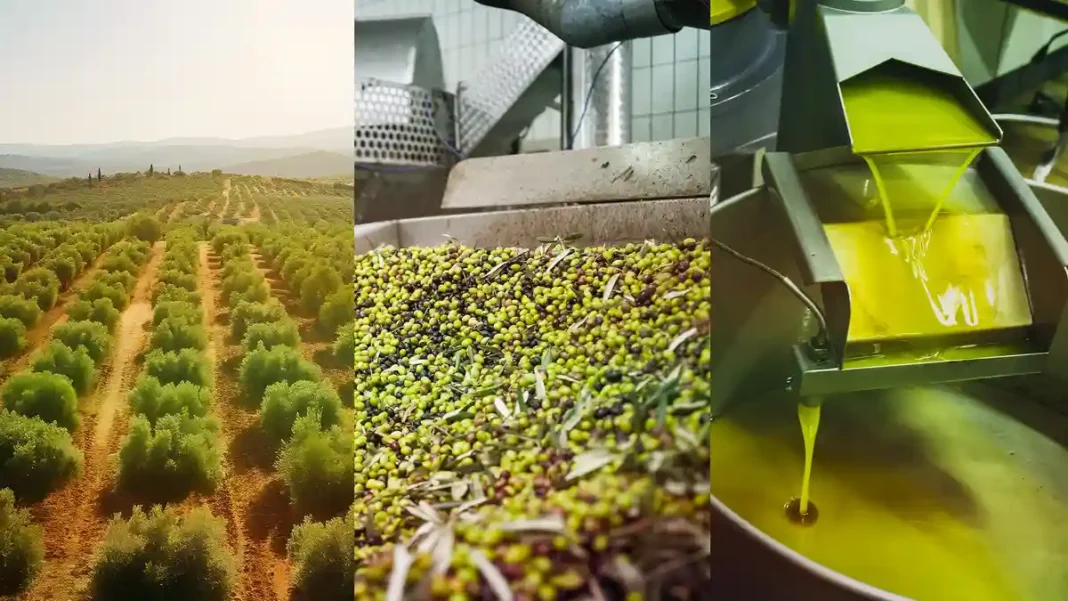
ISLAMABAD: Pakistan’s domestic olive oil production is expected to reach 716 tonnes this year, according to a government survey seen by ProPakistani — a milestone for an industry that produced just 19 kilogrammes in 2016.
Olive fruit production is estimated at 7,412 tonnes, the survey says. The numbers are still small next to Pakistan’s overall edible-oil market, but for an industry that barely existed a decade ago, the growth is substantial.
From research plots to 7.6 million plants
The push began in 1986, when the Pakistan Agricultural Research Council started working with the Italian government to introduce olives and develop cultivation practices. In the early 2000s, researchers began grafting wild olive varieties to turn them into fruit-bearing trees.
A five-year project under the 2006 debt-swap agreement with Italy moved under PARC and completed in 2012, and later projects scaled up commercial cultivation. The government has distributed millions of saplings free and offered subsidies of more than 67 per cent on plants and drip-irrigation systems.
The policy target is to expand the total cultivated olive area to 100,000 acres and the tree population to 10 million by 2030. Ongoing work falls under the National Olive Value Chain Policy 2024–2030, which created the Pakistan Olive and Olive Oil Council and launched the national certification trademark “PakOlive” — only oils that pass strict quality checks can carry the label.
Where the olives grow
The survey records 7.64 million olive plants across 60,456 acres in 131 districts. Balochistan holds the largest share, with 3.20 million plants (41.9 per cent) across 24,620 acres in 31 districts. Punjab follows with 2.24 million plants across 17,000 acres, and Khyber-Pakhtunkhwa has 1.66 million across 14,690 acres.
There are also 205,929 plants in Azad Jammu and Kashmir, 117,958 in Islamabad, 92,296 in Gilgit-Baltistan and 129,384 in Sindh.
Fifty-one extraction units now operate nationwide — 23 in Balochistan, 16 in K-P, nine in Punjab, two in Islamabad and one in AJK — backed by three value-addition laboratories, six fruit-processing units, five weather stations and a national reference laboratory.
Exports up 27-fold
Olive oil exports have grown from 9 tonnes in 2020 to 249 tonnes in 2025 — a 27-fold increase in five years — while imports have fallen 33 per cent in volume from their 2021 peak of 4,479 tonnes to 2,996 tonnes in 2025.
During a recent media briefing, ProPakistani reported that Italian delegates who visited Pakistan considered Balochistan olive oil to be of international quality. While 100kg of olives typically yields 12 to 14kg of oil worldwide, Balochistan olives are reportedly yielding around 18kg per 100kg of fruit.
Why you still see imported oil on shelves
Despite the progress, a 2023 market study under the GRASP project found that 74 per cent of consumers preferred imported olive oils and only 26 per cent favoured local ones; three of every four products in retail were internationally sourced. Price sensitivity runs high — 73 per cent of consumers call price very important — and 71 per cent rate brand reputation as very important.
“The primary bottleneck is branding, packaging, and marketing because most of our farmers are not equipped in that area, and there is no corporate involvement for now,” said Awais Khan, CEO of the National Alliance for Safe Food, speaking to ProPakistani.
The government sees the sector as part of a wider push for self-sufficiency in edible oils — Pakistan remains heavily dependent on imported edible oil, which is why agriculture reforms and farm-gate pricing debates, such as the recent row over wheat issue prices, keep returning to the policy agenda. Olive oil still accounts for only 0.3 per cent of the country’s edible-oil imports, and a common myth that it is unsuitable for high-temperature cooking, plus its higher cost, limits uptake.
Challenges ahead
Olive trees yield no fruit or financial return in their first four years, and the break-even horizon stretches to nearly 10 years. Federal projects typically run on fixed five-year windows, which can cut support before groves reach commercial maturity.
The largest plantations sit in Balochistan and K-P, where the security situation complicates long-horizon investment. And unlike traditional oilseeds, olives need barani and marginal lands — areas where access to agricultural extension services remains limited.
For now the trajectory is encouraging. Turning it into a commercially viable industry will need sustained investment, a working value chain, and branding strong enough to win shelf space from imports.
FAQs
How much olive oil will Pakistan produce in 2026?
Production is expected to reach 716 tonnes, up from 19kg in 2016, according to a government survey.
Where are most olives grown in Pakistan?
Balochistan leads with 41.9 per cent of planted trees, followed by Punjab and Khyber-Pakhtunkhwa.
What is PakOlive?
PakOlive is the national certification trademark for Pakistani olive oil. Only oils that meet strict quality regulations can carry the label.