

Why does Pakistan exist? The answer is the Partition of 1947 — the division of British India that created Pakistan as a homeland for the subcontinent’s Muslims. This guide tells the Pakistan side of the story: why the demand arose, how 14 August 1947 unfolded, Jinnah’s role, the migration that remade the country, and what Partition means for Pakistan today. For the full two-sided history, see our pillar guide to the Partition of India and Pakistan.
Quick answer: Pakistan was created on 14 August 1947 when British India was partitioned into the independent dominions of Pakistan and India. The creation rested on the Two-Nation Theory — Jinnah and the Muslim League’s argument that Muslims needed a separate homeland — enacted through the Mountbatten Plan (3 June 1947) and the Indian Independence Act (July 1947).
In this guide:
- Why Pakistan Was Created
- 14 August 1947: Independence Day
- Jinnah’s Role
- The Migration That Made Pakistan
- What Partition Means for Pakistan Today
- FAQs
Why Pakistan Was Created
The demand for Pakistan grew out of a simple fear with deep roots: that in an undivided, Hindu-majority India, Muslims would be a permanent political minority. The All-India Muslim League, under Muhammad Ali Jinnah, argued from the 1940 Lahore Resolution onward that Muslims constituted a separate nation — by religion, culture, law and historical experience — entitled to a homeland comprising the Muslim-majority zones of the north-west and north-east. The 1946 elections, in which the League swept the Muslim-reserved seats, gave the demand democratic weight; the Calcutta killings of August 1946 gave it urgency. When Britain decided to leave, the League’s position was non-negotiable: no Pakistan, no settlement.
14 August 1947: Independence Day
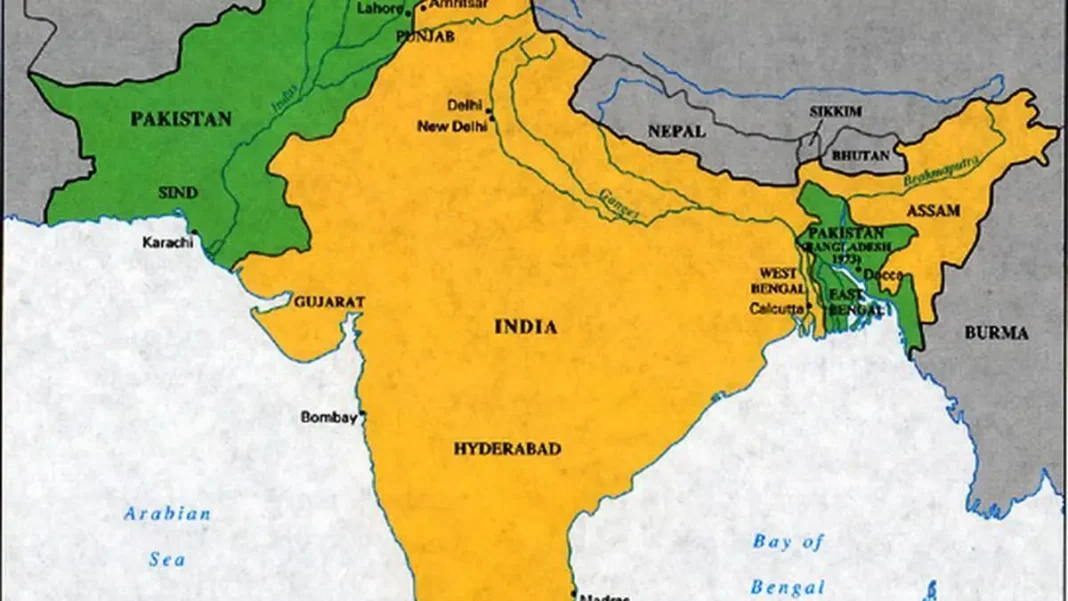
Pakistan celebrates independence on 14 August — the day power was transferred in Karachi, a day before India’s midnight ceremony in Delhi. Jinnah, as Governor-General, addressed the Constituent Assembly; that evening his broadcast ended with “Pakistan Zindabad”. The new dominion comprised two wings a thousand miles apart: West Pakistan (today’s Pakistan) and East Pakistan (today’s Bangladesh) — a geographical oddity that would shape the country’s first quarter-century. Karachi became the capital; the flag, the anthem and the institutions of a new state had to be built from scratch, in weeks.
Jinnah’s Role
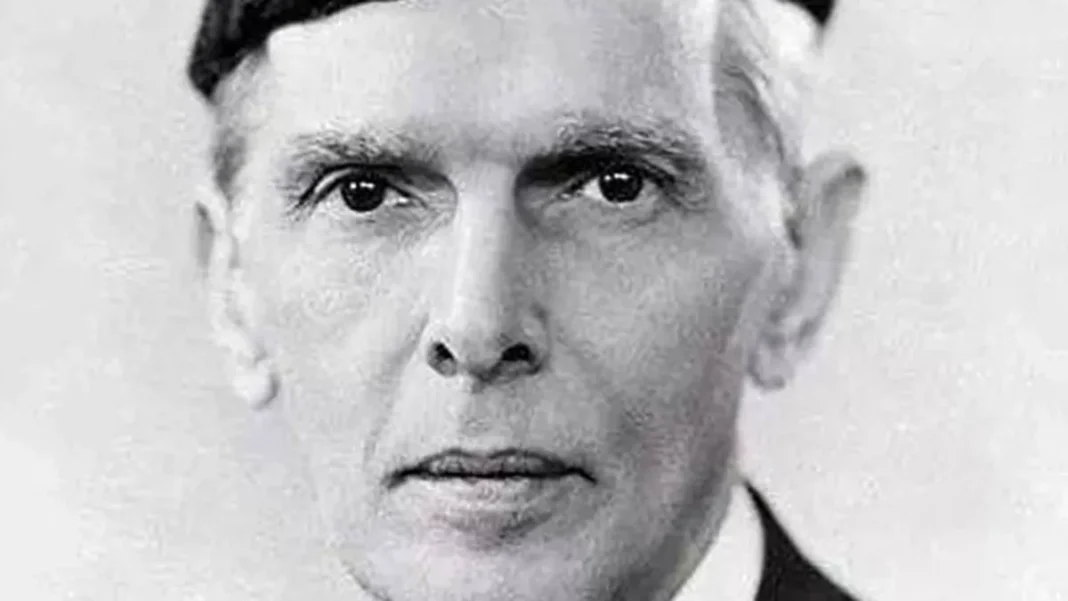
No Partition story can be told without Quaid-e-Azam Muhammad Ali Jinnah — Pakistan’s founder and first Governor-General. A London-trained barrister who had once been an ambassador of Hindu-Muslim unity, Jinnah became convinced by the late 1930s that constitutional safeguards would never protect Muslims in a united India. His negotiating skill forced the British and the Congress to accept a division they had long resisted; his 11 August 1947 address to the Constituent Assembly — “you are free to go to your temples… religion has nothing to do with the business of the state” — remains the most quoted (and debated) statement of Pakistan’s founding vision. He died on 11 September 1948, barely thirteen months after independence.
The Migration That Made Pakistan
Partition’s human tide flowed both ways, but its Pakistani imprint was indelible: 7.226 million Muslims entered Pakistan (1951 census), the great majority settling in Punjab and Sindh. Karachi — under half a million people in 1947, nearly half of them Hindu — absorbed over half a million refugees, becoming the Urdu-speaking city it remains. The muhajir (refugee) identity born in those columns became a permanent force in Pakistani politics, from the language politics of Sindh to the rise of the MQM. The violence touched every migrant stream: estimates of the dead range from 200,000 to 2 million, with around a million the most cited figure.
What Partition Means for Pakistan Today
Partition is Pakistan’s founding trauma and founding triumph at once. The Two-Nation Theory remains the state’s ideological bedrock, taught to every schoolchild. The Radcliffe Line’s hasty geography underlies the Kashmir dispute and the militarised eastern border. And the refugee experience shaped the country’s demography — the reason Karachi speaks Urdu, the reason Punjab’s canal colonies filled, the reason “Partition stories” remain a living genre in Pakistani families. To understand the country, start here: read our Partition of India explainer for the causes and the line itself, and Karachi’s first-capital years for what independence built.
FAQs
When was Pakistan created?
14 August 1947, when British India was partitioned into the independent dominions of Pakistan and India under the Indian Independence Act.
Why was Pakistan partitioned from India?
Because of the Two-Nation Theory: Jinnah and the Muslim League argued Muslims were a separate nation needing a homeland, a demand Britain accepted in the Mountbatten Plan of 3 June 1947.
Who founded Pakistan?
Muhammad Ali Jinnah (Quaid-e-Azam), leader of the All-India Muslim League and Pakistan’s first Governor-General. He died on 11 September 1948.
How many Muslims migrated to Pakistan in 1947?
The 1951 census counted 7.226 million Muslims who left India for Pakistan; total displacement across both directions was 14–15 million.
Related Guides
- Partition of India and Pakistan — the pillar guide: causes, timeline, Radcliffe Line, migration, legacy
- Partition of India — causes, the Radcliffe Line and the aftermath, explained
- 1st Capital of Pakistan — Karachi’s years as the nation’s capital, 1947–1959
- Constitution of Pakistan 1973 — how Partition’s questions were written into law