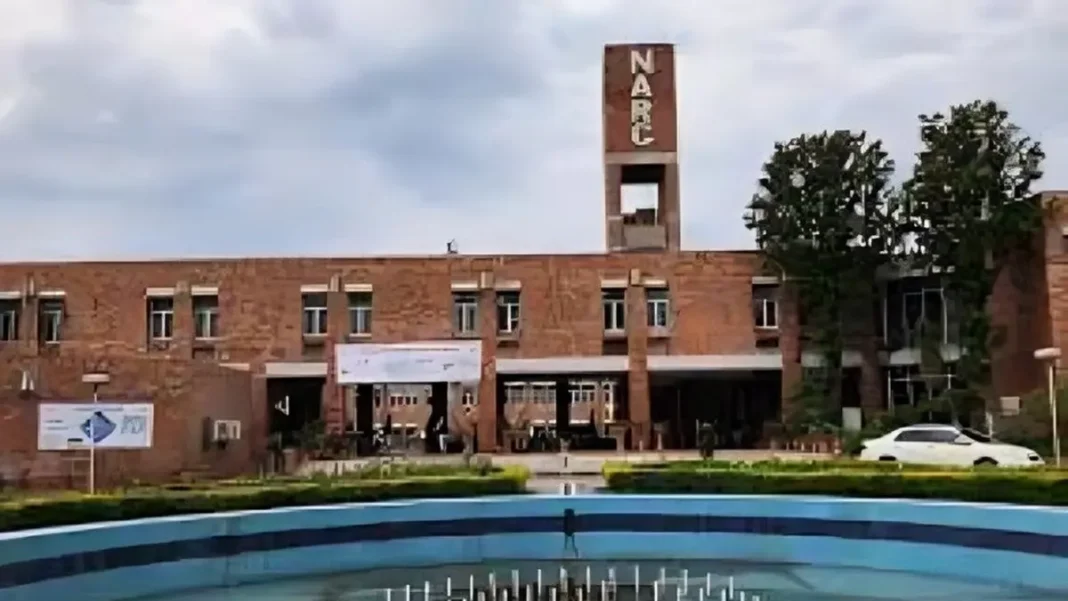
PARC Restructuring Review Given to FBR Chairman by PM
Prime Minister Shehbaz Sharif has tasked the Federal Board of Revenue (FBR) chairman with reviewing the PARC restructuring plan within two weeks. ProPakistani reported the directive, citing sources, on Wednesday.
The directive was issued at a performance review meeting of the Ministry of National Food Security and Research on 19 November. The FBR chairman must report back within two weeks.
PARC is Pakistan’s national agricultural research body, coordinating research on crop productivity, livestock, agricultural technology and food security. Its restructuring follows a broader reform drive, after assessments found outdated facilities, overlapping federal and provincial responsibilities, weak commercialisation of research and limited coordination with farmers and industry.
Why the FBR chairman
The choice has raised questions. The tax authority must meet an annual revenue target of Rs15.264 trillion, widen the tax net to include retailers and improve collection. It collected Rs4.089 trillion in the first four months of FY2026-27, short of its target by Rs96 billion. Assigning its chairman another major task raises questions about how the extra work will affect tax reform and revenue collection.
The PARC restructuring plan approved in March
The restructuring is not new. The prime minister approved it in March 2026, aiming to modernise the institution, improve farm exports and secure food supplies, and directed the food security ministry to prepare a detailed roadmap with timelines.
Under the plan, the National Agricultural Research Centre (NARC) in Islamabad becomes five centres of excellence, covering genome-based crop research, livestock genetics and health, climate-smart land and water, AI-driven precision agriculture, including farm automation, and food processing and value addition. Each centre will be led by experts from the Chinese Academy of Agricultural Sciences (CAAS). Four regional hubs will support them, foreign experts will hold half the seats on the scientific advisory board, and PARC will shift from direct implementation to coordination.
The work runs in four phases: setup in 2026; the five centres in operation, with pilots in Punjab and Sindh, in 2027-28; a national rollout with an AI-powered research information system and 25 per cent private co-funding in 2028-30; and global benchmarking from 2030. Targets include a Rs10 billion endowment, a Rs2 billion annual grant, and research spending up from 0.5 per cent to 1 per cent of agricultural GDP.
Delays raised at the 19 November meeting
The review follows concern over slow progress. At the 19 November meeting, the prime minister told ministries to speed up efforts to meet targets and warned that delays would not be tolerated, Business Recorder reported.
Officials briefed him on expanding storage capacity for farm produce and on Mera Kissan, a digital application to register farmers and improve their access to government services. They also reported that the National Agriculture and Food Security Advisory Council was in place, and that PARC restructuring was discussed.
Ministers Rana Tanveer Hussain (National Food Security), Ahsan Iqbal (Planning), Ahad Cheema (Economic Affairs), Jam Kamal (Commerce) and Shaza Fatima (Information Technology) attended, along with senior officials.
Why farm research matters now
Agriculture remains central to Pakistan’s economy and food security, and the government has moved on several fronts. The cabinet has approved a national policy to deregulate the sugar sector. Pakistan is seeking Brazil’s help to modernise livestock farming, as domestic cotton output has fallen to around 5.6 million bales. Sindh has fixed the flour price at Rs138 per kilo. The prime minister has ordered action against oil marketing companies over tax irregularities worth Rs24.4 billion. Food exports were reported in October figures published this week. The government has also acted on wheat prices and hoarding.
Whether the two-week review produces a firm timetable will be the next test. The March plan set out the shape of the reform. The FBR chairman’s review will show whether the government can now move it from paper to practice.
Frequently asked questions
What has the prime minister asked the FBR chairman to do?
He has asked the FBR chairman to review the reform and restructuring plan of the Pakistan Agricultural Research Council (PARC) and report back within two weeks.
What is PARC?
PARC is Pakistan’s national agricultural research body, coordinating research on crop productivity, livestock, agricultural technology and food security.
When was the PARC restructuring first approved?
The prime minister approved it in March 2026. The plan turns the National Agricultural Research Centre in Islamabad into five centres of excellence, in four phases running to 2030 and beyond.
Why is the FBR chairman’s workload an issue?
The FBR must meet an annual revenue target of Rs15.264 trillion. It collected Rs4.089 trillion in the first four months of FY2026-27, short of its target by Rs96 billion.
What happens next?
The FBR chairman has two weeks to complete the review. The government will then decide the next steps for putting the restructuring into practice.