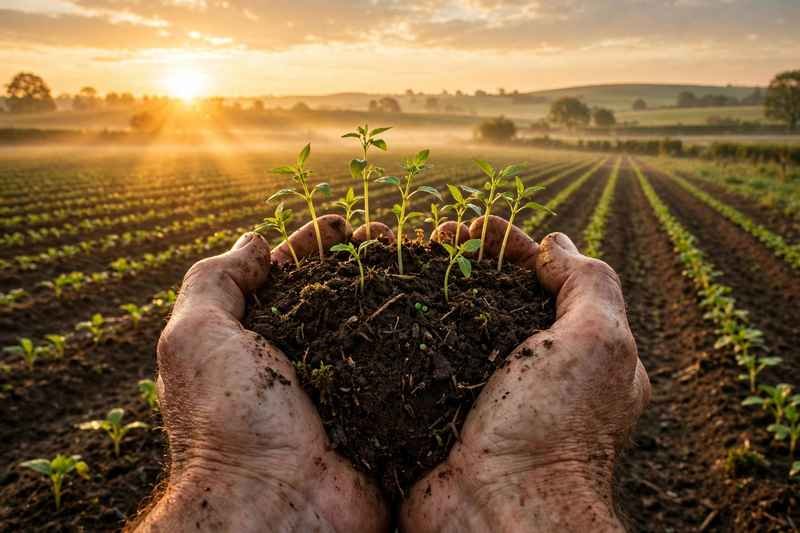
The world marks World Food Day tomorrow, October 16, with the Food and Agriculture Organization (FAO) of the United Nations leading a global call to action under this year’s theme: “Innovate today. Nourish tomorrow.”
Observed every year on October 16 — the anniversary of FAO’s founding in 1945 — World Food Day is celebrated in more than 150 countries. Since the first observance in 1981, it has grown into the UN’s flagship campaign for food security, nutrition, and sustainable agrifood systems.
A Stark Reminder: The Hunger Numbers
This year’s observance comes with sobering figures. In his World Food Day 2026 message, UN Secretary-General António Guterres noted that around 645 million people faced hunger last year, while nearly 2.7 billion people cannot afford a healthy diet.
“Food is a basic human right,” Guterres said, pointing to overlapping shocks — disrupted production and supply chains, rising food and fertilizer costs — that are pushing nutritious diets further out of reach for millions. His message was blunt: “We have the knowledge, technology and capacity to feed the world. It’s time to use it.”
What “Innovate Today, Nourish Tomorrow” Means
The 2026 theme puts innovation at the center of the fight against hunger — and the FAO is clear that innovation means far more than technology. It includes:
- Digital tools: mobile advisory services giving farmers real-time weather and crop guidance, and data systems that organize agricultural knowledge
- Science: improved seed varieties, biotechnology, and research into climate-resilient crops
- Artificial intelligence: named explicitly in the Secretary-General’s message as a tool to help ensure nutritious food reaches everyone
- Traditional knowledge: the farming practices of Indigenous peoples, pastoralists, and smallholders refined over generations
- Policy and finance: mobilizing investment to make nutritious food available and affordable, especially in developing countries
- Community action: scientists, researchers, farmers, youth, and entrepreneurs working together on local solutions
The theme also stresses preparedness — investing in resilience before crises hit costs far less than repairing the damage afterward.
2026: The Year of the Woman Farmer
This World Food Day carries extra significance: 2026 is the International Year of the Woman Farmer (alongside the International Year of Rangelands and Pastoralists). Women produce a huge share of the world’s food, yet remain under-recognized and under-supported — with less access to land, credit, training, and technology than men.
FAO events this year are spotlighting women’s knowledge, skills, and daily work in food production, from art exhibitions honoring women fishers and farmers to programs connecting women producers with innovation resources. For Pakistan, where rural women form the backbone of agricultural labor, the theme resonates deeply.
Why It Matters for Pakistan
Pakistan sits at the intersection of nearly every challenge World Food Day highlights. The country faces the triple burden of malnutrition — undernutrition, micronutrient deficiency, and rising obesity — while its agriculture contends with water stress, climate extremes, and post-harvest losses.
Yet Pakistan also holds enormous potential under this year’s theme. Mobile-based farm advisory services are expanding, research institutions are developing heat-tolerant wheat varieties, and a young, tech-savvy generation is entering agri-entrepreneurship. The women working Pakistan’s fields — sowing, harvesting, tending livestock — are precisely the innovators the International Year of the Woman Farmer seeks to celebrate.
Reducing food loss between farm and market, improving storage, and connecting smallholders to fair markets are among the highest-impact innovations available — none requiring futuristic technology, all requiring sustained commitment.
How You Can Mark the Day
- Waste less food: plan meals, store food properly, and use leftovers creatively. Roughly a third of all food produced globally is lost or wasted.
- Buy local and seasonal: support nearby farmers and markets — shorter supply chains mean fresher food and fairer incomes.
- Diversify your plate: try neglected and underused crops — millets, pulses, indigenous vegetables — which are often more nutritious and climate-resilient than staples.
- Support women producers: buy from women-led farms and food businesses where you can.
- Learn and share: talk about food security with family, especially children — awareness is where change starts.
The Bottom Line
World Food Day is not just a date on the calendar — it is an annual audit of humanity’s most basic promise: that no one should go hungry. The 2026 theme is an invitation as much as a slogan. Innovation is not only the work of laboratories; it is the farmer trying a new seed, the mother stretching a meal without wasting a grain, the student building an app for crop prices. Innovate today, in whatever way you can — and help nourish tomorrow.
Source: FAO and United Nations World Food Day 2026 materials. World Food Day is observed globally on October 16.