PM criticises exporters over sluggish shipments; industry says policy failures lie with government
PM criticises exporters over sluggish shipments; industry says policy failures lie with government
Prime Minister Shehbaz Sharif has voiced dissatisfaction with the performance of Pakistan’s exporters, saying the sector has failed to deliver despite what he called several incentives extended in the budget. The industry’s response was swift: policy formulation is the government’s job, not the exporters’.
Addressing the Pakistan Stock Exchange through a video link on Thursday, the prime minister said export shipments were slowing even after the government provided long-sought support, including measures that raised unit prices.
“We have given incentives to the export sector, but its performance remains unsatisfactory,” he said, adding that he did not wish to single anyone out but that exporters had failed to deliver. He also said he had briefed the IMF managing director on Pakistan’s economic performance.
Why Pakistan exports are struggling, according to industry
Jawed Bilwani, former president of the Karachi Chamber of Commerce and Industry and coordinator of the All Pakistan Exporters Association Forum, rejected the criticism. “Policy formulation and its operations are in the hands of the federal government, not the exporters,” he said.
Exporters point to a long list of drag factors: high manufacturing costs, narrow profit margins compared with regional competitors, higher taxes than other businesses, prolonged delays in refund payments without compensation, and what they describe as arbitrary deductions by the Federal Board of Revenue. Liquidity pressures and high operational costs, they say, leave them with no level playing field.
Bilwani also criticised taxes and duties on imported yarn under the Export Facilitation Scheme, saying they created liquidity pressure without benefiting the local yarn industry, and noted that several exporting industries had shifted operations abroad.
Strike and utility costs pile on pressure
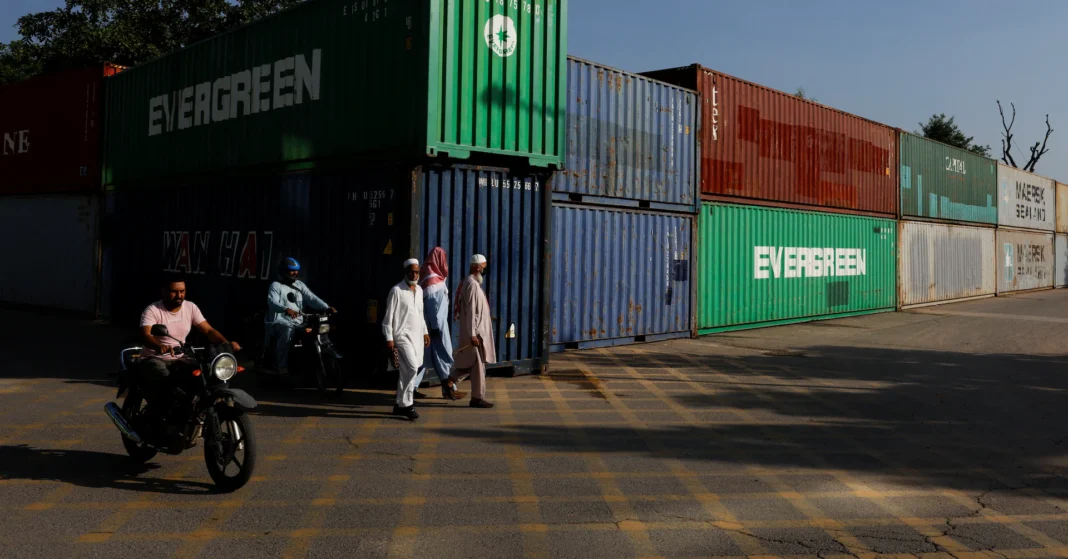
A recent nine-day nationwide transporters’ strike caused massive losses for exporters, including vessel shutouts, detention charges and mounting demurrage. Bilwani urged the government to set up an emergency cell at the Prime Minister’s Office to handle export logistics.
Other complaints included costly utilities, frequent electricity, gas and water outages, capacity charges paid to independent power producers, and labour productivity losses from the lack of public transport and prolonged loadshedding.
Bilwani argued that despite these conditions, export industries had invested heavily in modern technology, quality control, certifications, skilled manpower and value addition, and deserved policy support rather than blame.
Frequently asked questions
What did the prime minister say about Pakistan exports?
Addressing the PSX via video link on Thursday, Shehbaz Sharif said exporters’ performance remained unsatisfactory despite several budget incentives, though he said he did not want to single anyone out.
How did exporters respond?
Former KCCI president Jawed Bilwani said policy formulation rests with the federal government, not exporters, and listed high costs, tax burdens, refund delays and utility outages as the real drags on shipments.
What was the impact of the transporters’ strike?
The nine-day nationwide strike caused vessel shutouts, detention charges and mounting demurrage costs for exporters, who want an emergency logistics cell at the PM’s Office.
What do exporters want from the government?
A level playing field: timely refunds, rationalised taxes and duties, reliable utilities and a coherent export policy, rather than blame for slowing shipments.