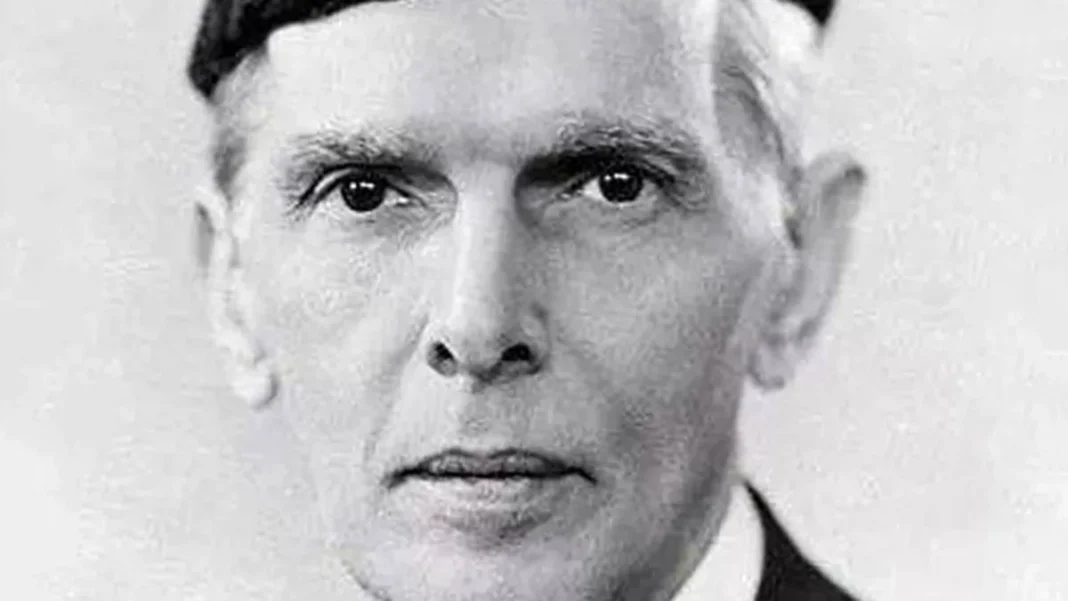
Hindus and Muslims are two distinct nations — different in religion, culture, law, heroes and history — and cannot be merged into a single nationality. That claim, the Two-Nation Theory (دو قومی نظریہ), is the ideological foundation of Pakistan. It was not invented in a day: it grew from Sir Syed’s warnings after 1867, was sharpened by Iqbal’s philosophy, and was finally adopted as the Muslim League’s creed at Lahore in 1940.
Quick answer: The Two-Nation Theory holds that Muslims and Hindus of British India were two separate nations who could not share one state. Articulated by Sir Syed Ahmed Khan after the 1867 Urdu-Hindi controversy, given philosophical form by Allama Iqbal (1930), and made political reality by Jinnah and the Lahore Resolution (1940), it remains Pakistan’s founding ideology.
In this guide
What the theory means
The Two-Nation Theory rests on a simple observation: nationhood is not only territory. As Jinnah put it in his famous 1940 presidential address at Lahore, Hindus and Muslims “belong to two different religious philosophies, social customs, and literatures” — they “neither intermarry nor interdine together, and indeed they belong to two different civilisations.” Separate electorates (1909), separate personal laws and separate political organisations had already recognised the distinction in practice; the theory gave it a name.
How the idea evolved
- Sir Syed Ahmed Khan (after 1867): watching the Urdu-Hindi agitation at Banaras, he concluded Hindus and Muslims could not progress as one nation — “the two nations” language first appears in his speeches of the 1880s.
- 1906–1916: the Muslim League’s founding and the Lucknow Pact treated Muslims as a distinct political entity entitled to separate electorates and weightage.
- Allama Iqbal (1930): at Allahabad he argued Islam itself is a social and political order — “Islam is not a religion in the European sense” — and proposed amalgamating Punjab, Sindh, NWFP and Balochistan into a Muslim state.
- Chaudhry Rahmat Ali (1933): his pamphlet Now or Never coined the name PAKISTAN — from Punjab, Afghania (NWFP), Kashmir, Sindh and BalochisTAN.
- Lahore Resolution (23 March 1940): the League formally demanded independent Muslim states — the theory becomes state policy.
Jinnah’s formulation
Jinnah converted a cultural argument into a constitutional one. His logic ran: in a united India, parliamentary democracy means permanent Hindu-majority rule; the Congress ministries of 1937–39 proved Muslims would be a permanent minority without safeguards; therefore only separate sovereignty guarantees Muslim nationhood. The 1945–46 election — the League sweeping the Muslim seats — was presented as the Muslim nation’s plebiscite for the theory.
Criticism and the Pakistani answer
Critics — from Congress nationalists to later historians — argue the theory ignored shared language, region and class, and that 1971 (Bangladesh’s separation) disproved it. The standard Pakistani response, taught in Pakistan Studies, is that 1971 was a failure of governance and power-sharing, not of the theory: Bangladesh itself was created as a Muslim-majority state, and the theory’s core claim — that Muslims needed a homeland where Islam shapes public life — stands vindicated by Pakistan’s existence.
Trace the full story in our 1857–1947 timeline, the 1857 War of Independence, and the Urdu study notes.
Frequently asked questions
Who gave the Two-Nation Theory?
Its earliest political expression is Sir Syed Ahmed Khan’s after 1867; Allama Iqbal gave it philosophical form in 1930; Muhammad Ali Jinnah made it the Muslim League’s political programme culminating in the Lahore Resolution of 1940.
What does the Two-Nation Theory state?
That Hindus and Muslims of the subcontinent are two separate nations — distinct in religion, culture, law and civilisation — and therefore entitled to separate homelands rather than one composite state.
Who coined the name Pakistan?
Chaudhry Rahmat Ali, a Cambridge student, coined “PAKISTAN” in his 1933 pamphlet Now or Never, built from the initials of Punjab, Afghania, Kashmir, Sindh and Balochistan.