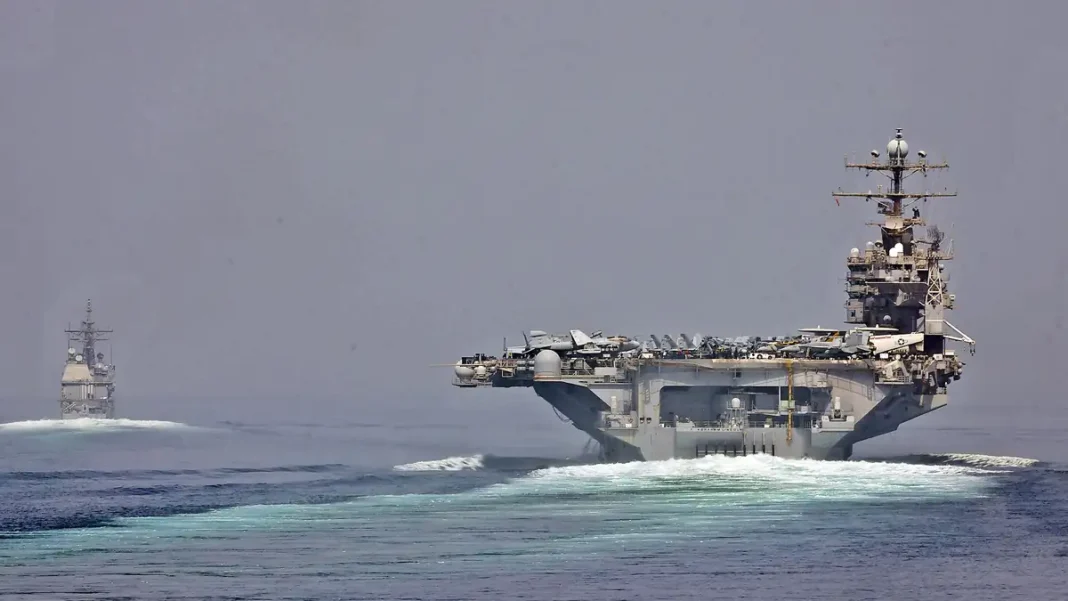
US Iran Blockade Tightens on Oil Transfers at Sea
The US Iran blockade now covers oil cargo moved between ships at sea, after Washington widened the naval measure on Wednesday to close a route Tehran has used to keep fuel exports moving. US Central Command said any vessel that takes on cargo through a ship-to-ship transfer from a blockaded ship loaded at an Iranian port or coastline may be treated as evading the blockade, even if it never enters Iranian waters.
Reuters reported the advisory on Wednesday. The blockade was first imposed on April 13, lifted in June after a draft understanding with Tehran, then reimposed on July 14 after it collapsed.
US Iran blockade now covers transfers at sea
Centcom said ships that receive cargo in this way face action at sea. “Any ship that receives cargo via a ship-to-ship transfer with a vessel subject to the blockade and carrying cargo loaded at an Iranian port or coastline may be considered to be evading the blockade, even if it has not entered Iranian ports or the Iranian coastline,” the command said in an update.
Such ships may be stopped, boarded, diverted, captured, or directed to proceed to the Iranian port where the cargo originated, the advisory said. Ships that fail to comply at once with lawful orders from blockade or boarding forces could face enforcement action, “including the use of force consistent with applicable law”.
Ship-to-ship transfers let cargo change hands in open water, far from port checks, and the new rule puts the receiving ship in the same position as the ship that loaded in Iran.
A blockade imposed, lifted and imposed again
Washington first imposed the blockade on April 13 as part of pressure on Tehran over its oil trade. It lifted the measure in June after the two sides reached a draft understanding, then brought it back on July 14 when that deal collapsed.
Iran has still managed to export some liquefied petroleum gas and jet fuel since July, despite the blockade, according to shipping intelligence and security sources who spoke to Reuters in October. Crude exports, however, have remained near a standstill for months, shipping sources say.
The advisory suggests Washington believes the trade that remains runs through transfers at sea, and it widens the net from Iranian ports to any vessel that handles Iranian cargo offshore.
Why it matters for Pakistan
The Strait of Hormuz carries a large share of the world’s seaborne oil, and Pakistan buys most of its fuel from the Gulf. Any fresh squeeze on Gulf shipping tends to push Brent crude higher, and higher crude feeds into the fortnightly pump-price reviews in Pakistan.
Feature Pakistan reported earlier this month that disruptions around Hormuz had already lifted oil prices, and later that prices fell as Middle East exports recovered. If the tighter blockade slows Gulf loadings further, the relief at the pump may not last.
Petrol in Pakistan stands at Rs 325 per litre, after the latest review left diesel unchanged. Fuel prices feed into transport fares and food costs, so a rise in crude hits household budgets well beyond the filling station.
The standoff also carries a direct security risk. Iran’s army chief has warned of a response if the United States attacks, while Vice President JD Vance has pushed back against talk of a long war with Iran. A boarding or seizure at sea under the new rules could become the next flashpoint.
Frequently asked questions
What has the US changed about the Iran blockade?
Any ship that receives Iranian cargo through a ship-to-ship transfer now counts as evading the blockade, even if it never enters an Iranian port or coastline.
What can happen to ships that break the rule?
Centcom says such ships may be stopped, boarded, diverted, captured, or sent back to the Iranian port where the cargo originated. Ships that refuse lawful orders could face enforcement action, including the use of force.
When was the blockade first imposed?
Washington first imposed the naval blockade on Iran-related oil exports on April 13. It was lifted in June after a draft understanding with Tehran, then reimposed on July 14 when that agreement collapsed.
Is Iran still exporting oil?
Iran has managed to export some liquefied petroleum gas and jet fuel since July, according to shipping sources. Crude exports, however, have stayed near a standstill for months.
Why does the blockade matter for Pakistan?
Pakistan buys most of its fuel from the Gulf, and the oil passes through the Strait of Hormuz. A tighter blockade can push Brent crude higher, and higher crude feeds into petrol and diesel prices in Pakistan.