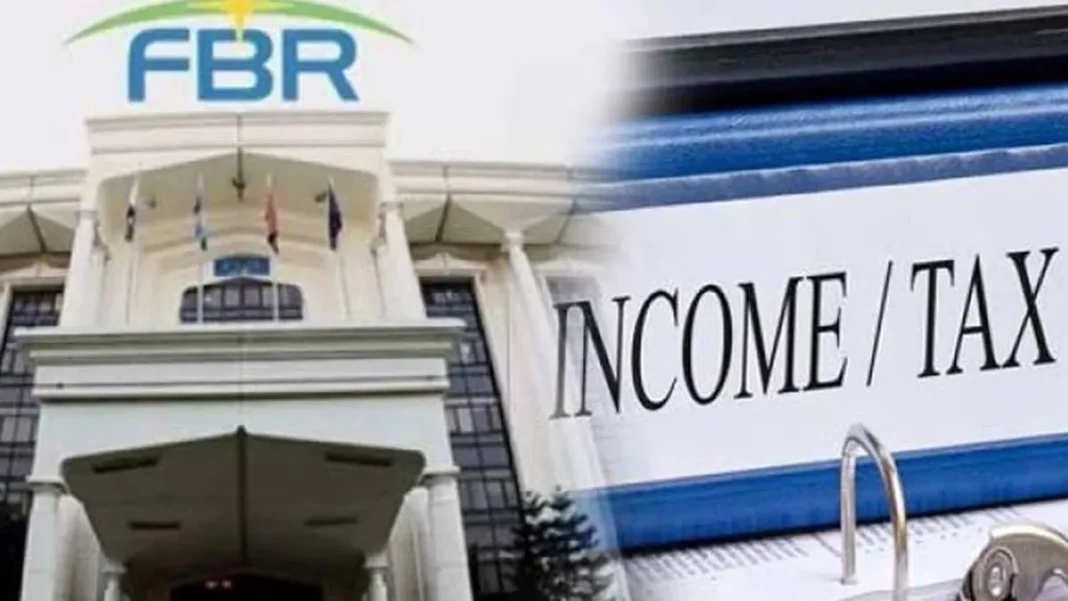
“What is the Federal Board in Pakistan?” — it is one of the most searched questions about the country’s government, and the answer matters to everyone who pays tax, runs a business or imports goods. The Federal Board of Revenue (FBR) is Pakistan’s central tax authority: the institution that assesses and collects federal taxes, polices the borders against smuggling, and funds the state. Here is what it is, what it does, and how it is run.
Quick answer: The Federal Board of Revenue (FBR) is Pakistan’s apex tax collection agency, founded in 1924 as the Central Board of Revenue and renamed under the FBR Act 2007. Working under the Revenue Division of the Ministry of Finance and headed by Chairman Rashid Mahmood Langrial, it collects income tax, sales tax, customs duty and federal excise duty — a record Rs13 trillion in FY2025-26.
In this guide: The definition · What the FBR does · A century of history · Who runs it · What it means for you · FAQs · Related guides
The Definition
The Federal Board of Revenue is the central revenue collection agency of Pakistan, responsible for administering federal taxes and customs under the Government of Pakistan. It sits within the Revenue Division of the Ministry of Finance, and its chairman connects the tax machinery with the finance ministry, reporting ultimately to the Prime Minister (paradigmshift.com.pk). In plain terms: when the federal government needs money, the FBR is the arm that goes out and collects it.
What the FBR Does
- Collects four federal taxes: income tax, sales tax, federal excise duty and customs duty — Rs13 trillion net in FY2025-26, the highest in Pakistan’s history.
- Runs customs and anti-smuggling: the Customs wing collects duties at ports and borders and fights smuggling; Pakistan Customs alone collected Rs467 billion in June 2026, up 33% year on year (pid.gov.pk).
- Gathers tax intelligence: the FBR collects intelligence on tax evasion and administers tax laws for the government (en.wikipedia.org).
- Hears appeals: the chairman exercises quasi-judicial functions, hearing and resolving disputes between taxpayers and the state.
- Serves taxpayers digitally: through the IRIS filing portal, the Active Taxpayer List and e-payment systems.
A Century of History
The FBR is older than Pakistan. It began on 1 April 1924 as the Central Board of Revenue under the CBR Act, 1924, in British India. After Partition, Pakistan inherited the structure; it was placed under the Revenue Division in 1944, made an attached department of the Finance Ministry in 1960, reformed in 1974, and shuffled between divisional statuses through the 1990s — before the FBR Act of July 2007 finally renamed it the Federal Board of Revenue (en.wikipedia.org; scribd.com). The 2007 rebirth came with a modernisation mandate: online filing, the Active Taxpayer List, track-and-trace systems and the WeBOC customs platform (finsmart.pk).
Who Runs the FBR
The board is headed by its Chairman — as of 2026, Rashid Mahmood Langrial — supported by members overseeing Inland Revenue (policy, operations, audit, automation) and Customs. Below them sit the field formations taxpayers actually encounter: Regional Tax Offices (RTOs), Large Taxpayer Offices (LTOs), Corporate and Medium Taxpayer Offices in cities nationwide. Domestic taxes handled by the Inland Revenue wing account for roughly 90 per cent of collections. For the full institutional portrait, see our complete FBR guide.
What It Means for You
For citizens, the FBR shows up as the income tax on salaries, withholding on bank and telecom transactions, and the Active Taxpayer List status that sets your tax rates. Filing returns on time keeps you on the ATL; in October 2026 the chairman intervened to stop advance-tax notices being issued to purely salaried employees (pakhtundigital.com). New corners of the economy keep entering the net — 2026 brought tax rules for YouTube and TikTok earnings — while AI cross-checks of returns against bank and property data make under-declaration steadily harder.
Frequently Asked Questions
What is the full form of Federal Board in Pakistan?
Federal Board of Revenue (FBR) — the country’s central agency for federal tax collection and customs administration.
Is the FBR a ministry?
No. The FBR is a federal board operating under the Revenue Division of the Ministry of Finance. Tax policy formulation has increasingly moved to the Finance Ministry itself, with the FBR focused on implementation and collection.
Who is the current chairman of the FBR?
Rashid Mahmood Langrial, who has led the authority since his appointment and through its record Rs13 trillion collection in FY2025-26.
What is the difference between FBR and CBR?
They are the same institution at different times: the Central Board of Revenue (CBR), founded in 1924, was renamed the Federal Board of Revenue (FBR) under the FBR Act passed in July 2007.
Related Guides