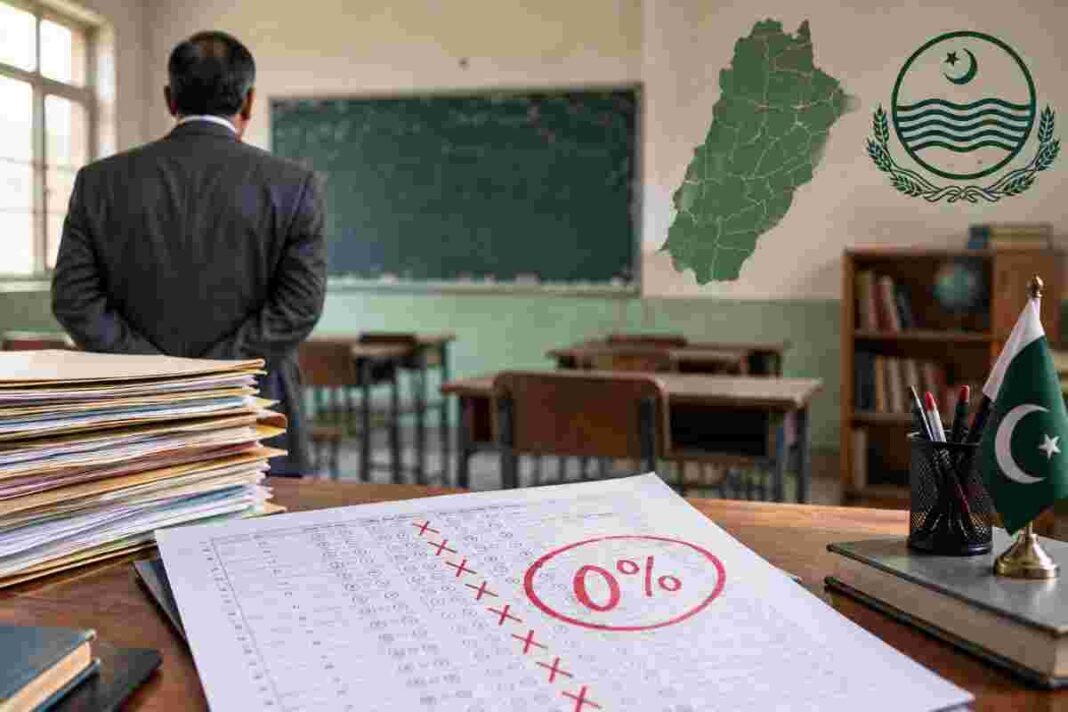
The Punjab government has decided to take strict action against the heads of government schools that failed to produce a single successful student in recent examinations. The decision follows a review of poor academic performance at several institutions across the province.
The School Education Department has now asked officials to provide complete details about Zero Result Schools across Punjab. The department wants to identify the reasons behind the disappointing results and determine who holds responsibility for the continued decline in academic performance.
Recent ninth-grade annual examination results from the Rawalpindi Board have raised serious concerns. According to available figures, 184 schools recorded a zero percent result, meaning none of their participating students passed the examination.
Government schools account for a significant share of these institutions. Of the 184 schools with zero results, 81 belong to the public education system, prompting authorities to review the performance of their heads and teaching staff.
Rawalpindi recorded the highest number of poorly performing institutions in the available data. A total of 91 schools in the district produced zero percent results, a situation that is particularly concerning for local education officials.
Attock also reported a large number of Zero Result Schools, with 35 institutions failing to produce successful candidates. Meanwhile, 26 schools in Chakwal recorded the same disappointing performance in the ninth-grade annual examinations.
The situation also affected other districts under the Rawalpindi Board. Jhelum reported 24 schools with zero percent results, while Murree recorded 10 such institutions and Talagang reported eight.
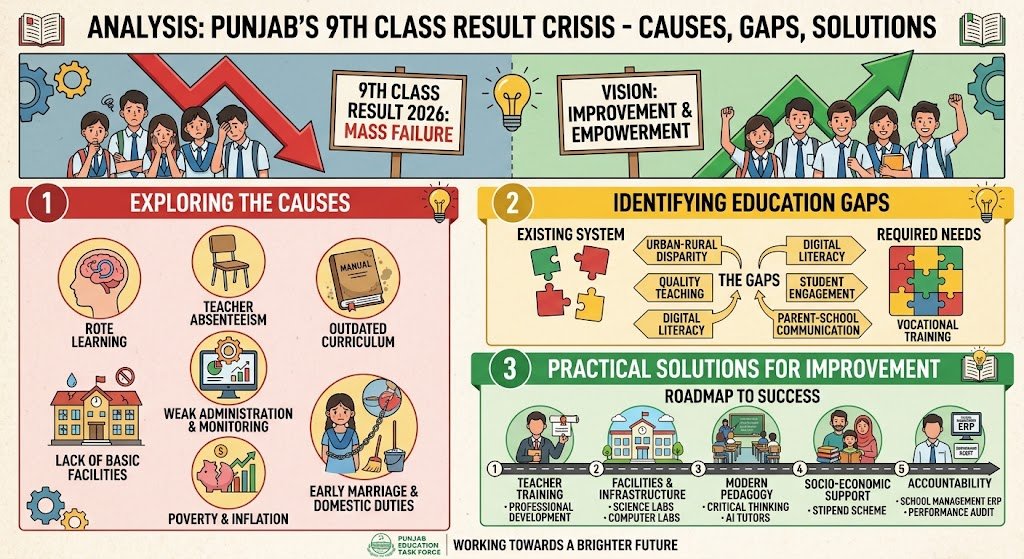
These figures have pushed education authorities to examine the causes behind weak academic outcomes. Officials now want to determine whether poor management, teaching standards, student attendance, academic planning, or other factors contributed to the results.
The School Education Department has decided to seek explanations from the heads of the affected government institutions. School heads may have to explain why their institutions failed to produce satisfactory results despite having access to government resources and academic support.
Moreover, authorities plan to identify institutions that have repeatedly shown weak academic performance. The department will also examine the role of responsible officials, rather than focusing only on the latest examination results.
The review of Zero Result Schools could help the government identify deeper problems within the public education system. Authorities can use the findings to determine which schools need stronger monitoring, better academic planning, or improved classroom performance.
However, the department also wants school leadership to take responsibility for student outcomes. Heads of institutions play an important role in monitoring teachers, maintaining academic standards, tracking student progress, and addressing learning gaps before examinations.
Therefore, schools that repeatedly produce poor results could face closer scrutiny from education officials. The department aims to identify responsible individuals and take departmental action where officials find serious negligence or continued poor performance.
The decision also sends a clear message to government school administrators across Punjab. Education authorities expect school heads to monitor academic progress throughout the year rather than waiting for final examination results to reveal serious weaknesses.
At the same time, the large number of schools with zero results highlights the need for early intervention. Regular assessments, teacher monitoring, attendance checks, and additional academic support for struggling students could help schools improve future examination results.
Zero Result Schools will now receive greater attention as the department gathers information from across Punjab. Officials will review the available records before deciding the appropriate course of action against responsible school heads.
Parents and students will also closely watch how authorities handle the issue. Strong accountability can improve performance, but schools may also require practical support to address shortages, learning gaps, and other challenges that directly affect students.
Ultimately, the Punjab government wants public schools to deliver better academic outcomes and use available educational resources effectively. The latest decision indicates that authorities intend to hold school leadership accountable when institutions continuously fail to meet expected standards.
The departmental review of these Schools could therefore lead to action against school heads who fail to provide satisfactory explanations. Education officials will focus particularly on institutions with consistently poor records and identify those responsible for weak academic performance.