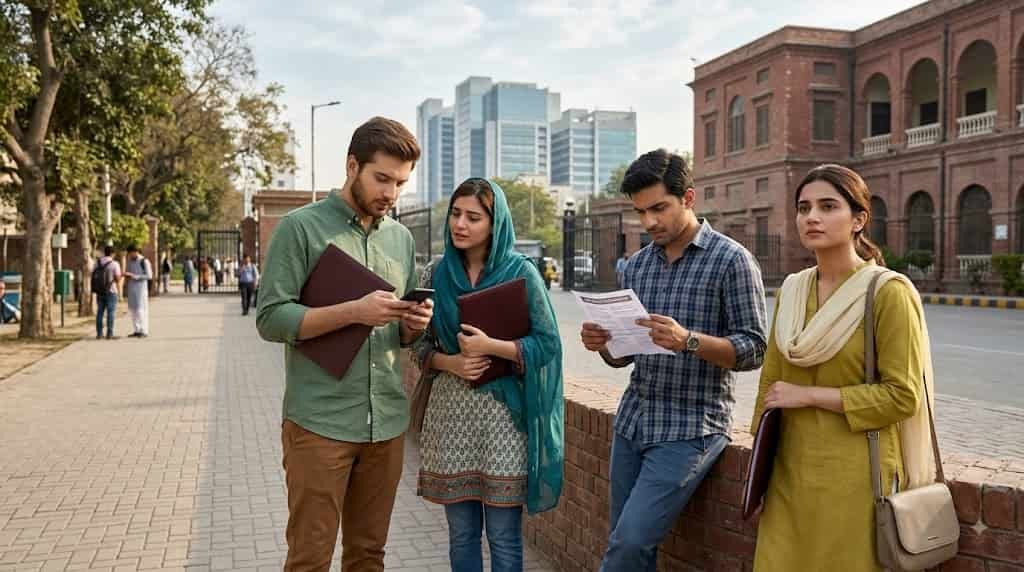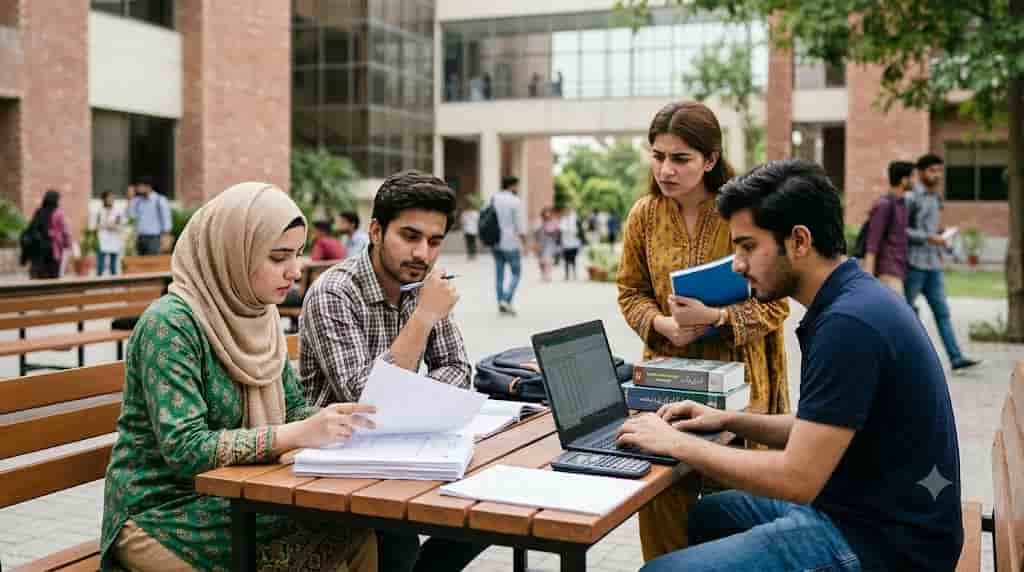
Education Is Becoming More Expensive for Pakistan’s Gen Z: Can Young People Still Afford a Degree?
For generations, Pakistani families have treated education as one of the safest investments in a child’s future. Parents save for years, cut household expenses and make personal sacrifices because they believe a university degree can open the door to a better life.
For Pakistan’s Gen Z, however, that promise is becoming harder to afford.
University tuition fees are only one part of the problem. Transport, hostel accommodation, books, laptops, internet access, food and professional certifications can push the real cost of education far beyond the amount printed on a university fee voucher.
At the same time, many students worry about what happens after graduation.
Will the degree lead to a good job? Will the starting salary justify years of educational spending? And how can a middle-income family continue paying when almost every household expense is rising?
These questions are turning the rising cost of education in Pakistan into a much bigger Gen Z issue.
Who Is Pakistan’s Gen Z?
Generation Z generally refers to people born between 1997 and 2012.
That means the oldest members of Gen Z are already well into adulthood, while younger members are still completing school or preparing for college and university.
This generation entered education during an extraordinary period of technological and economic change.
They have witnessed the expansion of online education, artificial intelligence, freelancing and remote work. Yet they have also faced inflation, employment uncertainty and increasing pressure to develop skills beyond a traditional degree.
Education, therefore, remains important, but the way young Pakistanis think about its value is changing.
Education Costs Are Part of a Bigger Gen Z Problem
It would be a mistake to examine expensive education in isolation.
Young Pakistanis are simultaneously dealing with employment uncertainty, financial pressure, changing career expectations, social media comparison and concerns about their long-term future.
Our pillar analysis, Pakistan Gen Z Under Pressure: What Is Really Worrying the Country Youth?, explores how these different pressures are shaping the lives and decisions of young Pakistanis.
Education sits at the center of many of these concerns because families often spend significant amounts on a degree with the expectation that it will eventually improve financial security.
When that outcome becomes uncertain, the pressure becomes much greater.
University Tuition Is Only the Beginning
When families calculate university expenses, they often focus first on semester fees.
However, the real cost can be much higher.
Students may also need to pay admission and registration charges, examination fees, laboratory costs, transport expenses, hostel charges, food bills and educational material costs.
A laptop has also become almost essential for many university students.
Assignments, research, presentations, online classes, learning management systems and professional development increasingly require reliable access to technology.
Students also need internet connectivity and, depending on their field, paid software, online subscriptions or specialized equipment.
Consequently, the real cost of obtaining a degree can stretch a household budget far beyond tuition alone.
Transport Has Become a Serious Student Expense
Not every student lives near a university.
In major cities such as Lahore, Karachi, Islamabad, Rawalpindi and Faisalabad, students can travel significant distances every day to reach their campuses.
Fuel prices and other transport expenses can therefore have a direct impact on the cost of education.
Students using university buses, private vans, ride-hailing services or personal vehicles may spend thousands of rupees every month simply reaching class.
For families already struggling with household expenses, transport can turn an otherwise manageable university fee into a much heavier financial commitment.
Studying Away From Home Costs Even More
Students from smaller cities and towns face another challenge.
Many must relocate if their preferred university or degree program is unavailable locally.
That decision adds hostel rent, food, transportation, utilities and other living expenses to the education bill.
Parents are no longer paying only for university.
They are effectively financing a second household for their child.
For families supporting two or three university-age children, these expenses can become particularly difficult.
Digital Education Is Not Completely Free Either
Technology has created enormous opportunities for Gen Z.
Students can now access lectures, research papers, professional courses and tutorials from almost anywhere.
However, participating fully in digital education still requires resources.
A reliable laptop or computer can represent a major expense for a family.
Stable internet access also carries a recurring cost, while students in fields such as graphic design, software development, engineering and media production may require more powerful devices.
Some professional platforms, certifications and software tools also charge subscription or examination fees.
Therefore, digital learning can reduce certain barriers while creating new educational expenses.
A Degree Is Often No Longer Enough
Perhaps the biggest frustration for Gen Z is that paying for university does not always complete their education journey.
Employers increasingly value practical skills alongside academic qualifications.
Students may therefore feel pressure to learn digital marketing, artificial intelligence, data analysis, communication, programming, project management or other professional skills.
Many pursue certificates, internships and short courses alongside their degrees.
This creates an additional layer of educational spending.
A student may spend four years paying university fees and still feel the need to purchase professional training before becoming competitive in the job market.
Expensive Education Meets a Difficult Job Market
This is where the education affordability problem becomes particularly serious.
Families invest in education because they expect it to improve employment prospects.
However, many young graduates struggle to find suitable work immediately after completing their degrees.
Our analysis of the Pakistan Gen Z Unemployment Crisis: Why Young People Are Struggling to Find Jobs in 2026 explores this challenge in greater detail.
When graduates remain unemployed or accept jobs with relatively low starting salaries, families naturally begin questioning the financial return on an expensive degree.
Rising education costs become even harder to justify when a degree does not guarantee a strong career. Many families invest heavily in higher education, yet graduates can still struggle to enter the job market. Read why Pakistan’s Gen Z feels left behind despite being more educated.
For Gen Z, the question is increasingly shifting from “Should I go to university?” to “Will this degree actually improve my career?”
The Return on Education Matters More Than Ever
A university degree should not be judged purely as a financial product.
Education develops knowledge, critical thinking, social networks and personal growth.
However, financial reality cannot be ignored.
If a family spends a substantial amount over four years, students understandably expect that investment to create better career opportunities.
This is particularly important when parents finance education from current income rather than accumulated savings.
Young people increasingly compare university costs with expected salaries.
That calculation may influence which university they choose, which degree they study and whether they pursue higher education at all.
Some Students Are Working While Studying
Financial pressure is encouraging some students to earn money before graduation.
Part-time employment, online work, tutoring, content creation and freelancing can help students cover personal or educational expenses.
This can also give them practical experience before entering the full-time job market.
However, balancing work and education is not easy.
Students who work late hours may have less time for assignments, social activities and rest.
The financial benefit can therefore come with additional pressure.
Freelancing Is Becoming an Alternative Career Path
Pakistan’s digital economy has also changed how young people think about careers.
A student with marketable digital skills can potentially begin earning before completing a university degree.
That possibility makes freelancing especially attractive to Gen Z.
Our detailed guide on The Rise of Freelancing Among Pakistan’s Gen Z: Why Young People Are Choosing Digital Careers explains why more young Pakistanis are exploring online income and skill-based career paths.
Freelancing does not make university education irrelevant.
Instead, it changes the conversation.
Young people increasingly want both academic qualifications and skills that can generate income.
Students Are Questioning Traditional Degrees
For previous generations, choosing a degree often meant following an established path.
Medicine, engineering, business, law and government careers carried strong social status.
Gen Z has access to far more information about career options.
A teenager can now watch professionals discuss salaries, working conditions and career prospects online before choosing a university program.
That access to information is making students more critical.
They want to know what jobs a degree can lead to, how much those jobs pay and whether alternative skills could produce better opportunities.
This does not mean Gen Z values education less.
It means many young people are becoming more selective about the education they are willing to pay for.
Private Universities Can Be Out of Reach for Many Families
Pakistan has many respected private universities, but tuition fees can represent a major financial commitment for middle-income households.
Students may choose public universities primarily because of affordability.
Others may compromise on their preferred institution or degree because the family cannot comfortably finance it.
Scholarships and financial aid can make an enormous difference, but not every student qualifies or receives enough support.
This creates a difficult situation where academic ability does not always determine educational opportunity.
Household income can become equally important.
The Middle Class May Feel the Pressure Most
Low-income households have long faced barriers to expensive education.
However, rising costs can also place significant pressure on middle-income families.
These households may earn too much to qualify for some forms of assistance while still lacking enough disposable income to comfortably finance private university education.
Parents can respond by reducing other spending.
Family holidays disappear. Major purchases get postponed. Savings shrink.
In some cases, families may use loans or sell assets to finance education.
This illustrates how education costs can affect the financial health of an entire household.
Women Can Face Additional Educational Barriers
Rising education costs can affect young men and women differently depending on family circumstances.
When resources become limited, some households may prioritize the education of one child over another.
Transport and safe accommodation can also create additional concerns for female students who need to study far from home.
Online learning has opened new opportunities, but digital access does not solve every problem.
Ensuring that talented young women can continue their education regardless of household income remains essential for Pakistan’s economic and social development.
Financial Pressure Can Affect Student Well-Being
The cost of education does not create only financial consequences.
Students who know their parents are struggling to pay fees can experience significant pressure.
Some worry constantly about maintaining grades because they fear wasting their family’s investment.
Others try to combine studies with employment.
Deadlines, exams, commuting, financial worries and late-night work can all reduce opportunities for proper rest.
This connects with another growing Gen Z concern explored in Why Sleep Problems Are Increasing Among Pakistan’s Gen Z.
Financial pressure may not be the only reason young people sleep poorly, but academic and career uncertainty can certainly contribute to unhealthy routines.
More Students Are Thinking About Studying Abroad
When local education becomes expensive while employment prospects remain uncertain, some families begin comparing Pakistani universities with opportunities abroad.
The calculation is not always straightforward because international education can cost far more.
However, scholarships, post-study work opportunities and perceived career prospects can make foreign education attractive.
For some young Pakistanis, studying abroad also becomes part of a broader plan to build a future outside the country.
Education Costs Connect With Youth Migration
The desire to leave Pakistan cannot be explained by one factor.
Young people consider migration for education, employment, income, professional development and quality-of-life reasons.
However, frustration can grow when a family spends heavily on education and the graduate still struggles to establish financial independence.
This broader trend is explored in Why Are Young Pakistanis Leaving Their Homeland?
Education and migration are therefore increasingly connected.
Some young Pakistanis do not simply ask where they should study.
They ask where their education will give them the best future.
Are Online Courses Replacing University Degrees?
Not completely.
Universities still provide structured education, recognized qualifications, academic networks and experiences that online courses cannot always replicate.
However, short online programs have changed the educational landscape.
A young person can learn coding, graphic design, digital marketing, video editing, artificial intelligence tools or other practical skills without enrolling in another multi-year degree.
This creates competition for traditional education.
Universities increasingly need to demonstrate not only academic quality but also career relevance.
Skills-Based Education Is Becoming More Important
Pakistan’s education debate often focuses on how many young people attend university.
Another question deserves equal attention: what can graduates actually do after completing their education?
Practical skills matter.
Communication, critical thinking, digital literacy, problem-solving and adaptability can improve a graduate’s ability to compete in changing job markets.
Artificial intelligence makes this even more important.
Some routine tasks will become easier to automate, while employers may place greater value on workers who can use technology effectively.
Universities that combine academic knowledge with practical skills can provide greater value to Gen Z.
Scholarships Need Greater Visibility
Pakistan already has scholarship programs through universities, governments and other organizations.
However, students do not always know what opportunities exist.
Schools and universities can improve guidance around scholarships, financial aid and merit-based assistance.
Students should also begin researching financial support before university admission rather than waiting until fees become difficult to manage.
Greater transparency can help families make better decisions.
Universities Need to Explain the Real Cost
Institutions can also help by making fee structures clearer.
Families should know the likely cost of completing an entire degree rather than focusing only on the first semester.
Unexpected fee increases can create serious financial problems later.
Clear information about tuition, additional charges, hostel expenses, scholarships and payment plans would help families evaluate affordability before enrollment.
Parents and Students Need a New Education Strategy
The traditional approach of choosing a degree first and worrying about employment later is becoming risky.
Families should investigate career prospects before making a major financial commitment.
Students can ask several questions.
What skills will this degree provide?
Which industries hire graduates from this field?
What practical experience will I gain?
Can I build additional skills alongside university?
Are scholarships available?
What is the likely total cost of completing the program?
These questions do not reduce the value of education.
They help families make education more purposeful.
Gen Z Needs Education That Leads Somewhere
Pakistan has a young population, which can become an enormous economic advantage.
However, young people need education that connects with opportunity.
Simply increasing the number of degrees will not solve youth challenges if graduates cannot translate education into productive careers.
Universities, employers and policymakers need stronger connections.
Internships, industry partnerships, career counselling and practical training can help students understand how their education connects with the workplace.
Gen Z does not only need certificates.
It needs pathways.
Is University Still Worth It for Pakistan’s Gen Z?
For many careers, absolutely.
Doctors, engineers, lawyers, academics and many other professionals require formal higher education.
University can also provide intellectual development, networks and experiences that are difficult to reproduce independently.
However, the decision deserves more careful planning than ever.
Students should consider cost, quality, career outcomes and personal goals rather than choosing a university simply because society expects everyone to earn a degree.
The answer is not to abandon higher education.
The answer is to demand greater value from it.
The Bigger Gen Z Question
Education affordability reveals something much larger about Pakistan’s young generation.
Gen Z is being asked to prepare for an increasingly competitive economy while facing rising costs and uncertain career pathways.
Some respond by learning digital skills.
Others begin freelancing.
Some pursue scholarships or affordable universities.
Others consider leaving Pakistan entirely.
These choices may appear unrelated, but they share the same underlying concern: young people want a realistic path toward independence and a stable future.
That is why expensive education belongs within the wider conversation about Pakistan Gen Z Under Pressure.
The issue is not simply how much a semester costs.
The real question is whether Pakistan can create an education system where young people believe the years and money they invest will lead to meaningful opportunities.
Frequently Asked Questions
Why is education becoming expensive in Pakistan?
Education costs extend beyond tuition fees. Transport, accommodation, food, books, technology, internet access, professional certifications and other expenses can substantially increase the total cost of studying.
Why are university costs a problem for Gen Z?
Many Gen Z students and their families face education expenses alongside broader financial pressures. Employment uncertainty after graduation can make the cost feel even more difficult to justify.
Is university still worth it in Pakistan?
University remains essential for many professions and can provide valuable knowledge, qualifications and networks. However, students should compare cost, education quality, career prospects and skill development before choosing a program.
Can freelancing help students pay university fees?
Some students use freelancing or other part-time work to support their expenses. However, income is not guaranteed, and balancing work with academic responsibilities can be challenging.
Are online courses better than university degrees?
They serve different purposes. Online courses can provide specific practical skills quickly, while universities offer structured education and recognized qualifications. Many students may benefit from combining both.
Why are Pakistani students considering studying abroad?
Students may consider international education because of scholarships, academic opportunities, career prospects and possible post-study employment. However, studying abroad can also involve substantial costs.
How can students reduce education expenses?
Students can explore scholarships, public universities, financial aid, shared accommodation, student discounts, affordable transport and carefully selected online learning resources.
Education remains one of Pakistan’s most powerful tools for social and economic mobility.
But for Gen Z, accessing that opportunity is becoming more complicated.
The rising cost of tuition, transport, accommodation and technology is colliding with uncertainty in the job market. As a result, young people are questioning not the importance of learning, but the value and affordability of traditional education pathways.
Pakistan needs universities that prepare students for real careers, employers willing to develop young talent and policies that make quality education accessible to families across income levels.
Gen Z is ready to learn.
The bigger challenge is ensuring that education remains affordable, relevant and capable of leading young Pakistanis toward the future they are working so hard to build.