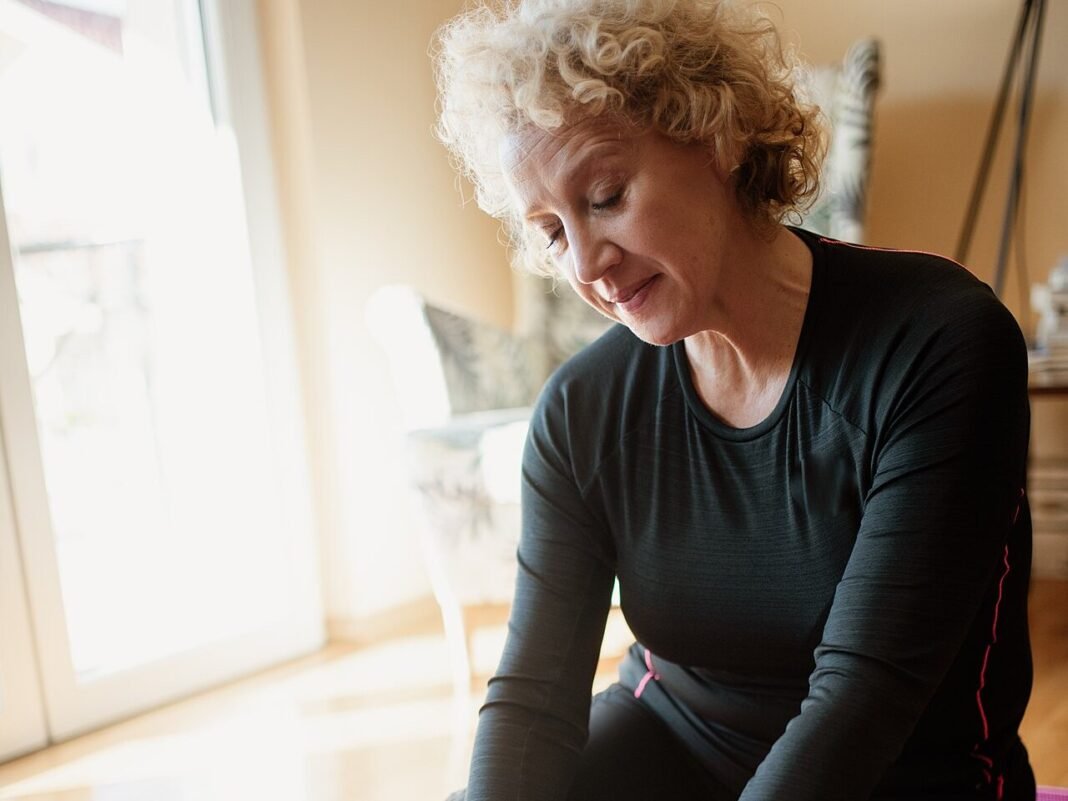
Sleeveless season arrives, and the back of your upper arms tells a story. After 60, muscle mass naturally declines, and the skin changes with it. The encouraging news is that muscle still responds to training at this age. Four simple wall exercises can start rebuilding yours at home.
A wall gives your body support while your arms do real work. It removes part of your body weight from pressing movements, instead. Every move below adjusts in seconds as you grow stronger, meanwhile. You need no gym, no weights, and only one optional resistance band.
Research in Frontiers in Public Health confirms upper-limb muscle and strength decline with age. Rebuilding even some of that muscle makes arms look firmer, in addition. Daily tasks like lifting shopping bags become easier, too. Ready to lean on your nearest wall?
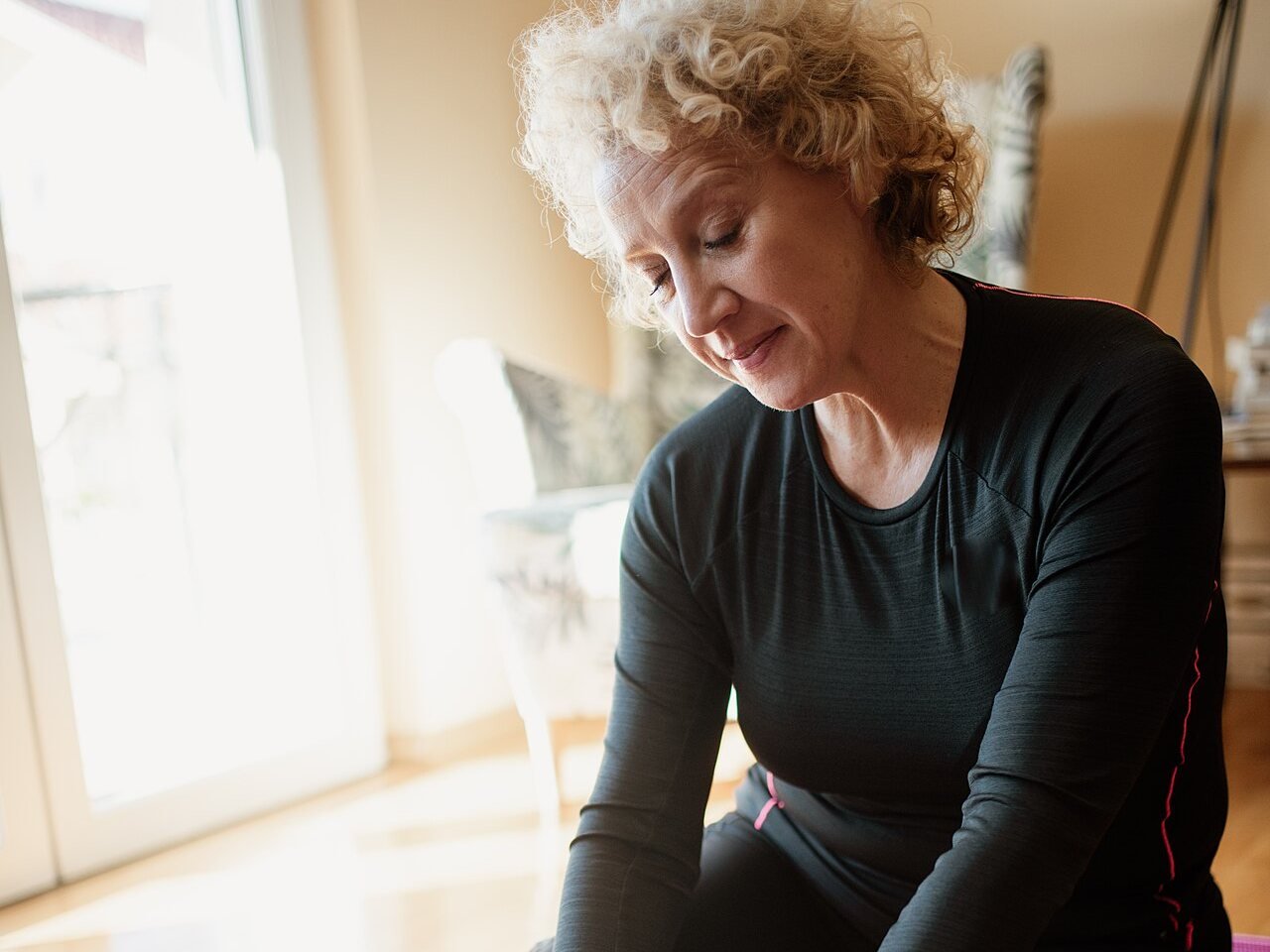
Why Wall Exercises Suit Arms After 60
The triceps, the muscle along the back of your upper arm, firms this area most. Wall exercises load the triceps with your own body weight safely. Your balance stays supported throughout every repetition, meanwhile, which protects your joints. Stepping farther from the wall increases the challenge whenever you are ready.
Strong arms also support healthy everyday movement at every age. Our guide on losing weight with PCOS explains why muscle matters beyond appearance. Think of these moves as maintenance for independence, instead. Fifteen quiet minutes, consequently, can change how your arms feel.
The 4 Wall Exercises, Step by Step
1. Wall Push-Up
- Stand facing the wall, about an arm’s length away.
- Place your hands slightly wider than your shoulders.
- Bend your elbows and bring your chest toward the wall.
- Stop when your elbows reach roughly ninety degrees.
- Press through your hands and return to standing.
Complete two to three sets of ten to fifteen repetitions. Rest thirty to forty-five seconds between each set, meanwhile. Keep your body in one straight line as you lower, instead. This classic move trains your triceps, chest, shoulders, and core together.
2. Wall Triceps Extension
- Stand facing the wall and place your hands at shoulder height.
- Step your feet back slightly, keeping your body tall.
- Keep your upper arms still as your elbows bend.
- Lower until your forearms nearly touch the wall.
- Straighten your elbows and press yourself back up.
Aim for two to three sets of eight to twelve repetitions. This move isolates the triceps more directly than the push-up, however. Start fairly upright, because it becomes difficult quickly, in fact. Keep your elbows pointing toward the wall throughout each bend.
3. Wall Band Pull-Apart
- Stand with your back resting lightly against the wall.
- Hold a resistance band in front of you at shoulder height.
- Keep a slight bend in both elbows.
- Pull your hands apart, opening your arms wide.
- Return slowly to the starting position with control.
Complete two to three sets of ten to fifteen repetitions. Firmer-looking arms also need muscle across the back of the shoulders, instead. This move trains your rear shoulders, upper back, and biceps together, meanwhile. The wall behind you reveals any leaning backward immediately.
4. Wall Snow Angel
- Stand with your back flat against the wall.
- Raise your elbows to shoulder height, forearms against the wall.
- Form a goalpost shape with both arms.
- Slide your arms slowly upward toward the ceiling.
- Lower them with control and repeat the movement.
Aim for two to three sets of eight to twelve slow repetitions. Snow angels move your shoulders through a bigger, healthier range, in addition. Never force your hands to stay on the wall, however. Use only the range you can control without pain.
How Often to Do These Wall Exercises
Repeat this routine two to four days per week for steady progress. Leave a rest day between harder sessions while you feel sore, instead. Move your feet farther from the wall once a move feels easy, meanwhile. Step up to a stronger band when your pull-aparts stay controlled throughout.
Keep your protein intake consistent across the week, too. Muscles need that protein to repair and quietly grow stronger, in fact. Track your repetitions in a small notebook by the door, for example. More reps, as a result, prove progress before mirrors do.
Safety First With Wall Exercises
Gentle effort should feel like work, never like sharp pain. Stop any move that hurts a joint and rest that day, instead. Talk to your doctor first if you have shoulder, heart, or blood-pressure conditions. Browse more guidance in our health section before you begin.
Frequently Asked Questions
How long until my arms look firmer?
Strength usually improves within three to four weeks of regular practice. Visible firmness takes longer because skin and body composition also change, however. Photograph your arms monthly in the same light for honest comparison, instead. Small, steady gains, consequently, are the realistic win.
What if I do not own a resistance band?
Simply skip the pull-apart for now and add one extra push-up set. A band costs very little and upgrades the whole routine later, meanwhile. Never substitute anything stretchy that could snap toward your face, though. Safety, in other words, always outranks improvisation.
Can I do these exercises every day?
Light snow angels are fine daily for most healthy people. The pressing moves deserve a rest day in between, however. Muscles grow during recovery, not during the workout itself, in fact. Alternate hard and easy days, finally, for the best results.
Firmer arms after 60 are built one wall, one week, one rep at a time. Start with whichever move feels friendliest today. Which of the four will you try first? Tell us in the comments.