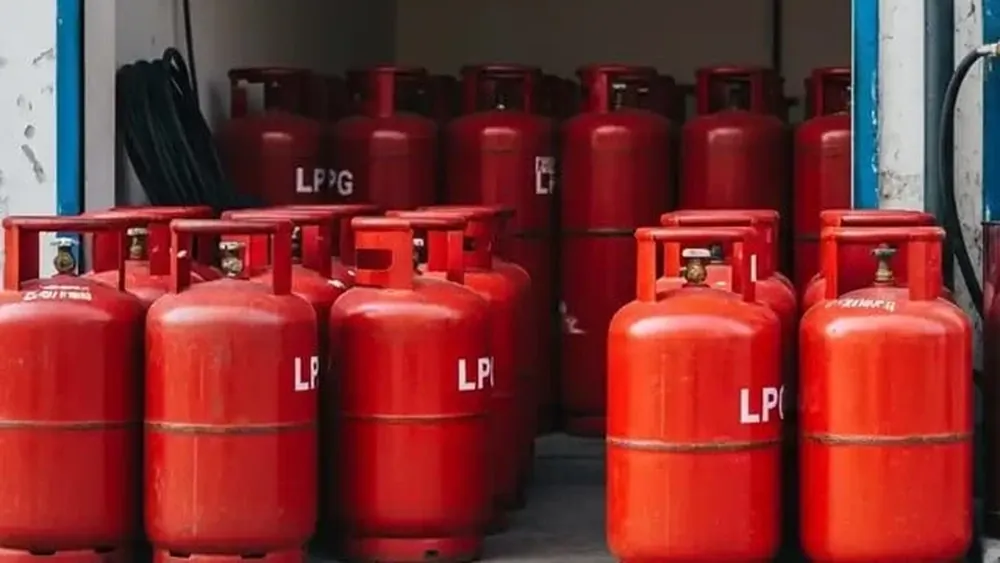
Pakistan’s LPG price crisis deepened on Thursday as rates in parts of Khyber Pakhtunkhwa hit Rs750 per kilogram and domestic cylinder prices crossed Rs10,000, while the Oil and Gas Regulatory Authority held back a planned crackdown on profiteers over fears it could trigger strikes and worsen the energy crisis.
OGRA has yet to launch the planned enforcement drive against companies and sellers accused of profiteering. Authorities fear the action could trigger strikes, disrupt supplies and aggravate the country’s existing energy crisis, the Express Tribune reported.
The crisis has intensified over the past five to six days after a decline in LPG supplies, which officials linked to the closure of the Taftan border amid tensions between Iran and the United States. Around 70 per cent of Pakistan’s LPG requirements are met through imports, while the remaining 30 per cent is produced domestically, a senior OGRA official told the Tribune on condition of anonymity.
Although OGRA fixed the official LPG price for the current month at Rs279.34 per kilogram, market rates in several areas have climbed to between Rs550 and Rs600 per kilogram. In Peshawar, LPG is selling for around Rs600 per kilogram, while prices in the northern areas have reached Rs750. The official warned the situation could deteriorate further, with prices potentially exceeding Rs700 per kilogram in affected markets.
When contacted for comment, an OGRA spokesperson said work was under way to address the issue, acknowledged that the closure of the Taftan border had created difficulties, and expressed confidence that the situation would be brought under control soon.
LPG price crisis hits low-income households hardest
The surge has hit lower-income households particularly hard, especially in Khyber Pakhtunkhwa, where consumers are also facing shortages of natural gas. Residents said the lack of piped gas, coupled with the rising cost of LPG, had made it increasingly difficult to meet basic household fuel needs.
In rural areas and localities on the outskirts of Peshawar, residents have begun turning to firewood for cooking and other domestic needs as both LPG and natural gas become harder to obtain. The shift has driven up firewood prices as well: rates have increased by Rs200 to Rs300 per maund, from Rs1,400–1,600 to Rs1,600–1,800 per maund, adding to the pressure on households already struggling with higher fuel costs.
A crisis three chapters in the making
This is the third chapter of a crisis Feature Pakistan has been tracking for weeks. On October 16, Prime Minister Shehbaz Sharif rejected an LPG auction plan and blocked a 15 per cent price hike. On October 18, the government moved to curb LPG hoarding ahead of winter. And on October 22, Pakistan weighed setting LPG prices daily instead of monthly as cylinders neared Rs10,000.
Each step has failed to cool the market. The official price of Rs279.34 per kilogram exists only on paper in the worst-hit areas, and the regulator is now hesitating to enforce even that. With winter demand approaching and the Taftan crossing closed, the gap between the notified price and the market price is the widest it has been this year. Petrol and diesel prices were also revised this week, adding to household fuel costs across the board.
What happens next
OGRA says work is under way and expects the situation to come under control, but it has not set a date for the delayed crackdown. The proposal to revise LPG prices daily rather than monthly remains under consideration, which would let prices respond faster to supply shocks but could also pass volatility straight to consumers. For now, households in Khyber Pakhtunkhwa and the northern areas are paying the highest LPG prices in the country’s history.
Why are LPG prices rising in Pakistan?
Supplies have declined over the past week, linked to the closure of the Taftan border with Iran amid regional tensions. Pakistan imports about 70 per cent of its LPG, so any supply disruption quickly pushes up market prices.
What is OGRA’s official LPG price?
OGRA fixed the official price for the current month at Rs279.34 per kilogram, but market rates in several areas have reached Rs550–600, and Rs750 in the northern areas.
Why has OGRA delayed its crackdown on profiteers?
Authorities fear enforcement action could trigger strikes by companies and sellers, disrupting supplies further and aggravating the energy crisis.