PM Shehbaz rejects LPG auction plan, blocks 15pc price hike
Prime Minister Shehbaz Sharif has rejected the Petroleum Division’s move to auction liquefied petroleum gas produced by state-owned companies without a legal and policy framework. He wants a comprehensive policy change, backed by law and regulation, before any sale goes ahead, and declined to approve interim measures. The simultaneous auctions held by three major public-sector LPG producers on August 10 will not proceed.
Under the LPG auction plan, the producer price of locally produced gas would have been linked to import parity, and distributor margins would have widened. Approving the results would have raised prices by at least 15 per cent on top of higher winter prices: Rs77,000 per tonne, or about Rs900 on an 11.8kg cylinder.
The decision follows Feature Pakistan’s report on OGRA’s Rs20.68 per kg LPG hike for October, which took the notified cylinder price to Rs3,296. Petrol has also stayed high at Rs398.96 per litre.
Why the LPG auction proposal fell through
The Petroleum Division had directed four public-sector entities (OGDCL, Pakistan Petroleum, Pak-Arab Refinery and Government Holdings) to offer standardised five-tonne lots on a pilot basis under Petroleum Minister Ali Pervaiz Malik, replacing the quota-based system. The highest bidder offered Rs205 million for a five-tonne-a-day lot over three years.
Existing stakeholders are already in court against the bidding, arguing that current policies and rules provide no such arrangement. The division has met the Attorney General several times to press for speedy proceedings. Without legal cover, the prime minister chose to halt the process rather than approve a contested sale.
Supply squeeze keeps market prices far above the official rate
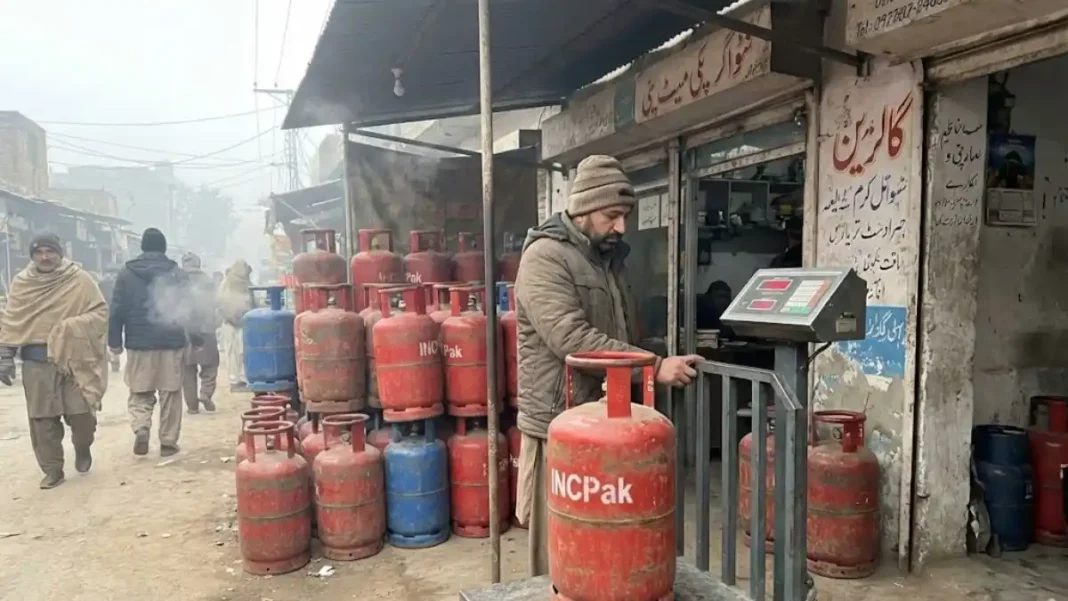
Consumers are already paying well above the official price. A domestic cylinder changes hands at about Rs5,000 against OGRA’s notified maximum of Rs3,296 — a premium of roughly Rs1,700, or 52 per cent. The gap reflects a supply squeeze on two fronts. Land-route volumes through the Taftan border remain negligible, while more than 25,000 tonnes of LPG is backed up at Rahimdan near Gwadar, where each bowser now waits about a month to be decanted and cleared. Industry officials say the delay has pushed freight costs from $100 to $400 a tonne.
The Strait of Hormuz closure has curtailed imports, leaving Oman as the principal alternative source. The Foreign Office had approached Oman’s OQ Trading for cargoes at the Petroleum Division’s request, but the state-owned supplier committed its available volumes to a single private buyer on commercial terms instead — a move insiders say is feeding the black market. Vitol has warned oil could hit $200 a barrel as the Hormuz tanker crisis deepens.
Storage at both LPG terminals at Port Qasim is full to capacity, which suggests the shortage is artificial. Industry sources point to weak enforcement, noting that police have reported loaded LPG bowsers parked in some areas, creating security and safety risks on highways. With short-term inflation running at 11.97 per cent, another fuel price shock would have landed on households already squeezed by rising costs.
What happens next
Pakistan needs 1.4 to 2 million tonnes of LPG a year, and more than half is imported. The decision closes the auction route until a full legal and policy framework is in place, a slow process given the litigation. For consumers, the immediate 15 per cent threat is gone, but the market price stays far above the official ceiling while the Gwadar backlog and import curbs persist.
Why did PM Shehbaz Sharif reject the LPG auction?
He refused to allow the Petroleum Division to auction LPG produced by state-owned companies without a legal and policy framework, and declined to approve any interim measures. The August 10 auction results will not go ahead.
How much would the auction have raised LPG prices?
At least 15 per cent on top of higher winter prices. That is a net impact of Rs77,000 per tonne, about Rs900 per 11.8kg domestic cylinder, because the producer price would have been linked to import parity.
Why is a domestic cylinder selling at Rs5,000 when OGRA’s price is Rs3,296?
The 52 per cent premium reflects a supply squeeze: negligible Taftan volumes, more than 25,000 tonnes backed up at Rahimdan near Gwadar, curtailed imports after the Hormuz closure, and weak enforcement.
What were the four state companies told to do?
Under Petroleum Minister Ali Pervaiz Malik, the four state companies were told to offer standardised five-tonne lots on a pilot basis to replace the quota-based system. The top bid was Rs205 million for a five-tonne-a-day lot over three years.