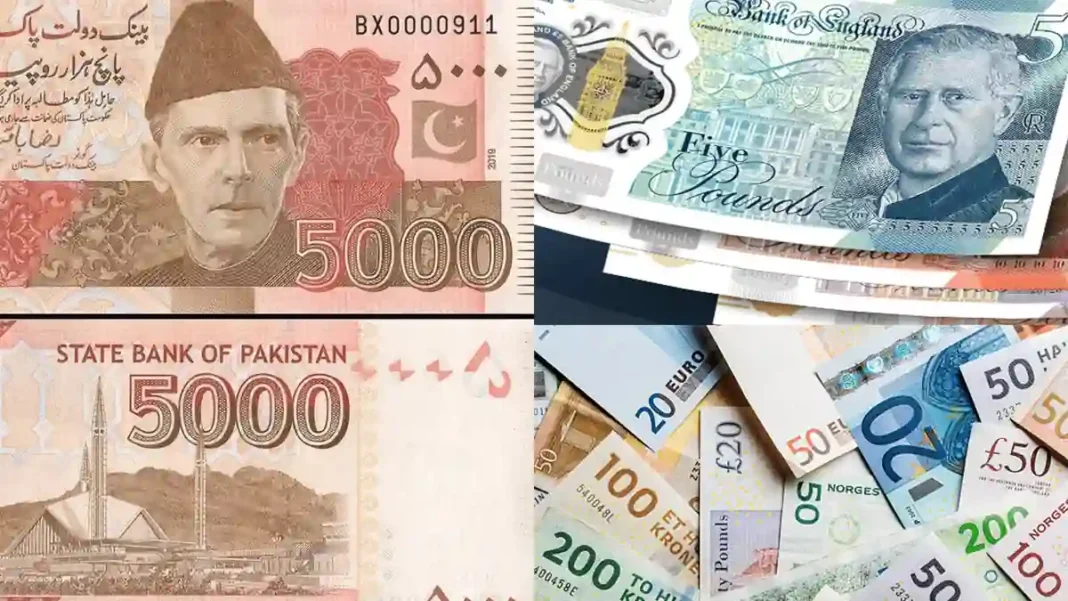
Dollar Rate in Pakistan Today: Rupee Gains for 268th Consecutive Day, Closes at Rs 276.82
KARACHI: The Pakistani rupee extended its winning run against the US dollar on Friday, October 23, 2026, gaining three paisas in the interbank market to close at Rs 276.82. It was the 268th consecutive day of gains, a streak that began on December 25, 2025.
The rupee moved against most major currencies. It gained 82 paisas against the British pound, Rs 1.36 against the euro and three paisas against the Australian dollar. It lost three paisas against the Canadian dollar, held steady against the UAE dirham and gained six paisas against the Saudi riyal.
Friday’s closing rates
- US dollar: Rs 276.82 (rupee up 3 paisas)
- British pound: Rs 370.39 (rupee up 82 paisas)
- Euro: Rs 309.78 (rupee up Rs 1.36)
- Australian dollar: Rs 194.26 (rupee up 3 paisas)
- Canadian dollar: Rs 197.50 (rupee down 3 paisas)
- UAE dirham: Rs 75.38 (stable)
- Saudi riyal: Rs 73.75 (rupee up 6 paisas)
The gains against the pound and the euro were the strongest moves of the day. Both are currencies in which a large share of Pakistani remittances and trade flows are settled.
The interbank picture, in context
These are the reference closing rates. Banks quote slightly different buy and sell prices for actual transactions. The National Bank of Pakistan’s indicative bulletin for Friday put the dollar at Rs 276.75 buying and Rs 277.25 selling, the spread commercial banks used as a guide during the day. Independent trackers published similar levels, and the open-market cash rate usually runs one to three rupees above the interbank level. Our forecast desk tracks the currency’s direction weekly: USD to PKR Forecast: Dollar Rate Prediction for October 2026
The backdrop is supportive. The State Bank’s foreign exchange reserves have been edging higher, recently touching $26.8 billion: SBP Reserves Edge Up to $26.8 Billion. Remittance inflows have also helped, with monthly remittances setting fresh records this year.
A year-on-year view shows real progress
The daily moves are small, but the year-on-year comparison tells a clearer story. A year ago, on October 23, 2025, one US dollar bought Rs 281.95. Today’s close of Rs 276.82 means the rupee has gained Rs 5.31 against the dollar in twelve months, a rise of about 1.92 percent.
That is a meaningful change in a market where Pakistanis have watched the rupee slide for much of the last decade. The winning streak has brought a rare stretch of calm to the currency market, which helps importers plan costs and gives the State Bank room on its policy settings: SBP Likely to Hold Tight Monetary Policy
Why it matters for ordinary Pakistanis
A stronger rupee matters most through import prices. Pakistan imports fuel, cooking oil, machinery and many raw materials, and a firmer rupee holds down the landed cost of everything it buys abroad. Petrol is a clear example: prices have climbed to Rs398.96 this month, but each revision would have been harsher with a weaker currency.
It also affects the cost of registering an imported phone, since customs values devices in dollars and converts at the prevailing rate. A stable rupee keeps that tax bill predictable.
For exporters, though, the trend is a mixed blessing. A strong rupee makes Pakistani goods slightly more expensive for foreign buyers, which is why the central bank watches the balance closely.
FAQs
How is the interbank rate different from the open-market rate?
The interbank rate is what banks trade with each other in large amounts, and the State Bank publishes a daily reference. The open market is what exchange companies offer ordinary customers in cash, and it usually runs one to three rupees higher.
Why has the rupee been gaining for so long?
The streak that began in December 2025 reflects tighter currency management, stronger reserves, steady remittance inflows and improved market sentiment.
Does a stronger rupee reduce inflation?
It helps, especially for imported items such as fuel and edible oil. But domestic factors, from taxes to food supply, also drive prices.
*Source: ProPakistani · Interbank quotes cross-checked with NBP indicative bulletin via Bloom Pakistan*