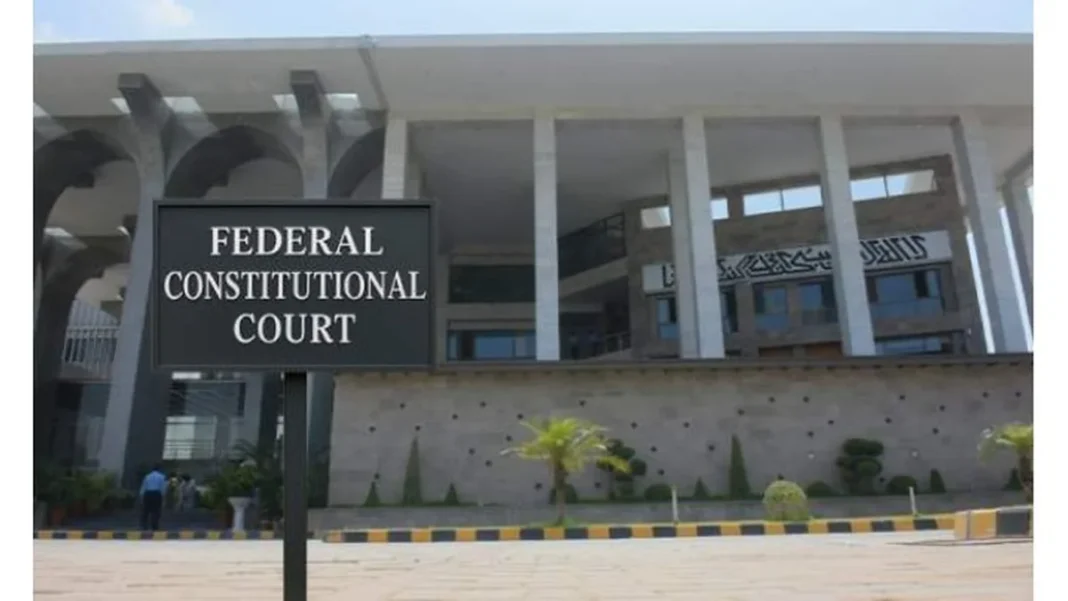
FCC Sets Limits on High Court Powers in Discipline Cases
The Federal Constitutional Court has set aside a Sindh High Court order on transfers and disciplinary action, ruling that a high court cannot take over the executive’s role in posting and disciplining officers. The judgment, reported on October 22, 2026, sets limits on high court powers in service matters.
A two-member bench of Justice Rozi Khan and Justice Syed Arshad Hussain Shah gave the ruling on an appeal by police officer Munir Ahmed Samo. The bench examined an order passed by the Sindh High Court’s Circuit Court at Larkana on June 30, 2026. Justice Rozi Khan wrote the judgment.
What the case was about
The Sindh High Court had ordered an inquiry into an alleged raid on April 16, 2026. The court then expressed dissatisfaction with the first inquiry and directed the Senior Superintendent of Police in Larkana to hold a fair and comprehensive investigation.
On June 19, 2026, the high court also directed that the officers concerned should not receive field postings for at least one year until the inquiry report came in. The later inquiry report, however, did not establish Inspector Samo’s involvement in the alleged raid. It recorded that his role was limited to that of a group officer issuing intelligence reports, and it recommended no further action against him.
Why the FCC set limits on high court powers
The Federal Constitutional Court held that the high court had failed to give adequate weight to the findings and recommendations in the later inquiry report. The court ruled that departmental action against a government employee must rest on credible evidence, a fair inquiry and compliance with legal requirements.
The judgment also held that a high court cannot assume the executive’s role in matters of an officer’s posting and disciplinary proceedings. In other words, courts can review whether the process was lawful, but they cannot step into the shoes of the department and decide postings themselves. The ruling therefore draws a line between judicial oversight and executive authority.
What it means for officers and departments
For government employees, the ruling strengthens the protection of due process. Adverse action must match the findings of the inquiry, and departments must follow the prescribed procedure before they act. An inquiry that clears an officer cannot simply be set aside without reasons.
For departments, the judgment confirms that posting and discipline remain executive functions. Courts will still examine whether action was lawful, but they will not direct transfers or punishments on their own. The decision will likely guide how high courts handle similar service petitions in future.
The ruling also fits a wider pattern from the new court. In June 2026, the Federal Constitutional Court held that high courts could not exercise suo motu powers under Article 199 of the Constitution, again narrowing the scope of judicial intervention in administrative matters. Readers can follow related court developments in the FCC plea on the KP chief minister’s appointment, the FCC order reinstating a Karachi anti-terrorism court judge, and the Peshawar High Court hearings on governor’s rule petitions.
What happens next
The Sindh High Court’s order on transfers and disciplinary action now stands set aside to the extent decided by the Federal Constitutional Court. Any future action against the officer must follow the inquiry findings and the legal procedure. The Sindh High Court’s transfer of narcotics cases to special courts shows the same court continuing its criminal docket, while service disputes of this kind will now be tested against the stricter standard set in the Samo judgment.
Who filed the appeal?
Police officer Munir Ahmed Samo filed the appeal against an order of the Sindh High Court’s Circuit Court at Larkana dated June 30, 2026.
What did the inquiry find?
The inquiry report did not establish Inspector Samo’s involvement in the alleged raid. It found his role was limited to issuing intelligence reports as a group officer, and it recommended no further action.
What did the FCC rule?
The court ruled that departmental action needs credible evidence, a fair inquiry and legal compliance, and that a high court cannot assume the executive’s role in postings and discipline.
Which judges heard the case?
Justice Rozi Khan and Justice Syed Arshad Hussain Shah heard the case, and Justice Rozi Khan wrote the judgment.