India Dam Protest Turns Violent in Arunachal
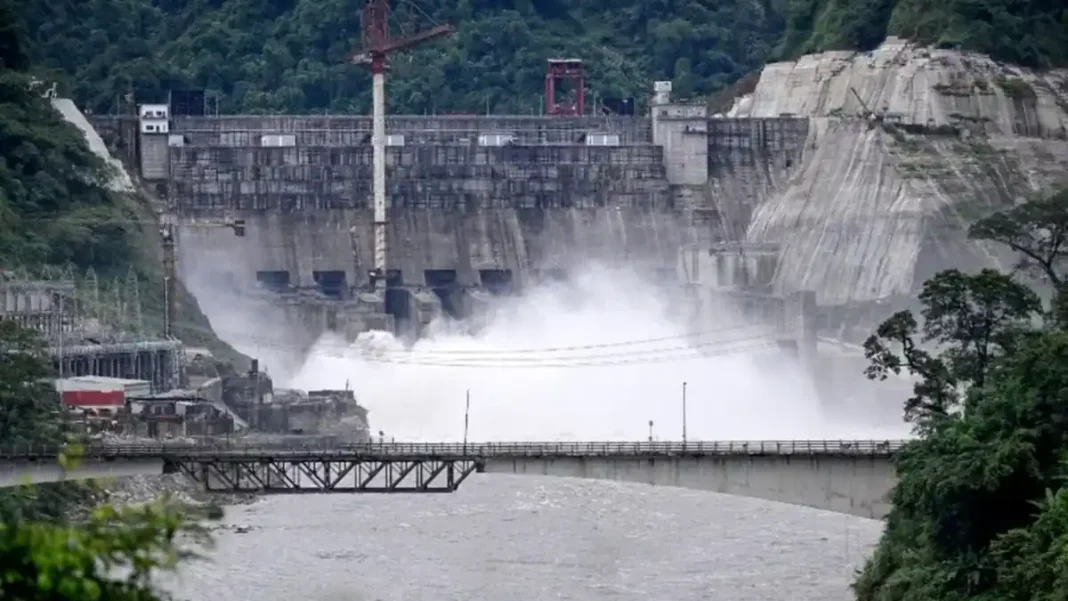
An India dam protest over a proposed Himalayan mega-dam turned violent in Arunachal Pradesh on Friday, as protesters clashed with police and torched buildings, officials said. The violence erupted during protests against the proposed 11,200-megawatt Siang Upper Multipurpose Project.
Arunachal Pradesh Chief Minister Pema Khandu told reporters on Saturday that the crowd destroyed property across the protest area. “The mob destroyed a lot of properties, police station, the NHPC office was vandalised, several elected representatives’ homes were ransacked,” Khandu said.
Around 40 police personnel were injured by stones thrown by protesters, who also vandalised the offices of state-run hydropower company NHPC. Police fired tear gas canisters to disperse the crowd. Khandu urged opponents of the project to engage with the government instead of turning to violence.
“Question us, have dialogue with us, instead of violence,” Khandu said.
India Dam Protest Targets Siang Upper Project
The project at the centre of the unrest is the Siang Upper Multipurpose Project, a planned 11,200-megawatt scheme by NHPC. If built, it would be by far India’s largest hydropower project. It has drawn fierce opposition from local communities, who fear the loss of their homes and land if a vast reservoir floods the Siang valley.
India says the dam is needed to counter China’s $167-billion Yaxia project, a likely record-breaking hydropower scheme upstream in Tibet. New Delhi fears the Chinese project could affect water flows downstream. Officials say the proposed Indian dam would create a vast reservoir to store water and help maintain flows into the Brahmaputra river.
Beijing has said its project will have no “negative impact” downstream. China also claims Arunachal Pradesh, which it calls Zangnan, as part of South Tibet. India has repeatedly dismissed that claim.
The dam dispute sits inside a wider border standoff. India and China share a disputed Himalayan border patrolled by tens of thousands of troops. India’s foreign ministry said on Friday that the two sides remained in regular contact to manage border tensions, after a top Indian border police official, Shatrujeet Kapur, reported “face offs” between Indian and Chinese forces.
Why a Counter-Dam Matters in the Water Dispute
The logic of the Siang project rests on storage. A dam upstream can hold back water and release it on its own schedule, which changes the flow that reaches communities downstream. A large reservoir of India’s own, downstream of the Chinese scheme, would give New Delhi a buffer: water stored in wet months could be released in dry months, steadying the flow into the Brahmaputra.
That is why the project is framed in New Delhi as a strategic asset rather than a simple power station. At 11,200 megawatts, it would dwarf most existing Indian hydropower plants, and its reservoir would be the tool that turns an upstream risk into a managed flow.
For local residents, the calculation looks very different. A reservoir big enough to steady a river is also big enough to submerge villages, farmland and forests. That fear, more than the geopolitics, drove people onto the streets on Friday, and it explains why Khandu’s appeal for dialogue has so far failed to calm the protests.
What Happens Next After the Arunachal Clashes
The immediate question is whether the state government can restart talks with protest leaders. Khandu has opened the door to dialogue, but the scale of Friday’s damage, including a ransacked police station and the vandalised NHPC office, has raised the stakes for both sides.
The longer question concerns the project itself. India has not signalled any retreat from the Siang plan, and China has not signalled any change to Yaxia. With both schemes still on the table, the Siang valley is likely to remain a flashpoint, and the next round of protests could come as soon as the state moves to restart survey or construction work.
Water politics in the Himalayas rarely stay local for long. The Brahmaputra flows from Tibet through Arunachal Pradesh and Assam before reaching Bangladesh, so decisions taken in one valley carry consequences far downstream. Friday’s clashes are a reminder that mega-dams are now as much about borders and influence as they are about electricity.