Commander Killed in Qila Saifullah Operation
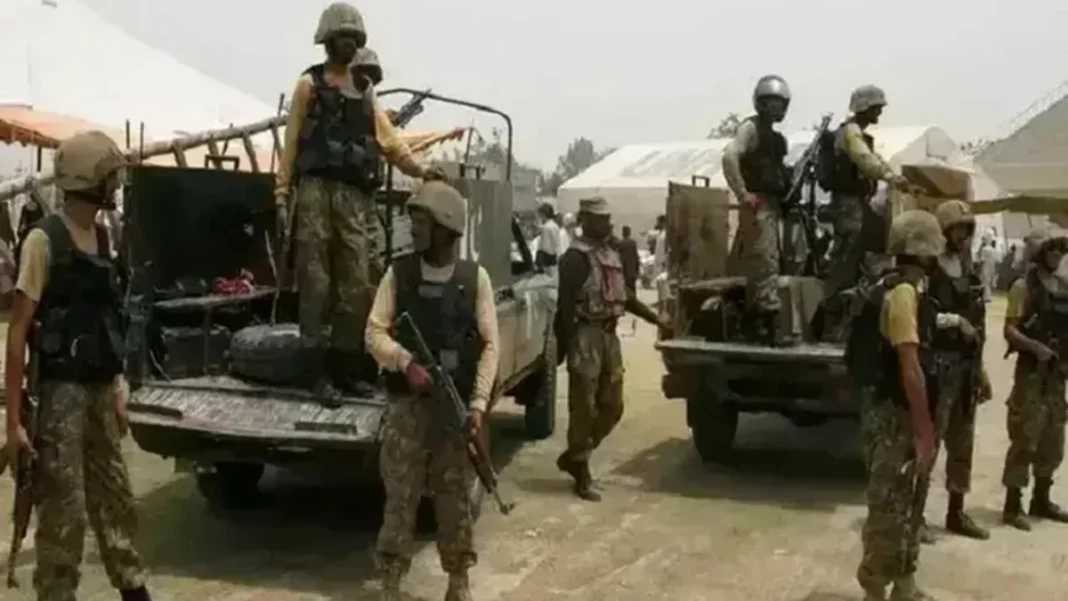
Security forces killed a commander of Fitna al-Khawarij, Adil Shah alias Darvesh, in a Qila Saifullah operation in Balochistan. The operation took place under Operation Radd-ul-Fitna 3, Radio Pakistan reported, citing security sources.
Fitna al-Khawarij is the state’s designation term for the banned Tehreek-i-Taliban Pakistan. The federal government last year officially designated all terrorist groups operating in Balochistan as Fitna al-Hindustan, accusing India of sponsoring a proxy war through the outfits.
The high-tempo intelligence-driven operations are being conducted as part of the ongoing Radd-ul-Fitna-3 campaign, which the military’s media wing has described as a counterterrorism operation aimed at eliminating Indian proxies.
Qila Saifullah Operation Targets Senior Commander
According to security sources, the commander had been associated with Fitna al-Khawarij since December 2020. He had managed the group’s financial affairs since 2024, and he had facilitated permanent residences for foreign terrorists in Zhob, Sherani and Shaban.
Shah had been involved in attacks on security forces and kidnappings for ransom since 2022. Nineteen first information reports had been registered against him, and a bounty of Rs2.5 million had been placed on his head, the sources added.
Security sources reiterated that operations against terrorists in Balochistan would continue until the last terrorist was eliminated, Radio Pakistan reported. The message matches the pattern of recent weeks, in which security forces have reported a steady run of intelligence-based operations across Balochistan and Khyber Pakhtunkhwa.
Balochistan Remains a Major Target
Although Khyber Pakhtunkhwa has borne the brunt of terrorism, Balochistan has also remained a major target of Indian proxies, which often target civilians and military installations in the province. Over the past few years, Balochistan has witnessed a rise in terrorist attacks, with militants frequently targeting convoys, abducting security personnel and civilians, and attacking security and civilian installations.
The scale of the problem is stark in the data. Terrorism is a growing problem for Pakistan, with the number of attacks rising every year since 2022, according to Armed Conflict Location and Event Data, a global monitoring organisation. Data from ACLED shows attacks in Pakistan rose nearly fourfold to 2,425 in 2025 from 658 in 2022. Over the same period, TTP attacks increased more than sevenfold to 838 from 118.
Balochistan’s recent incidents underline that trend. In a similar incident last week, 20 trainee police personnel were abducted by unidentified armed men while travelling between Kalat and Mastung in Balochistan. The abducted personnel belonged to the districts of Kharan, Nushki, Chagai and Washuk in Rakhshan Division. They included eight personnel from Kharan, five from Nushki, four from Chagai and three from Washuk.
In one such attack in July this year, at least 30 people, including 27 police personnel, were killed when terrorists identified by the state as the Indian proxy Fitna al-Hindustan ambushed police personnel deployed in the Kach Mangi Phase III area of Ziarat, triggering hours-long gun battles. The attackers also abducted several civilians and police personnel after the assault. In the aftermath, the Pakistan Army, Frontier Corps and Balochistan Police launched a joint operation, which remains under way, with forces intensifying action across the province.
What the Qila Saifullah Strike Signals
The killing of a commander who handled the group’s finances matters beyond one operation. Financial managers keep a militant network running: they move funds, arrange shelter and sustain recruitment. Removing one disrupts those links, even if the network itself survives.
The operation also fits the stated aim of Radd-ul-Fitna-3, which targets what the state calls Indian proxies in Balochistan. Security sources have stressed that operations will continue until the last terrorist is eliminated, a line that signals further operations in the province in the coming weeks.
For residents of Qila Saifullah and nearby districts, the immediate hope is simpler: fewer attacks on roads, convoys and police posts. The record of recent months, from the Kalat-Mastung abductions to the Ziarat ambush, shows why that hope still feels distant, and why each reported operation is watched closely across the province.
Who was Adil Shah alias Darvesh?
He was a commander of Fitna al-Khawarij, the state’s term for the banned Tehreek-i-Taliban Pakistan. Security sources said he had been linked to the group since December 2020 and had managed its finances since 2024.
Where did the operation take place?
The intelligence-based operation took place in Qila Saifullah, Balochistan, under Operation Radd-ul-Fitna 3.