Xi Says Taiwan Reunification Must Happen
Taiwan reunification must happen, Chinese President Xi Jinping said on Thursday, as he urged peaceful reunification with the island and drew a firm rejection from Taipei.
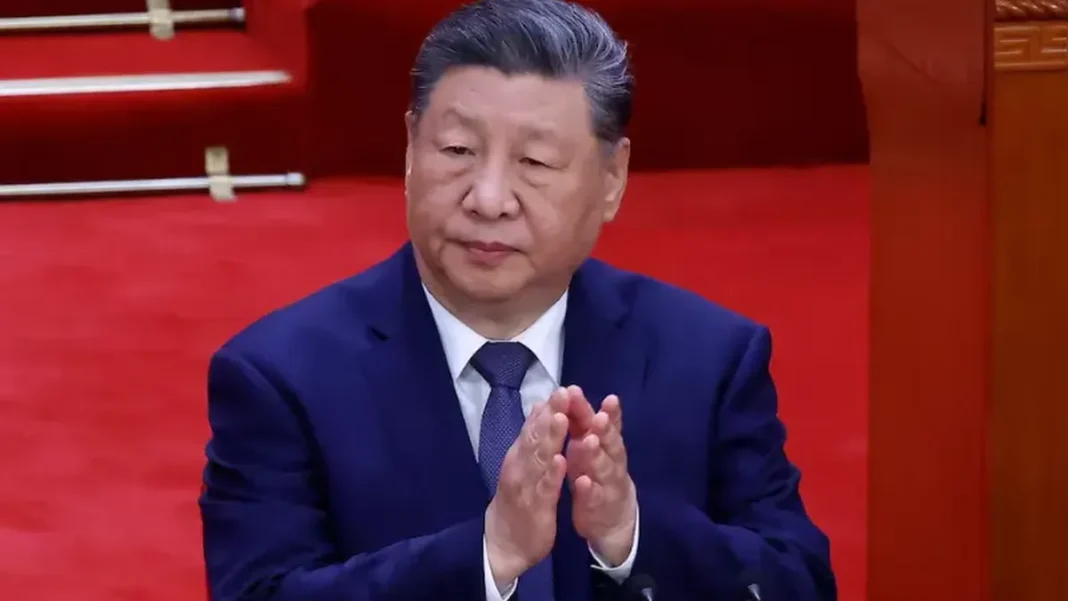
“The tide of history cannot be stopped,” Xi said in a speech in Beijing’s Great Hall of the People. “The complete reunification of the motherland must be realised, and it will certainly be realised.”
Xi was speaking on the 160th birthday of Sun Yat-sen, the revolutionary hero who helped lead the 1911 revolt that ended centuries of rule by emperors and empresses and ushered in the Republic of China.
Resolving the Taiwan question is an “unwavering historical mission” of China’s Communist Party, Xi said. He said China adheres to “peaceful reunification and the policy of ‘one country, two systems'” and is willing to talk to Taiwan while upholding the “one-China principle”, Beijing’s position that both sides of the Taiwan Strait are one country.
Xi made no mention of using force. China has never renounced force for Taiwan, but its military operates around the island on a daily basis and is extending its reach further into the Pacific.
Taiwan reunification: Taipei rejects the offer
Taiwan’s government dismissed the remarks. Its Mainland Affairs Council said neither the government nor Taiwan’s people could accept “one country, two systems”, which would ultimately mean submitting to the Communist Party’s rule.
“As for the wording on Taiwan unification, it isn’t much different from the past,” council spokesperson Liang Wen-chieh told reporters.
China views democratically governed Taiwan as its own territory, despite Taipei’s strong rejection of that claim. Beijing has repeatedly offered a “one country, two systems” model of autonomy, which no major Taiwanese political party supports.
Xi called on all Chinese, including those in Taiwan, to join hands to oppose Taiwan independence “separatist” forces and work for the peaceful development of cross-Strait ties.
Jets fly as Xi speaks
Taiwan’s defence ministry said it had detected 29 Chinese military aircraft, including J-16 fighter jets and drones, carrying out a “joint combat readiness patrol” around Taiwan in conjunction with Chinese warships, starting on Thursday.
The patrol underlined the military pressure that runs alongside Beijing’s political message. Xi did not threaten force in his speech, but the aircraft and warships around the island showed that the pressure continues.
Sun Yat-sen’s legacy is claimed by both sides. Beijing calls Sun a great national hero and patriot, as well as the forerunner of the 1949 communist revolution that forced the defeated Republic of China government to flee to Taiwan, where it remains to this day. In Taiwan, Sun is officially considered the “father of the nation” and his portrait hangs in the presidential office.
Last month, Taiwan called on its people to steer clear of China’s events to mark the Sun Yat-sen anniversary, saying China had a distorted view of him and his legacy. Xi said Sun “consistently upheld the unity of the country and the solidarity of the nation, and he firmly opposed all words and actions that split the country or the nation.”
Why the timing matters
Xi’s speech comes a week ahead of the APEC summit in China’s southern tech hub of Shenzhen, where he is due to meet US President Donald Trump again. It also comes a little more than two weeks before important local elections in Taiwan.
The Taiwan question sits at the centre of the US-China relationship, and the timing links the speech to the leaders’ meeting. Beijing has accused Washington of using spy claims as a pretext for a tech blockade, and China says US spy claims justify a tech blockade. Trump’s Asia tour follows midterm losses at home, and US envoys are planning meetings with Putin and Zelensky after talks.
Taiwan President Lai Ching-te and his ruling Democratic Progressive Party champion Taiwan’s separate identity from China, but they have been striking a tougher tone with Beijing on the role of the Republic of China. China says Lai is a “separatist” and has refused to speak with him. Lai says only Taiwan’s people can decide their future. The same week has seen friction on other fronts, and Iran has slammed a US reward offer over its nuclear programme.
The words may not be new, as Liang Wen-chieh noted, but the setting, the jets in the air and the Trump meeting a week away give them fresh weight.
Frequently asked questions
What did Xi Jinping say about Taiwan?
Xi said “the tide of history cannot be stopped” and “the complete reunification of the motherland must be realised”, calling the Taiwan question an “unwavering historical mission” of the Communist Party.
Did Xi threaten force?
No. Xi urged peaceful reunification under “one country, two systems” and made no mention of using force, though China has never renounced force for Taiwan.
How did Taiwan respond?
Taiwan’s Mainland Affairs Council said neither the government nor the people could accept “one country, two systems”, and its spokesperson said the wording “isn’t much different from the past”.
What military activity took place?
Taiwan’s defence ministry detected 29 Chinese military aircraft, including J-16 fighter jets and drones, in a joint combat readiness patrol with warships around Taiwan.