Smog in Punjab has shut down motorways this week. Thick fog mixed with smog cut visibility to almost nothing on major roads. Officials closed several sections to keep drivers safe. On 10 November 2026, the M4 motorway closed between Shamkot and Abdul Hakeem to all traffic. To understand the health risks, read our guide on smog in Punjab and how to protect your family.
This article lists the motorways that closed, and it explains why fog and smog together are so dangerous. It also shares simple steps to drive safely. In short, the safest choice is to travel in daylight, slow down, and check the road before you leave.
Smog in Punjab Closes Motorways
Dense fog forced the first closures on Monday 10 November 2026. The M4 motorway closed between Shamkot and Abdul Hakeem to all traffic. As a result, drivers on that route had to stop or turn back. The closure stayed in place while visibility stayed poor.
Other sections closed to heavy traffic on the same day. The M4 closed between Sher Shah in Multan and Khanewal for heavy vehicles. In addition, the M4 closed between Abdul Hakeem and Gojra, and between Pindi Bhattian and Abdul Hakeem, for heavy traffic. The M1 also closed between Peshawar and Rashakai on the morning of 10 November.
Fog shut more stretches overnight. Stretches of the M4 and M5 closed during the night of 11 to 12 November as fog thickened. However, closures change from day to day. A section closed in the morning may reopen by midday, and a clear road can close again by night. For this reason, always check before you travel.
Heavy vehicles face the strictest limits. A loaded truck needs far more room to stop than a car, so police hold trucks back first. Several of this week’s closures applied to heavy traffic only, while cars could still pass.
Why Fog and Smog Are a Dangerous Mix
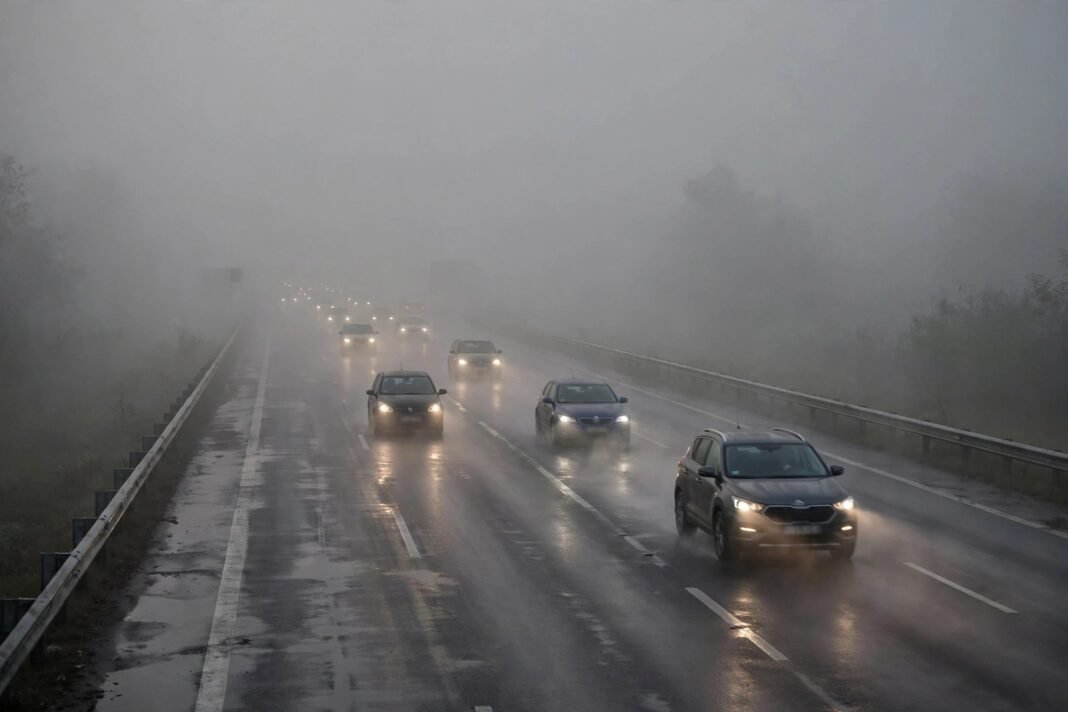
Fog alone cuts how far you can see. Smog adds fine dust and smoke to the air, and the mix can drop visibility to a few metres. In fact, drivers in thick fog often cannot see the car ahead until it is too late to stop. That is why motorway police close roads instead of leaving them open.
Cold, still air makes the problem worse. In November, falling temperatures trap smoke and dust close to the ground. Wind speeds stay very low for days, so the dirty air has nowhere to go. Meanwhile, traffic fumes, factory smoke, brick kilns, crop burning and construction dust keep adding to it.
Lahore felt the worst of it. On the night of 11 November, the city’s air quality index stood at 358. Earlier, readings climbed from 366 on 8 November to 440 on 9 November. Early on 13 November, the index stood at 211, still rated very unhealthy. Read more about Lahore’s air quality crisis.
There is some good news, however. On 11 November 2024, Lahore’s air quality index passed 2,000 and reached about 2,400. A year later, on 11 November 2026, it stayed below 450. In other words, this year’s smog is bad, but it is far below last year’s extremes.
Pollution from across the border added to the problem. During the Diwali period, air carrying pollution travelled deep into Punjab. The provincial environment agency found that about half of Punjab felt its effect in one 24-hour stretch.
Smog in Punjab: The Safest Time to Travel
The National Highways and Motorway Police have clear advice for the fog season. Travel between 10 in the morning and 6 in the evening. Visibility is best in those hours, and the fog usually lifts by late morning. In contrast, early morning and late night are the most dangerous times to drive.
Motorway Police spokesperson Syed Imran Ahmed shared the advice after the M4 closures. He said authorities close motorways to protect lives and property. Above all, he urged drivers to avoid unnecessary travel in foggy weather.
If your trip can wait, wait. A delayed journey is better than a dangerous one. For example, a morning meeting can move to midday, and a night drive can become a daylight drive. Your family would rather see you late than not at all.
Night driving in fog is the riskiest of all. Darkness and fog together leave almost no visibility. If you must drive at night, stick to well-lit roads and keep your speed very low.
How to Drive Safely in Fog and Smog
Firstly, slow down. Fog hides what lies ahead, so drive well below the normal speed limit. Secondly, switch on your low beams. High beams bounce off fog and make it harder to see, while low beams cut through it better. Use fog lights if your car has them.
Keep a bigger gap than usual between your car and the one ahead. In fog, you need more time and space to stop. Do not overtake, because you cannot see oncoming traffic in time. Instead, follow the road markings and stay in your lane.
Use your wipers and demister to keep the windscreen clear. Smog leaves a film on glass, so clean the windscreen before you set off. In addition, keep your windows closed and set the air to recirculate, so smog stays outside the car.
Never stop in the middle of the road in fog. If you must stop, pull fully off the road and switch on your hazard lights. As a result, other drivers can see your car and pass safely.
Use your indicators early, so other drivers know what you plan to do. Check your mirrors often, because cars can appear out of the fog without warning. Above all, stay calm and patient, even if traffic moves slowly.
What to Do If Visibility Drops to Zero
Sometimes fog thickens so fast that you cannot see the road at all. Do not panic, and do not keep driving blind. Slow down gently, because sudden braking can cause a crash behind you. Then look for a safe place to pull over.
Pull completely off the road, away from moving traffic. Switch on your hazard lights. Turn off your headlights once you are parked, so other drivers do not follow your lights onto the shoulder. Wait until visibility improves before you drive on.
Meanwhile, let someone know where you are. Call a family member and share your location. If you are on a motorway and need help, call the Motorway Police helpline on 130. Finally, stay in your car until it is safe to move again.
Before You Leave: Check the Road First
A two-minute check can save hours on a closed road. Call the Motorway Police helpline on 130 before you set off. The helpline gives the latest road status and tells you which sections are open or closed. In addition, listen to traffic updates on the radio.
Punjab Highway Patrol police have been asked to map alternative routes for fog closures. They are preparing diversion plans and reflective boards to guide drivers when motorways close. As a result, drivers should soon have clearer detours when a motorway shuts.
Tell someone your route and your expected arrival time. Keep your phone charged and carry water and a warm layer. For example, a blanket in the boot costs nothing and helps a lot if you wait by the roadside. Above all, fill your fuel tank before a long trip, because a diversion can add many kilometres.
Check your car before a fog-season trip. Test the headlights, fog lights, wipers and brakes. In addition, check the tyres, because worn tyres grip less on cold, damp roads.
Smog in Punjab and Your Health on the Road
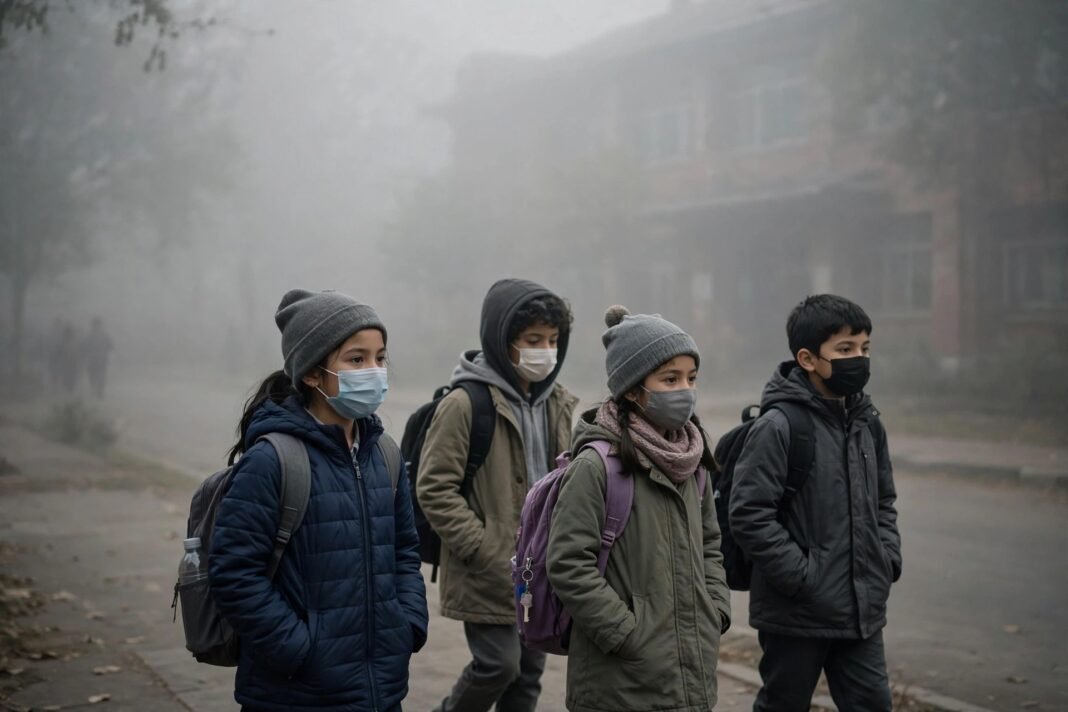
Driving in smog is not only a road risk. The air itself can harm your health. Fine dust, known as PM2.5, gets deep into the lungs and can trigger coughing, sore eyes and breathing trouble. Children, older people and people with asthma face the highest risk. People who drive for a living face the highest exposure, because they spend hours on the road each day.
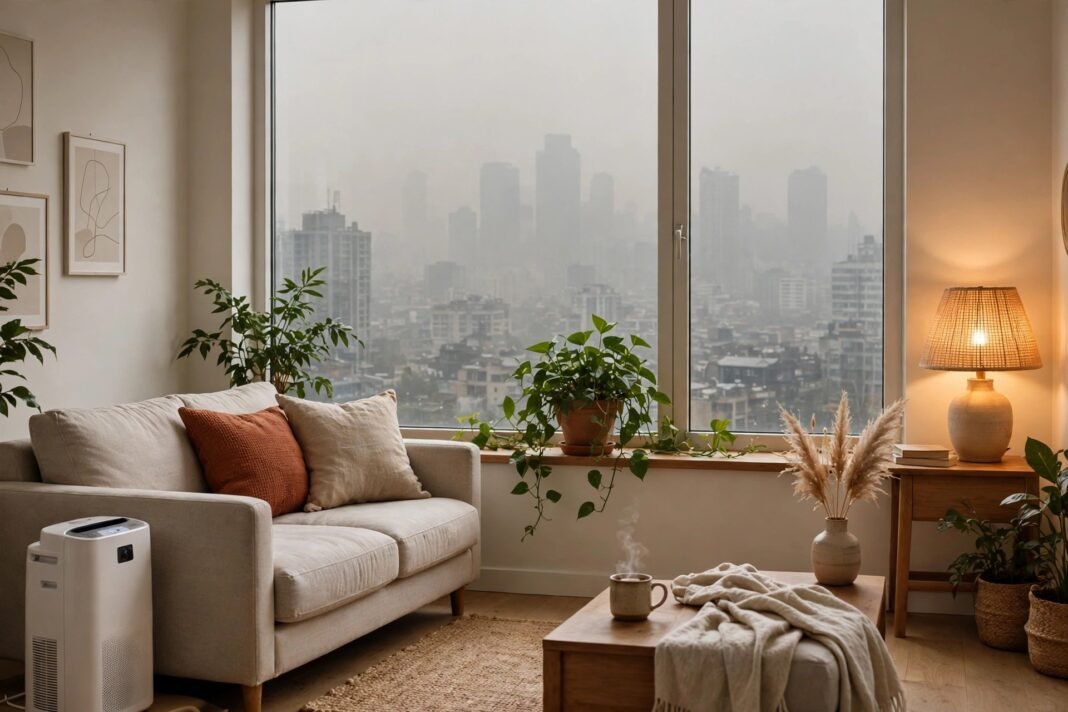
Keep your car windows closed in smog and use the air conditioning on recirculate. If you step out of the car, wear a mask that fits well. In fact, an N95 mask blocks far more fine dust than a cloth mask. Limit your time outside, and do not exercise outdoors on high-smog days.
For the full picture, read our guide on smog in Punjab and how to protect your family. It explains the symptoms to watch for and the steps that protect your family at home.
When Smog in Punjab Should Ease
Experts say smog levels usually rise until 15 November and then begin to fall. October 2026 smog was about 33 percent lower than in the same month last year. Therefore, this season should improve gradually after mid-November, if the weather helps.
Rain can clear the air fast, and forecasts pointed to rain over Punjab in the coming days. However, fog season runs through winter, so drivers should stay careful for weeks to come. In short, the worst days may pass soon, but safe driving habits matter all season. Until then, check the air quality each morning before you plan a long drive.
Have you driven through smog in Punjab this week? Tell us in the comments how you stayed safe on the road.