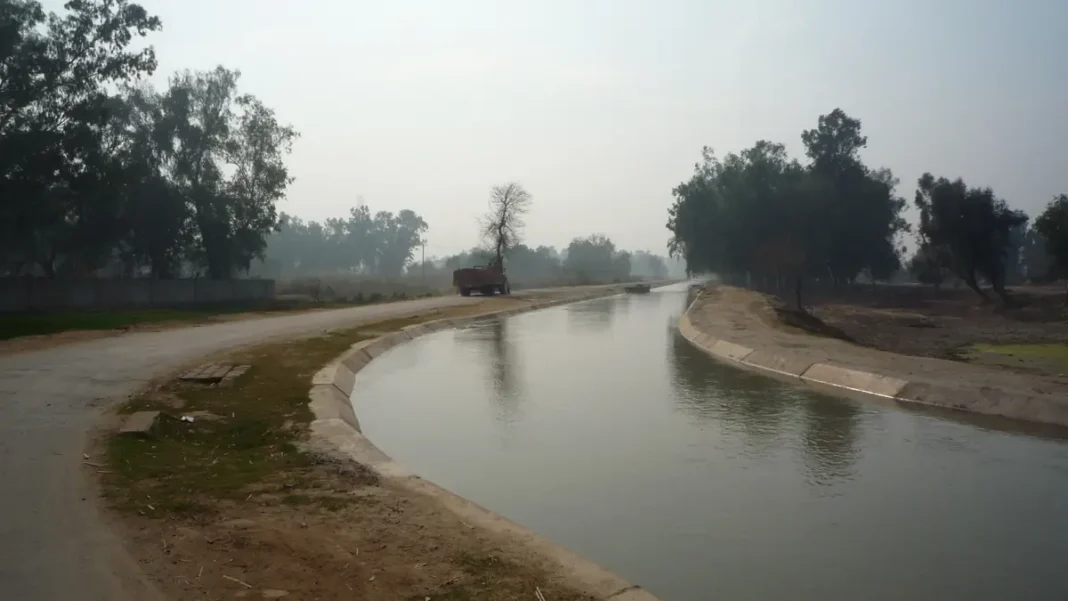
Punjab Water Demand Outstrips Supply, FAO Warns
Punjab water demand already exceeds supply across all sectors, a United Nations assessment has warned, with groundwater falling by about 5.5 billion cubic metres a year and surface water under growing pressure.
The Food and Agriculture Organisation (FAO) set out the warning in Water and Land Accounting in Punjab, published on Monday. The province needs an extra 10 billion cubic metres of water each year to bridge the gap and sustain its groundwater aquifer.
The FAO took advice from water specialists, including former Water and Power Development Authority (Wapda) chairman Shamsul Mulk and former Indus River System Authority (Irsa) chairman Rao Irshad Ali Khan. The findings rest on annual water accounts covering five water years from 2012 to 2017.
Why Punjab water demand keeps rising
The gap is worst in Punjab’s urban areas, where freshwater access is limited and groundwater reserves are falling. Farm production is also increasingly at risk from water stress and groundwater depletion. Punjab’s farms face pressure from several directions at once: the province recorded 898 farm fires in a single day this month, with Hafizabad worst hit.
Freshwater shortages have pushed farmers and cities to recycle more low-quality water, while pollution from agro-chemicals and urban wastewater has intensified. With Punjab a major contributor to the national economy, the report calls its water management particularly critical.
The pressure is already visible: Punjab and Sindh face a projected 22 per cent irrigation-water shortfall this Rabi season, according to the Indus River System Authority, with combined usable storage in the Tarbela, Mangla and Chashma reservoirs at 6.167 million acre-feet.
Rivers, canals and wetlands under strain
The report says rivers flowing through Punjab and its freshwater bodies have diminished significantly, with river flows down by about 30 billion cubic metres since the 1960 Indus Waters Treaty with India.
The province holds only 1.7 per cent of wetland areas, and its natural landscape has declined considerably. Rainfall remains the only water source outside canal command areas and urban centres, and recharge sources have diminished, cutting net renewable water resources.
Punjab’s canal system operates as a run-of-the-river system for half the year and cannot draw its full authorised share of river water. “The reduction in drainage flows suggests a consistent water supply and demand gap,” the report adds.
Its technical diagnosis named four main challenges: growing water scarcity; continuous groundwater depletion; competition among sectors for water and unaccounted transfers; and the need to protect renewable water resources, wetlands and the natural landscape.
What the FAO wants Punjab to do
The report strongly recommended a commission to conduct a one-time review of provincial water resources, water-related policies, institutional mandates and existing strategies, and said Punjab needed more advanced and integrated water services.
The commission would align national and inter-provincial water policies, assess the impact of transboundary water projects, sort out overlapping responsibilities, review water and land resources, demand and projections to 2050, and set up a coordination cell in the Planning and Development Department.
It also found shortcomings in data collection, recommended expanding the land-use classification system across the province, and called for timely steps to increase surface water, improve recharge and build mechanisms for inter-seasonal transfers.
The FAO is already working with the Punjab Agriculture and Irrigation departments, the Muhammad Nawaz Sharif University of Agriculture Multan and IHE Delft on a WaPOR water budgeting study. Feature Pakistan reported in October that Pakistan eyes $18bn of water investment by 2029, while India’s decision to place the Indus Waters Treaty in abeyance has sharpened the debate over shared rivers.
Frequently asked questions
What did the FAO report find about Punjab’s water?
Demand already exceeds supply across all sectors. Groundwater is falling by about 5.5 billion cubic metres a year, and the province needs an extra 10 billion cubic metres of usable water annually to close the gap.
What is the report called?
Water and Land Accounting in Punjab, from the Food and Agriculture Organisation of the United Nations, based on annual water accounts covering five water years from 2012 to 2017.
What did the FAO recommend?
A commission to conduct a one-time review of Punjab’s water resources, policies, institutional mandates and strategies, plus a coordination cell in the Planning and Development Department and an expanded land-use classification system.
How have Punjab’s rivers changed?
River flows fell by about 30 billion cubic metres after the 1960 Indus Waters Treaty with India. The province holds only 1.7 per cent of wetland areas, and its canals run as a run-of-the-river system for half the year.
Why does the warning matter for farmers?
Farm production is increasingly at risk from water stress and groundwater depletion, and Punjab and Sindh already face a projected 22 per cent irrigation shortfall this Rabi season.