Dar Links ECO Trade to Afghan Action on Terrorism
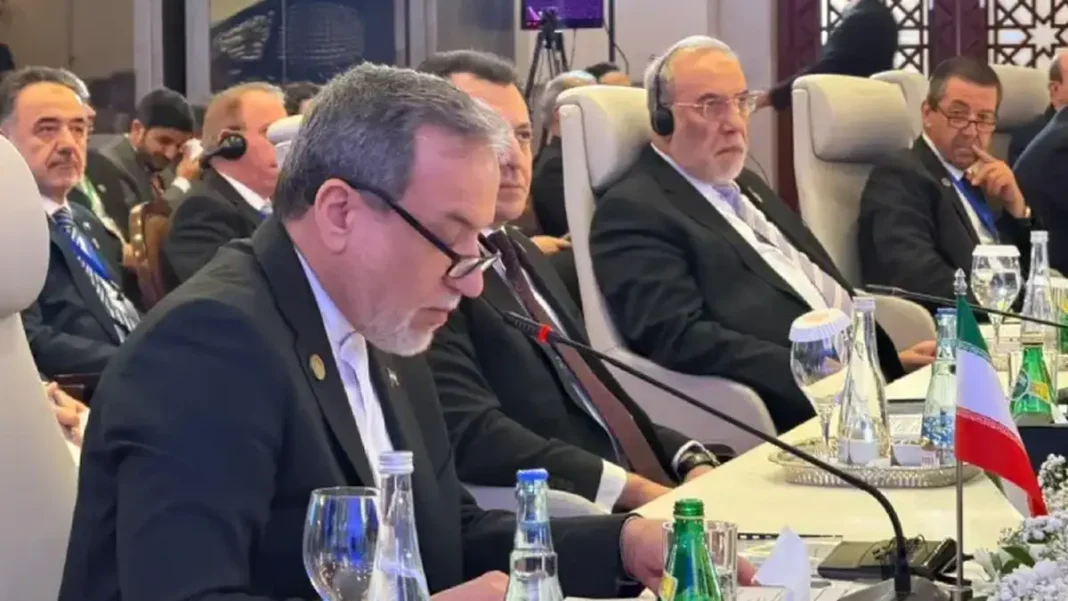
Pakistan told a regional ministerial meeting in Islamabad on Monday that progress on trade and connectivity with Afghanistan depends on Afghan action on terrorism. Deputy Prime Minister and Foreign Minister Ishaq Dar, who is chairing the 30th meeting of the Economic Cooperation Organisation Council of Ministers, said a stable Afghanistan at peace with itself and all its neighbours would benefit the Afghan people and the wider region.
“Regional connectivity rests on more than the routes that link us. It depends upon trust between states and confidence that international commitments will be honoured. Unresolved disputes and the non-fulfillment of international obligations can erode that trust and impede economic progress,” Dar said in his opening speech.
Afghan action on terrorism at the centre of the ECO meeting
Dar stressed that a secure and stable environment was essential for sustained regional economic partnerships, and that respect for international law and treaties was essential to them.
Pakistan holds the ECO chairmanship for 2026-27 and is hosting the two-day meeting, which runs on November 15 and 16, under the theme “Reviving Regionalism for a Resilient ECO”. The meeting brings together foreign ministers and heads of delegations from the organisation’s 10 member states.
No one from Afghanistan is attending the meeting, according to the list of delegations shared by the Foreign Office. That absence gave Dar’s remarks added weight, since the country at the centre of his message had no delegation in the room to answer it.
Dar cautioned that conflict and insecurity could disrupt trade routes, energy supplies, investment and economic projects. “Peace and development reinforce each other,” he said.
Five priorities for Pakistan’s ECO chairmanship
Dar set out five priorities for Pakistan’s chairmanship: expanding trade and investment, strengthening regional connectivity, advancing the ECO Trade Agreement, building regional resilience and promoting human development.
On trade, Dar said Pakistan would work towards wider market access and stronger regional value chains. He said the November 2025 roadmap approved by ECO trade ministers provided a basis for modernising the ECO Trade Agreement.
On connectivity, Dar said Pakistan would seek to improve transport and transit links between Central Asia, South Asia and Pakistani ports on the Arabian Sea. On resilience and human development, he called for closer cooperation in disaster preparedness, water management and climate-resilient infrastructure, and stressed education, research, innovation and vocational training.
Araghchi calls for a regional energy mechanism
Iranian Foreign Minister Abbas Araghchi also addressed the meeting. He stressed the need for a reliable and sustainable regional energy mechanism, pointing to the US-Israeli war on Iran, which has also choked key fuel supply routes through the Strait of Hormuz and Bab al-Mandeb. He said the region needed such a mechanism to safeguard energy flows, ensure stable supplies and reduce external vulnerabilities.
Araghchi also called for a modern, new-generation, more inclusive, effective and operational trade agreement that would benefit the region.
Referring to the US war on Iran, Araghchi said Iran had remained committed to diplomatic engagement and peaceful solutions. He added, however, that the US had opted for a different course, marked by aggression, threats, targeted assassinations, economic coercion and blockades, in flagrant violation of international law and the UN Charter.
He also called attention to Palestine, describing the genocide as the most pressing international crisis.
Who is attending the meeting
The ECO’s members are Pakistan, Afghanistan, Azerbaijan, Tajikistan, Iran, Turkiye, Kazakhstan, Turkmenistan, Kyrgyz Republic and Uzbekistan. Delegates include Araghchi, the Tajik and Turkmen foreign ministers and the Azeri deputy foreign minister, along with the Turkish, Kazakh, Kyrgyz and Uzbek deputy foreign ministers.
Foreign ministers and senior officials arrived in Islamabad over the weekend, as Feature Pakistan reported, for the ECO meeting.
Security operations against militant groups have continued along the western border, including an operation in North Waziristan in which 16 terrorists were killed and two soldiers were martyred. Islamabad has repeatedly said that trade, transit and economic cooperation with Kabul cannot advance while militant groups operate from Afghan soil, a position Dar restated in the ECO chamber on Monday.
Frequently asked questions
What did Ishaq Dar say about Afghanistan at the ECO meeting?
Dar said progress on regional cooperation required the Afghan authorities to address the security concerns of neighbouring countries, particularly terrorism. A stable Afghanistan at peace with itself and its neighbours would benefit the Afghan people and the wider region.
What are Pakistan’s five priorities as ECO chair?
The five priorities are expanding trade and investment, strengthening regional connectivity, advancing the ECO Trade Agreement, building regional resilience and promoting human development.
What did Iran’s foreign minister call for?
Abbas Araghchi called for a reliable and sustainable regional energy mechanism to safeguard energy flows, pointing to the choking of fuel routes through the Strait of Hormuz and Bab al-Mandeb.
Is Afghanistan attending the ECO meeting?
No. According to the list of delegations shared by the Foreign Office, no one from Afghanistan is attending the 30th ECO Council of Ministers meeting in Islamabad.
Who is attending the ECO meeting?
Delegates include Iranian Foreign Minister Abbas Araghchi, the Tajik and Turkmen foreign ministers and the Azeri deputy foreign minister, along with the Turkish, Kazakh, Kyrgyz and Uzbek deputy foreign ministers. Afghanistan is not attending.