In short: More than one in four Pakistani children aged 5 to 16 is out of school, according to the Household Integrated Economic Survey 2024-25, and in Sindh the figure reaches 39 percent. Faiza Rind examines the education emergency: poverty that pulls children into work, the unfinished struggle for girls, schools without water or trained teachers, and public spending of just 0.8 percent of GDP.
Education is not a privilege reserved for the wealthy; education is a right of every child. Yet in Pakistan millions of children continue to grow up without access to a classroom, a teacher or even the opportunity to build a future. Behind every number is a child whose dreams are being delayed by poverty, inequality and a failing education system. I see children who dream of a life yet their dreams are held back.
Pakistan is facing a crisis that threatens not only the future of its children but also the development of the entire nation. Despite repeated government promises, educational reforms and declarations of an education emergency millions of children remain deprived of their right to education. While the world continues to invest in knowledge, technology and innovation a significant number of children are still struggling to enter a classroom. I feel sad when I hear about children who cannot attend school.
According to the Pakistan Bureau of Statistics’ Household Integrated Economic Survey (HIES) 2024–25 28 per cent of children aged 5–16 are out of school. This means that more than one in every four school-age children is not receiving education. The situation is particularly concerning in Sindh, where 39 per cent of children in this age group're out of school. The figures highlight a failure to provide equal educational opportunities across the country. I worry when I learn that 28 per cent of children are not in school.
Poverty: A Major Barrier to Education
One of the reasons behind Pakistan’s education crisis is poverty. For families sending children to school is not always an affordable option. Rising living costs unemployment and financial difficulties force parents to prioritise household needs over education. In low-income households children are sometimes expected to contribute to family income or take care of household responsibilities of attending school. I hear parents telling me that they cannot afford to send their children.
Although education is legally recognised as a right the reality is different for children living in poverty. School uniforms, books, transportation and other educational expenses create financial pressure. Consequently many children never enter a classroom or leave school before completing their education. I think education is a right that should not be denied.
A nation cannot achieve progress when a child’s future depends on the condition of their parents.
Girls’ Education: An Unfinished Struggle
The educational crisis becomes even more serious when gender inequality is considered. Thousands of girls continue to face barriers that prevent them from receiving an education. In rural and underdeveloped areas traditional attitudes, early marriages, household responsibilities, poverty and the shortage of nearby schools limit girls’ educational opportunities. I know many girls face obstacles.
According to the HIES 2024–25 44 per cent of school-age girls in Sindh are out of school compared with 35 per cent of boys. This gap reflects the opportunities available to girls and demonstrates the need for stronger efforts to protect girls’ right to education. I feel that girls deserve chances.
Educating girls is not about improving individual lives; it also strengthens families, communities and the national economy. An educated woman is better equipped to make decisions support her family and contribute to society. Denying girls education means denying the country a part of its potential. I believe that educated women lift families.
Poor School Facilities and Quality of Education
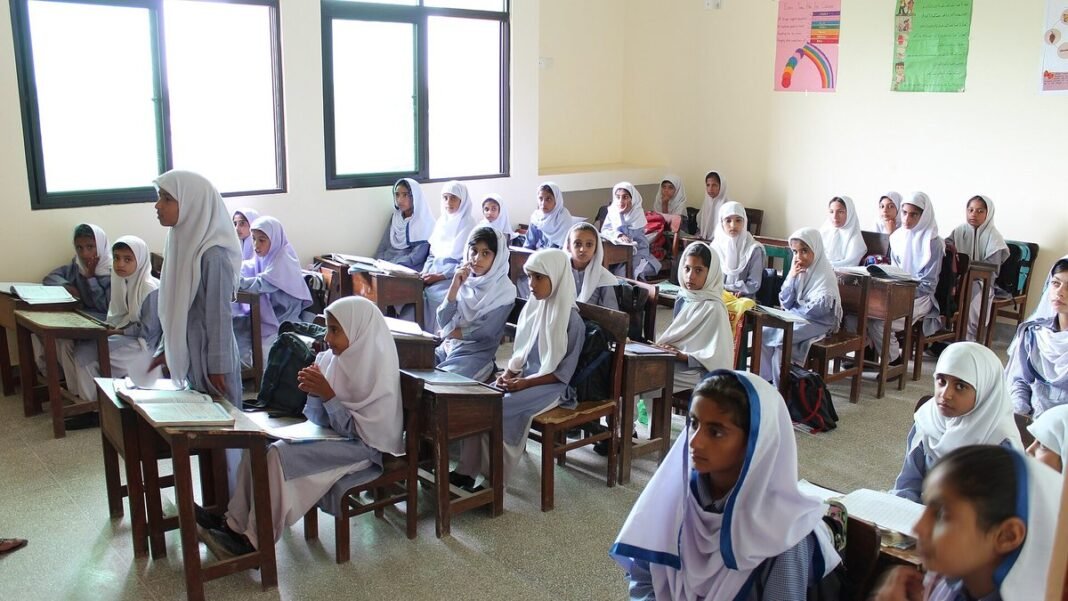
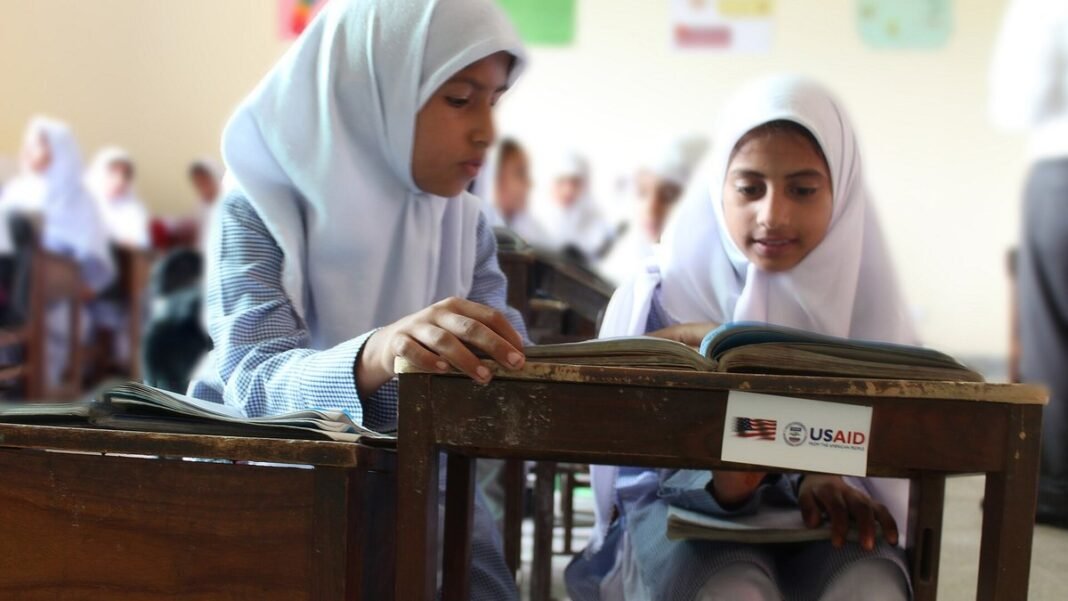
Another concern is the poor condition of educational institutions particularly in rural areas. Many schools struggle with classrooms, insufficient furniture, limited learning materials a shortage of qualified teachers and a lack of basic facilities such as clean drinking water and functional toilets. I see schools that lack needs.
In some communities children have to travel distances to reach the nearest school. Others attend institutions where the learning environment's not suitable for their educational development.
However the problem is not limited to school enrolment. Providing access to a classroom does not automatically guarantee quality education. Students also need teachers, effective teaching methods, proper guidance and opportunities to develop critical thinking skills. I wonder if classrooms alone are enough.
Unfortunately many students complete years of schooling without developing strong reading, writing and mathematical abilities. This raises a question: Are we simply enrolling children in schools or are we actually preparing them for the future? I ask myself if we are truly preparing children.
Government Responsibility and Educational Investment
The government’s role in addressing this crisis cannot be overlooked. Although education has frequently been included in development plans, investment and implementation remain major concerns. I trust that the government can do better.
According to the Pakistan Economic Survey 2024–25 public expenditure on education was estimated at 0.8 per cent of GDP. Such limited investment makes it difficult to improve infrastructure, recruit and train teachers provide learning resources and expand educational opportunities.
Pakistan needs more than announcements and short-term educational programmes. It requires a national strategy that ensures educational policies are properly implemented and public funds are used transparently. I hope for a strategy.
The government must also strengthen schools improve teacher training provide financial assistance to disadvantaged families and ensure that children from remote areas receive equal educational opportunities.
A Collective Responsibility
Although the government carries the responsibility for providing education society also has an important role to play. Parents must be encouraged to prioritise children’s education while communities should support families facing difficulties.
Non-governmental organisations, educational institutions and private organisations can contribute by establishing learning centres providing scholarships distributing materials and supporting children who have dropped out of school.
Special attention must also be given to children with disabilities and to children living in communities. Education should be accessible to every child regardless of gender, financial background, geographical location or physical ability.
Furthermore schools should focus on developing knowledge, communication skills, creativity and digital literacy rather than relying entirely on memorisation. Education must prepare students to participate in an increasingly competitive world.
The Future of Pakistan Depends on Education
Pakistan’s education crisis is not merely a problem of schools and classrooms; it is a problem of priorities. A country cannot expect growth, social equality or political stability while millions of children remain excluded from education.
Every child who is denied education represents an opportunity for national development. Behind the statistics are children who could become teachers, doctors, scientists, writers and future leaders if children were given the opportunities.
The government must turn promises into action increase educational investment and ensure that every child has access to quality education. The success of a nation should not be measured by economic achievements or infrastructure but also by opportunities it provides to its youngest citizens.
Pakistan does not lack children; it lacks an education system that gives every child an equal chance to succeed. The question is no longer whether the country can afford to educate its children, but whether the country can afford to leave an entire generation behind.
Frequently Asked Questions
How many children are out of school in Pakistan?
The Household Integrated Economic Survey 2024-25 found 28 percent of children aged 5 to 16 out of school, more than one in four. In Sindh, 39 percent of children in this age group are out of school.
Why are girls more likely to be out of school?
Poverty, early marriage, household responsibilities, traditional attitudes and the shortage of nearby schools. In Sindh, 44 percent of school-age girls are out of school, compared with 35 percent of boys.
How much does Pakistan spend on education?
Public expenditure on education was estimated at 0.8 percent of GDP in the Pakistan Economic Survey 2024-25, which the article argues is far too little to fix infrastructure, train teachers and reach remote communities.
Related reading on Feature Pakistan: Taleemi Wazaif: The Stipend That Only Pays if the Child Stays in School by Ashbeel Zafar and Degree: A Ticket to the Unemployment Queue? by Aniqa Tarique.
The views expressed in this article are the writer’s own and do not necessarily reflect the editorial policy of Feature Pakistan.