The cold weather has arrived, and your baby’s first winter is here. You look at your tiny newborn and wonder one thing above all: is my baby warm enough?
Every new mum asks this question, because a newborn cannot tell you how they feel. In fact, small babies are not very good at controlling their own temperature yet. So they need your help to stay warm, but not too warm.
This guide walks you through the simple steps that matter most. You will learn how to dress your baby, set the right room temperature, keep sleep safe, and enjoy winter outings with confidence.
Baby’s First Winter: Dressing Your Newborn in Layers
Layers are the secret to keeping a newborn warm in winter. Several thin layers trap warm air better than one thick outfit, and you can add or remove a layer as the day changes.
A good rule of thumb is to dress your baby in one more layer than you are wearing. For example, if you wear a t-shirt and a jumper, your baby might wear a vest, a sleepsuit and a cardigan. If you feel chilly, your baby probably does too.
Choose soft, light layers close to the skin, with a warmer layer on top. Above all, avoid thick, heavy outfits indoors, because they can make your baby too hot. Health guidance on dressing a newborn gives the same simple rule for most winter days.
How to Tell If Your Baby Is Too Hot or Too Cold
Many new mums check their baby’s hands and feet first. However, cool hands and feet are normal in babies, so they do not mean your baby is cold.
Instead, feel your baby’s chest or the back of their neck. If the skin feels hot or sweaty, remove a layer of clothing or bedding. If the chest feels cool, add a light layer.
Overheating is the bigger worry in winter, because too much clothing or bedding can make a baby too hot. Research shows that babies are safer being a little cooler than too hot. So during your baby’s first winter, check your baby often, and adjust the layers rather than guessing.
The Right Room Temperature for Sleeping
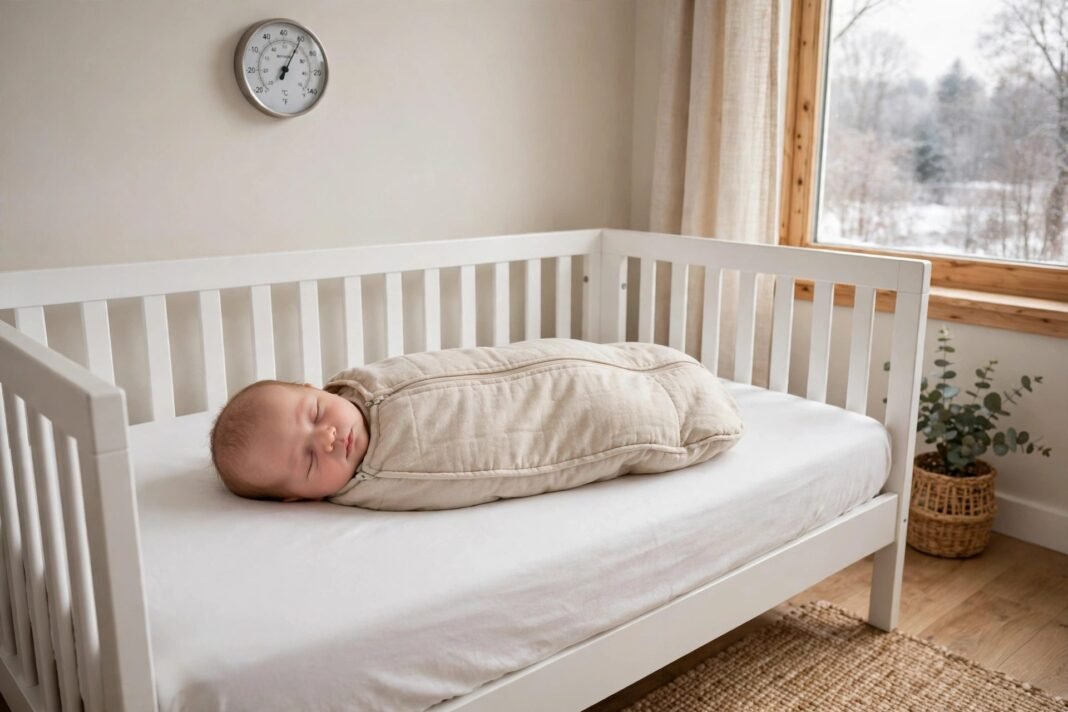
Your baby’s bedroom should feel comfortable, not warm. Safe sleep guidance recommends a room temperature of 16 to 20°C for sleeping babies. A room thermometer helps you check, because it is hard to guess the temperature by feel.
At this temperature, your baby needs only light bedding or a lightweight, well-fitting sleep bag. In fact, a sleepsuit plus a sleep bag is enough for most winter nights. If you use sheets or blankets, choose lightweight ones and avoid thick, fleecy or padded blankets.
If your baby is unwell or feverish, do not add extra clothes, even in winter. Extra layers will not help a fever, and they can make your baby too hot. If you are worried about your baby’s temperature, talk to your doctor or health visitor.
Safe Sleep in Your Baby’s First Winter
Winter brings extra bedding into the house, but your baby’s sleep space should stay simple. The safest place for a baby to sleep is on their back, on a clear, flat and firm mattress, with no loose bedding around them.
Keep blankets, quilts, pillows, bumpers and soft toys out of the cot, because loose bedding is linked to suffocation. Instead, use a sleep bag or a firmly tucked lightweight blanket that cannot cover your baby’s face. Remember that a folded blanket counts as two blankets.
Your baby should sleep in the same room as you, day and night, for at least the first six months. In addition, never let your baby sleep with a hot water bottle or an electric blanket, and never place the cot next to a radiator, heater or fire. These simple steps lower the risk of sudden infant death syndrome, which is higher in babies who get too hot.
Going Outside in Your Baby’s First Winter
Fresh air is good for you and your baby, even in winter. A healthy baby dressed for the weather can enjoy short outings on cold days. However, keep the trip short when the weather is very cold or windy.
Dress your baby in several thin layers, with a warm hat, mittens and socks or boots. A pram cover can shield your baby from wind, but make sure air can still flow freely. In the car, use thin, snug layers instead of a thick coat, because bulky clothes stop the car seat straps from working properly.
Always remove hats and extra clothing as soon as you come indoors or get into a warm car, even if it wakes your baby. This step matters, because a baby can overheat quickly in a warm room after a cold walk. Cold weather safety guidance for children gives the same advice for outdoor trips.
Feeding and Comfort on Cold Days
Winter does not change how your baby needs to feed. Keep breastfeeds or formula feeds as normal, and offer an extra feed if your baby seems hungry. A well-fed baby stays warm more easily than a hungry one.
Wet clothes lose warmth fast, so change your baby quickly if clothes get damp. For example, a wet nappy or a spill from a feed can chill a small baby in minutes. Keep a dry spare outfit in your bag when you go out.
Cold air can dry your baby’s skin, so keep bath time short and the water comfortably warm. Pat the skin dry gently, and dress your baby straight away. If your baby’s skin looks sore or cracked, ask your pharmacist or health visitor what to use.
Signs Your Baby Is Too Cold Outside
Most outings during your baby’s first winter pass without any trouble. However, it helps to know the signs that your baby has had enough cold.
A baby who is getting too cold may become quiet, sleepy or floppy. Their skin may look pale or feel cold to the touch. Fingers, toes, ears and noses are the first places to suffer in bitter cold, and the skin there can turn pale or grey.
If you notice these signs, take your baby indoors straight away. Remove any wet clothing and wrap your baby in warm, dry blankets. If numbness or pale skin lasts more than a few minutes, call your doctor. If your baby is very sleepy, hard to wake or breathing oddly, seek urgent medical help at once.
Colds and Illness in Winter
Your baby’s first winter brings more coughs and colds, and newborns catch them easily. You cannot keep every germ away, but you can lower the risk. Ask visitors with a cold to wait until they feel better, and wash your hands before you pick up your baby.
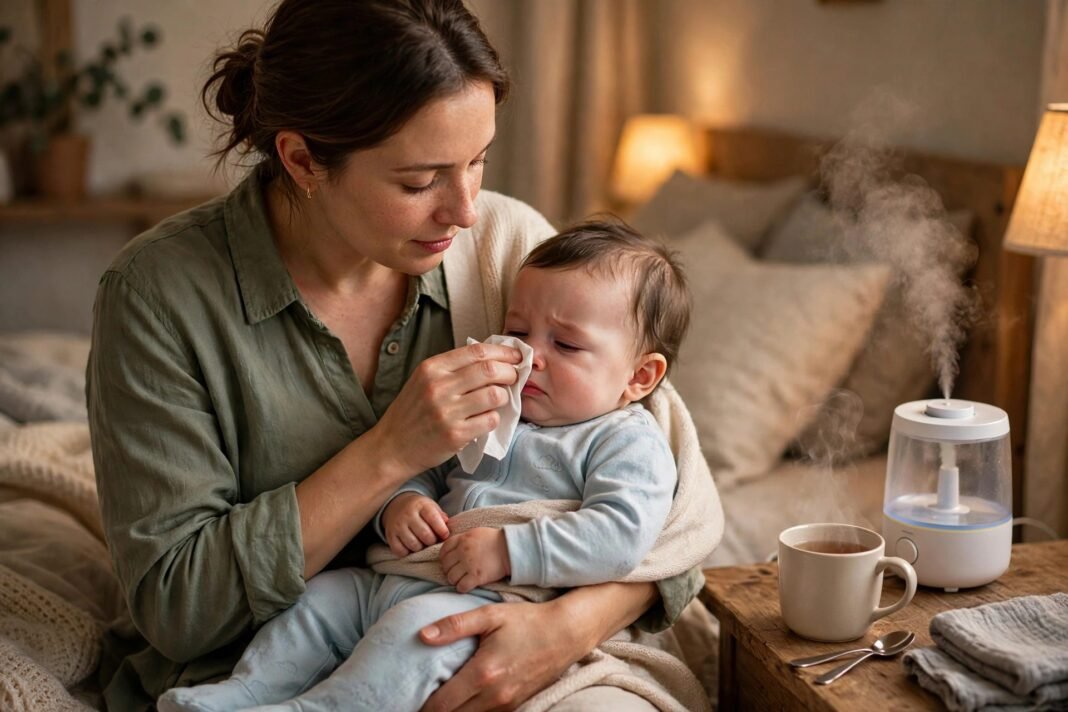
A blocked nose can make feeding hard for a small baby, because babies breathe through their nose while they feed. Saline nose drops can help loosen dried mucus, and your pharmacist can advise you about them. If your baby struggles to feed or breathe, talk to your doctor.
Older children get winter infections too. In fact, throat and chest infections are common in children in the colder months. So keep your newborn away from older children with a bad cough when you can.
Looking After Yourself Too
A new mum during her baby’s first winter can feel tired, cold and stuck indoors. Short days and broken nights make everything harder. So be kind to yourself, and rest when your baby sleeps if you can.
Ask for help when you need it, whether that means a family member holding the baby or a friend bringing a meal. You do not have to manage everything alone. In fact, accepting help is one of the smartest things a new mum can do.
If you are still on leave, use the time to recover and bond with your baby. Leave lengths differ widely around the world, so some mums get months at home while others get only weeks. Whatever your situation, your health matters as much as your baby’s.
Your Baby’s First Winter: A Simple Checklist
Here is a quick recap to keep on your fridge. Dress your baby in one more layer than you wear. Check the chest or back of the neck, not the hands and feet. Keep the bedroom at 16 to 20°C, and use a room thermometer.
Keep the cot clear and simple, with no loose bedding. Take hats off indoors, and keep car seat layers thin. Change wet clothes quickly, and keep outings short on bitter days.
Above all, trust yourself. You know your baby better than anyone, and you will soon read their signals without thinking. What helped you most during your baby’s first winter? Share your story in the comments, because your words may help another new mum.
This article is for general information only. It is not medical advice. If you are worried about your baby’s health, please talk to your doctor, health visitor or pharmacist.